Digilah

Categories
Web 3.0 Tech

How to mine bitcoins? In Europe

Written by : joel nzoda on Digilah (Tech Thought Leadership)

Bitcoin mining is rarely a profitable business for individuals. Bitcoin ‘s popularity has generated huge competition which makes it inaccessible.

Most often only industrial sites manage to profit from this activity. Before you venture into this adventure, I invite you to read the (already old) testimony of Greg Ryder and to visit the space dedicated to mining on the Bitcointalk forum .

Note in passing the existence of companies that practice the “cloud mining” and sell computing capacity to their customers who receive in exchange the fractions of mined bitcoins, after deduction of management fees. Be careful though, some services are often very disappointing, when it’s not just pure scams. In general, even if practiced seriously, cloud mining is rarely profitable.

Practiced on French (or European) soil, cryptocurrency mining is only recommended for people who have, for domestic purposes, their own green electricity generator (solar, wind, geothermal, hydraulic) without having the possibility of reselling production surpluses on the public network.

Another possibility to make mining rational in France is to use the heat produced to produce hot water, this is the proposal of the French startup WiseMining.

Most searched question

What is cryptocurrency?

What is bitcoin and how does it work?

Most searched queries

Ethereum price

Bitcoin price


Hello readers! Hope you liked what you read today. Click the like button at the bottom of this page and share insights with your colleagues and friends!

For more such amazing content follow Digilah

Categories
Edu Tech

The Evolution of Education

Written by – Deakin Daney on Digilah (Tech Thought Leadership)

The thirst for knowledge is as ancient as the sea. Every generation of knowledge seekers is hungrier than the last. But is just education enough to quench our growing desire to know more?

Innovation and ideation are two important parameters to assist in our education journey. With the launch of the New Education Policy, the country is now moving into the future with a strong focus on STEM and assisted and alternative teaching methods. What this now brings to the forefront, is how we impact the thoughts, abilities, and actions of our young generation.

How do we excite them, and make them think beyond the pages of their books? 

The answer lies in engagement, team building and working on real life problems which lead to world class solutions which help build a sustainable and enriching environment. 

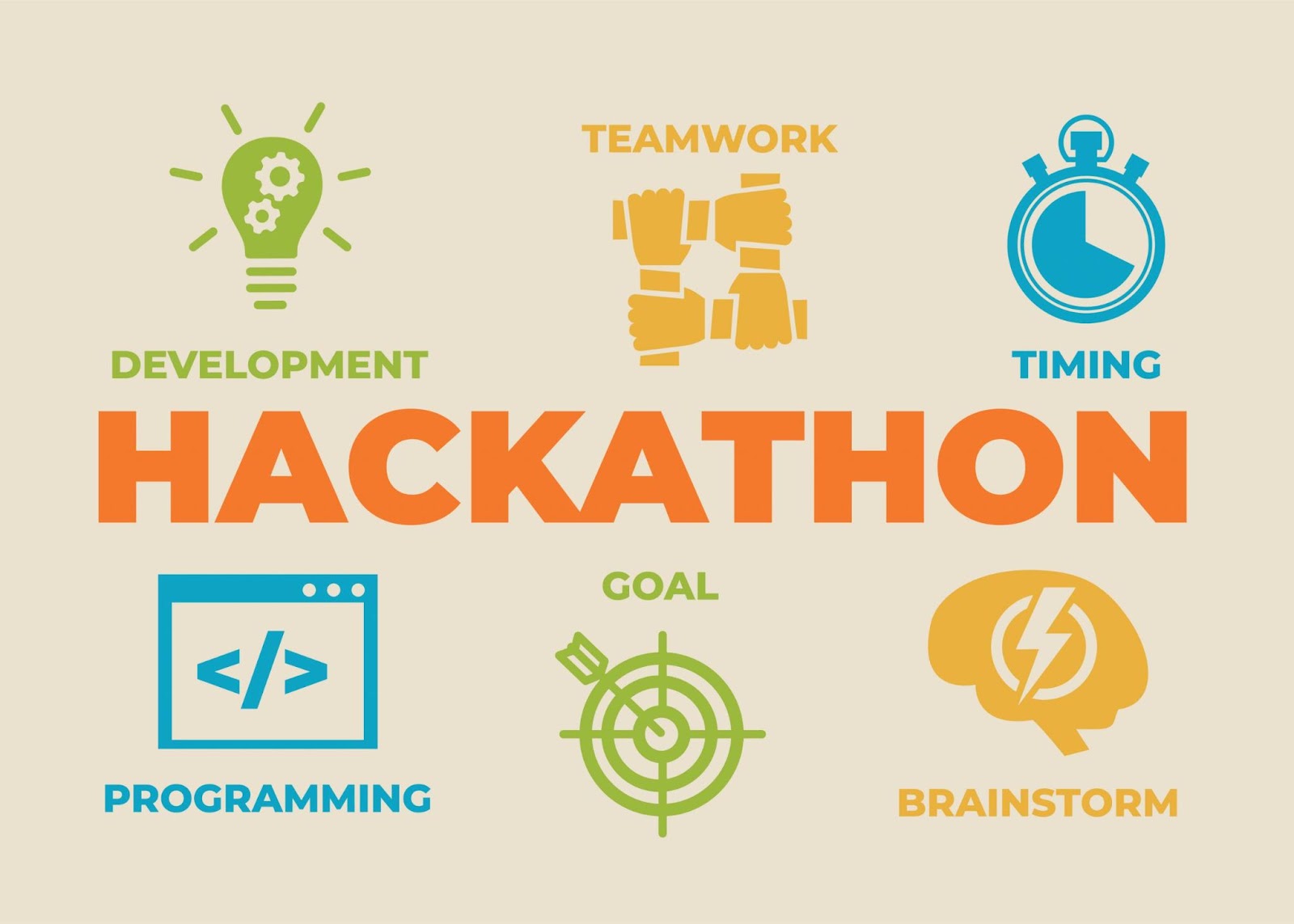
Hackathons started as a technical competition, aimed at a 24 or 48 hour finale, which involved writing code, creating technical prototypes and , during the finale , proving the product / code actually worked and could be used in real life scenarios.

While those kinds of hackathons do still exist, they focus on a very defined solution. Now, these hackathons have opened up not just for technical students , but also non-technical ones , including management , social media , the arts , and more. These events are no longer aimed at 24 & 48-hour timelines. They extend for a few months and have various engagement activities which make the whole program so very interesting.

As the Head of Innovation for i4C we work in the niche space of Hackathons and Ideathons. With a proprietary idea submission and evaluation platform, we provide school and college students and corporate employees alike the opportunity to participate in multiple events and showcase their strengths and solutions.  

At the heart of a hackathon event is the theme. One could do a specialised event on IoT, Blockchain, Artificial Intelligence, Machine Learning, EV infrastructure etc. They can also do a social event on Sustainability goals, climate change, water conservation, Air Pollution, Waste Management, and many other themes. One could even have an event involving multiple themes to engage a larger target group and audience. 

The strength behind the Theme is the Problem Statement (PS). These statements are carefully curated problems faced currently. Sometimes these PS are given by Industry – Banks, Manufacturing Cos, Aggregators, Cloud Computing etc , all because they want to see a fresh take on how to tackle these problems .

This becomes very interesting for students because here they get a real world problem faced by a large company, and if they are part of the team which solves it, well.. it can lead to an offer of employment for them, or at the very least an internship. It could help them start their career on a good note. 

We have recently conducted a few hackathons for government bodies, private companies and are currently working with a large Blockchain entity now. The thrill that the students get from such a participation, needs to be seen to be believed. We have students from Tier 2 and Tier 3 colleges attempting to solve a real-world problem of a Trillion Dollar Company. This is the Engagement which the Hackathon Platform provides. It helps see things from a very large perspective.

These events also lead to team management and team playing skills. Since these events are all team based with a minimum team size of 4, the students and employees get to work with each other in proximity. This helps them understand the life lesson of team dynamics, kindness, sharing and above all, the desire to win as one.

Feedback from many events conducted by us, has led us to this important conclusion, as students themselves commented on feeling as a family, with immense gratitude for winning being shared by all. 

During an event, the teams which take part, are evaluated by industry experts, who interact with the students and share their thoughts and ideas on what can be done to make the solution to the PS more compelling.

Many of these experts, if not all, are usually Subject Matter Experts (SME) in their chosen field , and hence approached by us . These kind of interactions between young minds and experienced SME, goes over and beyond what is taught in a classroom, and it liberates the young minds to think more clearly and more long term.

It gets even better, once the teams are shortlisted for the finals based on their solutions. These teams are then assigned mentors who help guide them and take their idea, prototype, vision, product, or service into the Finale.

These mentors spend long hours with the team and patiently answer all questions in support of their team winning the Finale. These hours and moments spent with such experienced mentors is usually a defining moment for students. 

During the Finale, all teams compete hard to prove their solutions are worthy, but it is usually the Top 3 who end up victorious. These 12 students across 3 teams, get to share their Intellectual Property with the companies who find their solution effective, they get prize money, they get certificates and trophies, they get internships and job offers, but most importantly , they learn to win on their own , through their efforts and those of team members. This, to me, is probably the defining thought on why we need to have more such idea based events in India.

Having our young generation think out of the box, solve Big Corporate problem statements, work as a team, and enjoy the success of winning, at a young age, on a big platform all adds up to our country’s growth and economic success.

Most searched question

What happens at a hackathon?

How do beginners prepare for hackathons?

How has the education system evolved over the years?

Most searched queries

Hackathon for beginners

Evolution of education in India

Importance of evolution in education


For more such amazing content follow: Digilah

Categories
AI Tech

Driving intelligence solution for the automotive industry

Written by : Vivek Gouda  on Digilah (Tech Thought Leadership)

The automotive industry is rapidly adapting to the demands of connected mobility. The rise of autonomous and electric vehicles will create new challenges for manufacturers, who must implement solutions that will help them meet changing consumer needs. These vehicles are expected to require more computing power than traditional cars, which leads us to ask: What does this mean for aftermarket solutions?

What does this mean for aftermarket solutions?

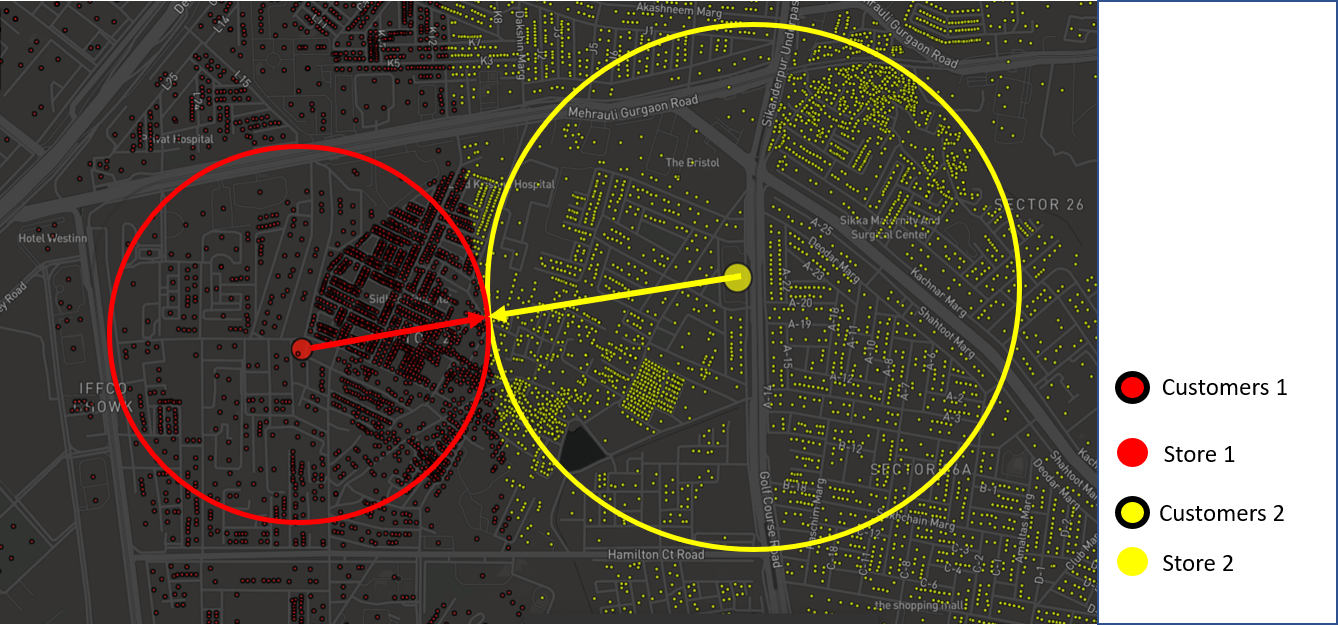
As both traditional and autonomous cars become more automated, and more intelligent, the use of geospatial technology is proliferating.Geospatial intelligence (GEOINT) is the use of data and technology to improve the way we make decisions. It’s a key component of connected mobility, which refers to how vehicles communicate with each other or with infrastructure.

In autonomous vehicles, geospatial intelligence can be used to collect real-time information about road conditions as well as traffic patterns—which can help a vehicle avoid hazards that could otherwise cause an accident or delay. This type of information can also be useful for collecting data on weather conditions, or even hazards like ice on the roads during winter months.

Connected cars are another place where geospatial intelligence is being applied: they collect both driver behavior data and location information via onboard sensors that provide insights into driver quality control and safety measures such as speeding or harsh braking incidents.

But what exactly does that mean for the future of cars?

Geospatial intelligence (GEOINT) is a broad term that refers to information gathered from satellite data and other sources in order to identify people, places, and objects.

Using GEOINT, we can determine the location of a person or object within a specific area. This allows us to collect data on the location of vehicles on roads at any given time—information which is then used by car manufacturers and other companies to improve their products and services. For example, knowing where cars are parked may help you find your way into an underground parking lot before you run out of battery power in your electric vehicle; it can also be used by municipalities when designing new roads so they can plan how many lanes will be needed for traffic flow.

And how does it work?

Driving intelligence solutions allow manufacturers and OEMs to identify and engage with their customers based on their driving behavior. The solution is designed to be used by the driver, who can also access it from an app on their phone or tablet. Using this technology, car manufacturers can:

  • Monitor vehicle location & speed
  • Identify where drivers spend most of their time in the vehicle
  • Collect data on when they start and stop using the car, how long they use it for and where they go during those times

What does this mean for traditional vehicles?

Geospatial intelligence is a software solution that integrates data from multiple sources to help personnel make better decisions. In the automotive industry, it has been applied to several areas, including navigation and fleet management.

In this article, we’ll explore how geospatial intelligence can improve driver safety and efficiency in traditional vehicles.

How does it all come together?

Here’s how it all comes together:

  • Data from connected vehicles – This is the raw data collected by autonomous vehicles and other vehicle systems. It offers an on-demand picture of traffic patterns, road conditions and driver behavior.
  • Data from the cloud – The cloud allows you to store and analyze large amounts of data in real time. In this way, you can quickly identify patterns that indicate a problem with one or more sensors or systems on your vehicle.
  • Data from the edge – Edge computing uses advanced analytics at the edge of a network (a local area) rather than in a centralized location such as a cloud server center or data hub. This approach enables faster decision making because only relevant information is sent over high-bandwidth networks instead of sending all available information for analysis in another location—a process that can take hours or even days depending on bandwidth capacity limitations

Harnessing the power of geospatial intelligence will help you create better experiences for every aspect of your customer journey.

Geospatial intelligence is a powerful tool that can help you create a more personalized and engaging experience for your customers.

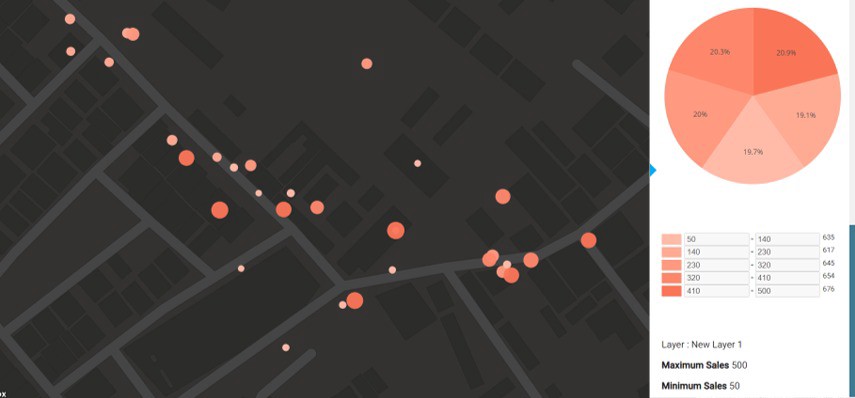
Heliware’s HeliAI uses location data to give you insights into how people are moving around the world, what they are doing at any given time and whether there are opportunities to engage with them at specific locations. Automotive service providers or manufacturers can use this information to understand customer behavior and improve the experiences your products offer.

MOST SEARCHED QUESTIONS

How AI is impacting the automotive world?

Future of AI in automotive industry?

How is AI used in self-driving cars?

What are the problems faced in automobile industries?

MOST SEARCHED QUERIES

AI technology meaning 

AI technology examples

Benefits of  in automotive industry


Hello readers! Hope you liked what you read today. Click the like button at the bottom of this page and share insights with your colleagues and friends!

For more such amazing content like and follow Digilah


Categories
Digi Tech

Who Wants To Be a (Digital) Millionaire?

Written by Wendy Scott on Digilah (Tech Thought Leadership)

I do.

If you recognize the reference to the Frank Sinatra/Celeste Holm song from the 1956 film, High Society, you are probably a Boomer like me. So what business does a fifty-nine-year-old have wanting to be a digital anything, let alone a digital millionaire?

I didn’t grow up with tech. We didn’t even have a landline at home. I took my ‘O’ Levels in 1978, which was the first year in the UK we were allowed to take calculators into exams. I struggle with tech, and I say ‘interweb’ to annoy the kids.

But what I do have is at least forty years of leadership and learning & development knowledge that I can share online. And technology has made it possible for me to make money doing that.

What the heck is a digital millionaire?

Otherwise known as a digital entrepreneur or content creator, it’s someone who sells digital products online such as templates, books, or courses. It’s also possible to sell membership newsletters, coaching, and exclusive coaching groups called masterminds.

How it all works

I’ve spent the last eighteen months reading, doing courses, and attending webinars to find out how to be a content creator, and as far as I can tell, this is what digital millionaires do:

Step One – Create online content – whether you create a blog, an Instagram post, a podcast, or articles, put free content online.

I write articles on Medium, a writing platform anyone can post on. When people read an article, the author gets a small amount of the reader’s membership fee.

Medium writers share articles on FB, Instagram, LinkedIn, Twitter, Quora, and Pinterest.

Step Two – Collect email addresses – Followers on Instagram or other social media are useful, but you’d have to start again if the platform disappears. The trick is to collect the email addresses of people that like your work. The list can’t disappear overnight, and you use the list to send newsletters and sell your products.

I’ve just started an email newsletter that goes out weekly and contains free links to my training, leadership and dating articles.

It’s said that successful online creators make one dollar a month income from each email subscriber.

I’m using convertkit for my list; They provide helpful resources, such as an online creator community, online tutorials, and live zoom tutorials.

Step Three – Give free content to your email list – Email your list once a week and give them valuable content for free. Content could be an article in the body of the email, sources you have found helpful, book recommendations, templates, short email courses, short video courses, or access to an exclusive podcast episode.

Step Four – Sell your content via your email list – You can sell templates, ebooks, and courses. I’ve seen online courses from $29 US to $3000 US, and some big earners sell masterminds for $10,000 US per year.

Currently, I’m writing an ebook and a course which will be my first digital products.

I use Atticus for my book, Teachable to create my course, and Canva to create the slides and workbooks.

Next tech on the list

A subscription to Later to automatically schedule my posts on social media.

I also use a writing assistant called Jasper.ai and a note-taking tool called RoamResearch.

How I’m finding all the tech

I believe in a growth mindset, so after the screaming, tears, and tech-induced lie-downs with a nice cup of tea, I persevere. Google is my friend. I’m learning very slowly, but each gain I make is a small step forward.

The upside is that I’m enjoying myself while learning about a whole new world. The downside is that none of my friends can understand what I’m talking about and think I’m getting mixed up in an online pyramid scheme scam.

Am I a Digital Millionaire yet?

No. I’ve made a loss with the subscriptions to tech and courses I’ve taken. But I’m having fun, learning heaps, and keeping current with new tech.

And you never know, this time next year I could be a millionaire…

Digital Millionaires I follow: Denise Duffield-Thomas, Jeff Walker, Amy Porterfield, Marie Forleo, and Dr. Benjamin Hardy.

Movers and Shakers on Medium: Tim Denning, Zulie Rane, Ayodeji Awosika, Tom Kueglar, Sean Kearnan, Nicolas Cole, Sinem Gunel.