Digilah

Categories
Ad Tech

Sustainability Standards – How Did the French Market Organize Itself for a More Sustainable World?

Written by Estelle Reale on Digilah (Tech Thought Leadership).

The advertising industry, like others, must respond to the urgency of climate change. It should promote responsible consumption, transparently communicate commitments, and integrate emissions reduction across various media platforms (Digital, TV, Radio, OOH, Print…).

The good news is that sustainability standards

are being implemented.

In October, the Global Alliance for Responsible Media (GARM) and Ad Net Zero established several working groups to create a global framework for media sustainability. The complete set of guidelines is expected to be published at the Cannes Lions Festival.

As France has been at the forefront of this topic, here’s an overview of what has happened over the past year.

Ad Sustainability Frameworks

Last year saw the launch of several cross-industry initiatives, including the implementation of frameworks that provide general guidelines for carbon footprint management. 

French trade bodies and associations, such as Bureau de la Radio for Radio & Digital Audio, SNPTV for Linear TV and CTV, Le SRI and Alliance Digitale for Digital, published their framework for carbon evaluation focusing on the campaigns’ delivery.

These standards were then incorporated into the Union des Marques meta-framework (local Federation of Advertisers) published last month under the name “OneFrame.” It is likely that the GARM and the WFA may draw inspiration from this industry initiative.

Methodology Used to Evaluate Carbon Footprint

Each trade body agreed on specific rules and practices to enable carbon footprint analysis. For example, they excluded the production of creative assets from the analysis. They also decided to assess the evaluation based on the delivery of the campaign life-cycle.

The Life Cycle Assessment (LCA) methodology was developed with the assistance of carbon experts and industry professionals from the buy-side and sell-side of the business.

The analysis includes several scopes: the manufacturing and life-cycle of users’ devices, the manufacturing and life-cycle of network components and allocation, and the manufacturing and life-cycle of networks and servers required for delivering the ad.

For CTV, Catch-up TV, or Audio campaigns, the LCA methodology is based on the SRI/Alliance Digitale guideline. The methodology considers the campaign’s booking method (programmatically or IO based) and the number of paths required for delivery in programmatic.

What followed?

In addition to the trade bodies, the industry is becoming increasingly mature in this area, with agencies such as GroupM, Publicis Media, and Dentsu developing their own evaluation tools and providing numerous trainings for their teams to better consider environmental responsibility.

Alliance Digitale also published a guide promoting a list of sustainable practices for programmatic buyers and traders. The guide offers recommendations grouped around several key principles:


      • Eliminating wasted ad impressions and unnecessary data

      • Activating low-carbon targeting (e.g., Wi-Fi vs 4G for mobile campaigns, contextual vs data…)

      • Delivering lighter creatives and formats (by reducing the weight of the creative with relevant tools)

      • Measuring and evaluating the carbon footprint of campaigns with appropriate solutions like the one proposed by DK.

    A guide including best practices with proven case studies is available. All this shows that sustainable development is no longer an option.

    What’s Next?

    To manage campaigns with sustainability in mind, the market is discussing a new KPI that can include carbon data. Although nothing has been finalized, many imagine a common cross-media KPI.

    Discussions revolve around the carbon weight per euro of media spent and the carbon weight per second. The former encourages optimizing the formats used with a constant marketing budget, while the latter enables comparing the footprint per second of exposure of the ad message.

    This KPI can also be easily used alongside classic KPIs such as viewability, view-on-time, CTR, attention, etc. Measurement solutions like DK offer to directly integrate this KPI into clients’ dashboards.

    Founded in 2021, DK is a French company that aims to promote the transition of media and advertising towards a more responsible and sustainable world. DK provides three types of solutions based on the client’s level of sustainability maturity:


        • Audit & Consulting: Conducting campaign audits on various channels including CTV, Linear TV, Radio, Digital, Audio, Streaming Video, and Display.

        • SaaS platform with dashboards for visualizing data.

        • Estimation API for directly integrating carbon data into clients’ dashboards.

      As the market moves forward, we are seeing the first consolidation of tech and measurement players. For example, DK has recently acquired its main competitor, Bilobay.

      Most asked questions

      What is meant by carbon footprint?

      How does advertising affect climate

      Most asked queries

      SaaS(Software as a service)

      Carbon footprint

      API integration

      Hello readers! Hope you liked what you read today. Click the like button at the bottom of this page and share insights with your colleagues and friends!

      For more such amazing thought leadership articles on technology follow Digilah people.

      Categories
      Ad Tech

      As Drake once proclaimed “nothing was the same”

      Written by Niraj Nagpal on Digilah (Tech Thought Leadership).

      While comical it may be to quote a famous rapper/singer, I couldn’t help but think of a relatable way to speak to marketers and their agencies that are living in a form of collective denial.

      Starting Jan 4, 2024, nearly 30 million Chrome browsers will block third party cookies, with the rest of the 99% of users to be following this in Q4/Q1 2025. 

      This says nothing of the fact that other major browsers including Apple’s Safari and Mozilla Firefox made this very change years ago effectively making 30% of the global internet population untraceable for attribution, reporting, and frequency capping purposes. 

      And yet, are marketers really taking this seriously or waiting for a single magic cookie replacement to come along?

      My opinion is that marketers that are seriously preparing with their agencies help will end up reaping the rewards of better targeting, improved customer experience and reducing media wastage.

      So, knowing what there is to gain, let’s look at a few steps and realities that marketers need to take and consider.

      Your 1st party data when assigned to a use case has value. Data for data sake without alignment across teams in your organization to solve for a specific challenge has no value.

      Investing in the right type of CDP/data lake infrastructure and working backwards on why you are collecting data, what is its purpose, and what you will do with it will help keep you focused and privacy compliant. 

        • Once your 1st party data is in a hygienic state, begin to work with other parties to augment your customer profiles in a privacy centric approach such as data clean rooms. 
        • Privacy enhanced technologies come in many flavors that preserve trust between parties without data being exposed and, in some providers, not moved at all. 
        • Again, begin with the use case and select your match partners and methodology accordingly. Hit singles and not try for home runs. 

        • Experiment with alternative ID’s now. For example, UID 2.0, LiveRamp Ramp ID, ID5, etc.  15+ different alternative ID’s exist, many which are aiming to be interoperable with each other. 
        • In parallel, invest the time and resources to begin testing the Privacy Sandbox API’s now from Google which will not be a 1:1 replacement for cookies and their functionality, but still pivotal moving forward. 

        • Work with publishers and encourage them to adapt IAB’s seller defined audience as a trusted signal for media activation in addition to contextual targeting solutions. 
        • With buyer support, this technology will only gain support. Otherwise, publishers will continue to lose out in the programmatic value exchange which benefits no one, including your consumers in the long run.  

        • Understand the importance of retail media networks. E.g. Amazon, Tesco, Carousell, Grab, Coles, etc. This new category of inventory and data supply will be a $100B industry in the years to come. 
        • The persistent signal of transactional data/ride sharing will augment the loss of cookie and identity signals. By leaning in today, marketers have the opportunity to perfect their marketing budget mix, ask for unique data sets, and tie back media dollars to sales. 

      It’s easy and understandable for marketers and agencies to live in denial that one solution or approach will suddenly manifest.

      However, now is the only chance marketers have to control their destiny and mitigate the pain of complete signal loss. 

      The harsh reality is that measurement and targeting will be broken, that there will be no one single third party cookie replacement (interoperability is key).

      While nothing will be the same, the future has never looked brighter. “Take care.”

      Most asked questions

      What is a cookie and how it is used in marketing?

      What is programmatic advertising?

      Most searched queries

      Programmatic value exchange

      Cookieless future

      Cdp

      Hello readers! Hope you liked what you read today. Click the like button at the bottom of this page and share insights with your colleagues and friends!

      For more such amazing thought leadership articles on technology follow Digilah people.

      Categories
      Ad Tech

      First Party Data is the King

      Written by Stafaniya Radzivonik on Digilah (Tech Thought Leadership).

      Nowadays we’ve been hearing repeatedly about the upcoming cookieless and ID-less world in the ad tech industry. However, what does it actually mean and how is it going to change our online activities? Let’s get to the roots of it.

      User Identification

      Any user can be identified, recognized and tracked within an online environment. Third-party cookies (3P cookies), device IDs and sophisticated IDs such as IDFA, AAID, IDFV serve the key role in that mission. They help advertisers to target the right audiences and deliver relevant ads according to user’s preferences and interests. Though, to what extent it’s allowed — under the question mark.

      The implementation of CCPA, LGPD, GDPR, TCF v.2 as well as an attempt to unite them under GPP alongside LAT introduced by Apple and Google in 2012 brought to the table the notion of user’s consent where users can opt-in or opt-out and adjust the data shared at any time.   

      Cookieless and ID-less world

      Following these data privacy restrictions, Apple released a new App Tracking Transparency (ATT) framework in 2021 where fingerprinting is prohibited giving full control to users. In turn, Google announced a deprecation of 3P cookies in Chrome by the end of 2023. Given that, the future of cookies and IDs is a foregone conclusion.

      The upcoming cookieless and ID-less world puts marketers in need of exploring ways to run successful campaigns without user IDs as well as challenges ad monetization strategies of publishers. It becomes necessary to adopt a portfolio of alternative approaches and solutions to target and serve relevant ads without clear identifiers.

      Options available to advertisers and publishers

      Privacy Sandbox Proposal

      Topic is rooted in Federated Learning of Cohorts (FLoC) and designed to support interest-based advertising. It facilitates more privacy for consumers on the web by means of analyzing online activity (behavior) of users within the browser without any cookies. It determines up to 350 cohort-based topics per user that could be adjusted as matching or sensitive and stored up to one week.

      First-Party Data

      Leveraging and storing the first-party data (1P data) collected by the publisher across all applicable devices (websites, apps, smart TVs) within the customer data platform (CDP) unveils the possibility to consolidate all the touch-points with the audience as well as to build a coherent profile of each user required for more targeted campaigns.                                                         

      Universal IDs

      A universal ID, a single identifier assigned to each user, allows passing anonymized information about that user to the approved partners. There are 1P data-based (LiveRamp, ID5, etc.), proprietary (TTD, Stroer, Criteo, etc.), and industry IDs. Though it’s widely tested, a universal ID requires email addresses of users which collection could be definitely challenging.  

      Contextual Advertising

      Contextual advertising is based on keywords retrieved from the page content where topic-based targeting grants advertisers control over ad placement as well as ensures brand safety. This is an effective way to show relevant ads without collecting 3P data.

      Smaato’s holistic approach

      At Smaato(Now part of Verve Group), we’ve been building data cohorts and audiences on the basis of 1P data from in-house gaming studios, 2P data shared by our web, in-app and CTV publishers, and 3P data received from data providers and shaping it by means of advanced targeting options (geo segments and geo-fencing, behavioral, contextual and privacy targeting).

      Mostly, it’s been centered around our contextual ad technology. This includes Moments.AI™, which focuses on real-time delivery to the freshest URLs and most relevant content. Our contextual toolbox also contains ATOM (anonymized targeting on mobile), a pioneering privacy-first targeting product based on AI algorithms.

      Alongside data and technology, we’ve been actively measuring performance via CPM, CTR, and VCR where personal data is not needed.

      Thus, even with our strict adherence to and adoption of all data regulations as well as bracing for cookies and IDs to crumble, we’ve been seeing a high potential to deliver effective omnichannel campaigns for marketers as well as to add value to the ad monetization of publishers.

      Most searched questions

      What are cookies?

      What are the alternatives if cookies are removed?

      Most searched queries

      Cookies

      Cookieless world

      ID

      Hello readers! Hope you liked what you read today. Click the like button at the bottom of this page and share insights with your colleagues and friends!

      For more such amazing thought leadership articles on technology follow Digilah people.

      Categories
      Ad Tech

      Tackling the attention deficit, one impression at a time

      Written by Hazel Broadley on Digilah (Tech Thought Leadership).

      As consumers continue to be bombarded with up to 10,000 ads per day, the fight to gain real human attention has never been so rife. 

      But as this figure rises – while attention spans remain the same – the chance of an ad being seen inevitably diminishes.

      This results in what we call the attention deficit – something the ad industry is striving to overcome.  

      But how do we begin to measure true attention, let alone improve it?

      Combining viewability with attention

      For years, the focus has been on standardizing metrics around how much of an ad is visible on screen and for how long, i.e., viewability. And this is still important, because after all, you can’t engage with an ad if you can’t see it.

      But with the realization that ‘viewable’ does not equal ‘viewed’ (almost 35% of all programmatic display ads are ignored), it’s become clear that viewability metrics alone are not enough.

      They are more like ‘hygiene’ metrics rather than predictors of quality. And that’s why we need to bolster this campaign insight with attention data. 

      Steps to leveraging attention

      As Rob Hall, CEO at Playground xyz explains, there are generally four steps to leveraging attention. First, you need solid research – from your own campaign data but also learnings from other brands who have tested the impact of different ad formats, content types, devices, channels or targeting strategies on attention metrics.

      Second, once you’ve gathered this, you can use it to enhance your channel planning, by creating and scheduling campaigns that are predicted to deliver the best performance. 

      Third comes the task of actually measuring attention, by tracking key attention metrics such as attention time, hover rate and touch rate on a mobile device, plus more traditional performance metrics such as CTR, bounce rate and conversion rate.

      And finally, to have the best chance of engaging your audience in the long term, you need to be able to optimize in real time according to what’s working and what’s not. 

      This kind of dynamic creative optimization (DCO), focused on attention, will be a key driver of campaign performance over the coming years. 

      Using data across TV, desktop, tablet and mobile, we can measure a whole range of attention metrics. But perhaps the most prevalent is Attention Time.

      Attention Time – the new metric in town

      Attention Time is important in any campaign because it measures how long a user is physically eyeballing the ad.

      Once you’ve measured this, you can then look at a host of other user activities, such as clicks, cursor position, touch rate, scroll rate and depth, audio on/off, volume etc. 

      Measuring attention with eye-tracking data

      As Lumen Research’s MD Mike Follett suggests, eye tracking data, used at scale across different channels, shows that “when users do look at an ad, it tends to perform really well”.

      There are a number of attention technology partners on the market including Lumen, Playground xyz, Amplified Intelligence and Adelaide, that can help marketers determine true attention through two main types of eye-tracking measurement: proxy-based and gaze-based. 

      When testing creative or context, gaze-based (or eye-gaze) metrics are generally thought to be a more accurate method than proxy-based metrics because they demonstrate that a user has actually paid attention to an ad. 

      This data comes from vast opt-in panels of consumers allowing eye-tracking cameras to follow the path of their eyes across the screen as they consume the open web. 

      By combining this with the other user activities above, you can get more granular with each impression, and optimise the ad creative or format more effectively.

      Now is the time to tackle attention

      When looking for an attention partner, be sure to ask them how they define attention (e.g. do they include all user actions?), what kind of eye-tracking they use (gaze-based or proxy-based data, or (preferably) both?), and how long they will apply optimization to ensure the most accurate measurement.

      As the range of attention metrics grows, so too does the need for industry standardization of these metrics. 

      But for now, there’s no time to waste in experimenting and A/B testing with different creatives and formats.

      This way, you can get ahead of the curve before attention-first campaign strategies become mainstream and make every impression count. 

      To read more from Hazel and her team, head to Lexical Llama

       Most searched questions

      What is meant by attention deficit in advertising?

      How do you tackle the attention deficit problem?

      Most searched queries

      Viewability

      Attention deficit

      Engagement

      Hello readers! Hope you liked what you read today. Click the like button at the bottom of this page and share insights with your colleagues and friends!

      For more such amazing thought leadership articles on technology follow Digilah people.

      Categories
      Mar Tech Ad Tech

      How MarTech and AdTech have transformed the Market

      Written by Sumesh Raghwani on Digilah (Tech Thought Leadership)

      However, a majority of people don’t understand the major differences between the two. While they are both closely related to each other, they perform very different functions.

      So, we can deep dive into the topics to understand them better:

      What is MarTech?

      MarTech refers to “Marketing Technology”

      The technologies that are used to execute a comprehensive digital marketing plan.

      All the technology used from the point of lead capture throughout the sales funnel until the conversion is considered MarTech.

      MarTech spending is only going to rise in the future.

      There are more than 8,000 tools that populate the MarTech landscape, and this number is only expected to grow in the future.

      That’s not all 60% of marketing experts have stated that they expect MarTech to grow even more soon.

      This can include the following technology tools:

      • Email marketing tools
      • Lead magnets
      • Digital marketing analytics tools
      • Customer data platforms
      • Social media management tools
      • Marketing automation programs
      • Content marketing tools
      • CRM software
      • Web analytics tools

      MarTech-specific tools are designed to help businesses understand their audience in a better manner. For example, if you publish a blog on your platform, you can use an analytics tool to determine the number of conversions that it generates.

      Real-life examples of MarTech:

      • Mixpanel is a commonly used business analytics tool that tracks user interactions with a product. It allows users to analyze data such as sign-ups and conversions and help them track the effectiveness of different marketing campaigns.
      • Buffer is a social media management tool that allows businesses to offer better support to their customers through social media channels. It is a marketing tool that helps businesses understand the needs of their customers better and tailor their products accordingly.

      What is AdTech?

      AdTech refers to “Advertising Technology”

      The technologies that allow for programmatic ad buying and digital spending.

      Tech advertising primarily focuses on demand-side and supply-side platforms and ad exchanges.

      With the help of advertising technology, companies can focus on a targeted audience.

      This helps save a great deal of money and improves returns on advertising spend. The cost of consumer acquisition also dips sharply.

      Needless to say, AdTech can help companies maximize the returns from their advertising spending by focusing on audiences that are interested in buying their product.

      AdTech primarily measures the effectiveness of every campaign. Ultimately, this helps marketers get the best bang for their money.

      Examples of AdTech include:

      • Data management platforms
      • Ad exchanges
      • Ad servers
      • Programmatic advertising tools
      • Tag managers

      The Adobe Advertising Cloud is an example of a tool that’s used commonly in AdTech.

      The two major platforms that play an integral role in AdTech are demand-side platforms and supply-side platforms.

      So, what are Demand-side platforms and supply-side platforms?

      Demand-Side Platforms

      A demand-side platform is a digital platform, or a software program used by advertisers to purchase ads from a centralized marketplace.

      Google Ads is a primary example of a demand-side platform.

      Why they are important: Demand-side platforms remove the human element from the equation, thus making the process cheaper and much more efficient.

      Supply-Side Platforms

      A supply-side platform is a software program that allows publishers to sell their ad inventory.

      The underlying technology beneath demand-side and supply-side platforms is the same. Whereas advertisers use demand-side platforms to purchase cheap ads, supply-side platforms use supply-side platforms to maximize the price for their impressions.

      Common examples of supply-side platforms include Google, OpenX, AppNexus, and AOL.

      Why Are They Important: Publishers actively avoid negotiating with human ad buyers for their media prices. Instead, they prefer using technology to buy ads more efficiently. A supply-side platform helps maintain a balance and allows publishers to effectively manage their relationships with several buyers.

      Popular Examples of AdTech:

      1. Tapad is a simple tracking tool that assigns a unique digital ID to each user and then tracks their activity on multiple devices.
      2. Undertone helps its customers design advertising campaigns over multiple platforms. The company focuses primarily on mobile advertising.

      AdTech primarily focuses on the use of programs and tools that can be used to analyze buyer behavior, evaluate the performance of ad campaigns, and improve them.

      Conclusion:

      So, now we have learned both MarTech and AdTech technology tools play a crucial role in the business.

      Businesses are increasingly looking at different ways by which they can employ both AdTech and MarTech to segment their audiences in a better manner, which ultimately results in better value for the business.

      Synergistic gains between the two will only help businesses in the long run.

      In the future, we will probably see MarTech, a mixture of both MarTech and AdTech platforms deployed together to create a bigger impact on advertising and marketing techniques.

      Most asked questions

      What is the difference between AdTech and MarTech?

      What software tools can be used to track user records in sales?

      Most searched queries

      Advertising

      Marketing

      Hello readers! Hope you liked what you read today. Click the like button at the bottom of this page and share insights with your colleagues and friends!

      For more such amazing content follow Digilah People

      Categories
      Ad Tech

      Recycled advertising impressions and eco-friendly campaigns

      Written by : Anas Ech-chaoui on Digilah (Tech Thought Leadership)
      Illustrations by Lim Daphne

      The idea was born from an inventory recycling idea by Thomas OBJOIS and Julien GALIM.

      The two co-founders and entrepreneurs used their previous experience, and they have established this unique technology for digital marketers..

      During the rise of programmatic in digital, they realised the downside of the complexity of this technology and established a company for recovering lost ad calls and turn them into valuable/monetizable impressions.

      The extent of this phenomenon is still little known, as are the various causes of this consequent advertising mess.

      This 100% French-origin company has been combating advertising waste and reducing the carbon footprint of digital campaigns through its pipes.
      Ampoule et engrenage contour

      Sustainable and profitable solution for publishers

      Based on our team’s experience at Lagardère Group, we have seen that more than forty technical problems were preventing the distribution of millions of advertising impressions.

      We call them “ghost impressions”.

      How this works in a nutshell:

      After our script is integrated into the publisher’s code base and we start to analyse the site’s inventory pages and advertising placements, we are able to map the loss and suggest the worth of the “ghost impressions”. After the full launch of the solution, we can identify and recycle the lost impressions in real time. It is important to mention that we respect all Core Web Vitals without impacting the quality of the user experience or the page behaviours such as loading time.

      Being in the market for years, we see that the recyclable impressions represent on average 20% of a website’s total display inventory.

      In 2022, our technology recovered and monetised more than 19 billion ad impressions.

      Where do ghost impressions come from ?

      ADVERTISING RELATED ISSUES

          • Connection problems during API calls of solutions (SSPs/Ad Servers/bidswitch…). 

          • Glitches in cross-origin requests to REST APIs or calls to solution servers. No ad response.

        SITE RELATED ISSUES

            • Failed or misconfigured lazyload ad logic that does not allow the execution of the slot 

            • Issues in the ad slot CSS that prevent the ad from being displayed

          VISITOR RELATED ISSUES

              • Loss of connection to the user’s device caused by micro-cuts 

              • Website or web tools are not adapted to certain browsers

            How does our solution work for a publisher?

            BCOVERY is a comprehensive technology and it operates by inspecting/scanning the content and HTML structure of the publisher sites.

            When a ghost impression occurs due to any technical reasons, our proprietary algorithm analyses the ad call  and makes the impression available to the publisher/advertisers for monetisation.

            We are is present in 5 countries and continuously growing.

            It supports more than 400 publishers worldwide (France, Germany, Japan, UK, USA)

            Milestone 2022 : 

            We as a company decided to do more for our environment and help digital marketers in maximising their potentials, therefore and to create the first eco-responsible French Marketplace.

            This Marketplace brings together all the publishers’ recycled inventories allowing us to provide incremental, trusted and high-performing impressions to the demand side.

            Advertisers – How do we reduce the carbon impact of media campaigns?

            Agencies and advertisers are increasingly aware of the carbon impact of their campaigns and realise that not all of the supplies emit the same amount of carbon.

            We also see that agencies and advertisers are increasingly favouring low-carbon impact inventories, and we want to help them achieve this…

            Echoing the above, BCOVERY convinced and determined about the need to measure and reduce the carbon emissions of advertising impressions and keep a more sustainable overall nature of digital campaigns.

            As a matter of fact, using our network, an advertiser considerably reduces the carbon footprint of its media activity. Here are the three drivers:

                1.  Recycled and low-carbon impressions

                1.  Reduced creative weight while ensuring effective communication

                1.  A direct and secure delivery channel (vs. a complex programmatic chain)

              Une image contenant texte Description générée automatiquement

              What is next?

              Our next mission is to create similar marketplaces in other countries and help the digital industry to be more sustainable than before.

              The three pillars of our ambition: 

              SENSITIZE 

              on the importance of the delivery channel in its CSR advertising strategy.

              POSITIONING 

              advertising recycling as a solution to buyers’ need for great performance and energy savings.

              REPLACE 

              energy-consuming advertising strategies with investing in recycled, responsible and qualitative inventories.

              Finally, one of our achievements:

              Our recycled campaigns

              ALDI Digital Campaign

                  • 80M recycled impressions

                  • 60% carbon saving

                  • High performance clicks and viewability

                In line with its anti-waste strategy and its desire to reduce the carbon footprint of its advertising campaigns, ALDI has partnered with BCOVERY in 2022 and because of our success we renewed our partnership –  as one of the major partners of ALDI for 2023.

                If your answer is YES to the following:

                You are a publisher and want to know the amount of your recyclable inventory?

                You are an advertiser and want to reduce your carbon emissions?

                Contact us directly by mail at hello@bcovery.com

                Are recycled products eco-friendly?

                What are 5 benefits of recycling?

                Most searched queries

                Eco friendly campaign ideas

                Best green marketing campaigns

                Hello readers! Hope you liked what you read today. Click the like button at the bottom of this page and share insights with your colleagues and friends!

                For more such amazing content follow Digilah

                Categories
                Ad Tech Web 3.0 Tech

                IS YOUR BRAND METAVERSE READY?

                Written by : Srishti Jain on Digilah (Tech Thought Leadership)

                You need not answer that. It’s clearly a rhetorical question. What we mean is how ready is your brand to start the Web 3.0 Journey.

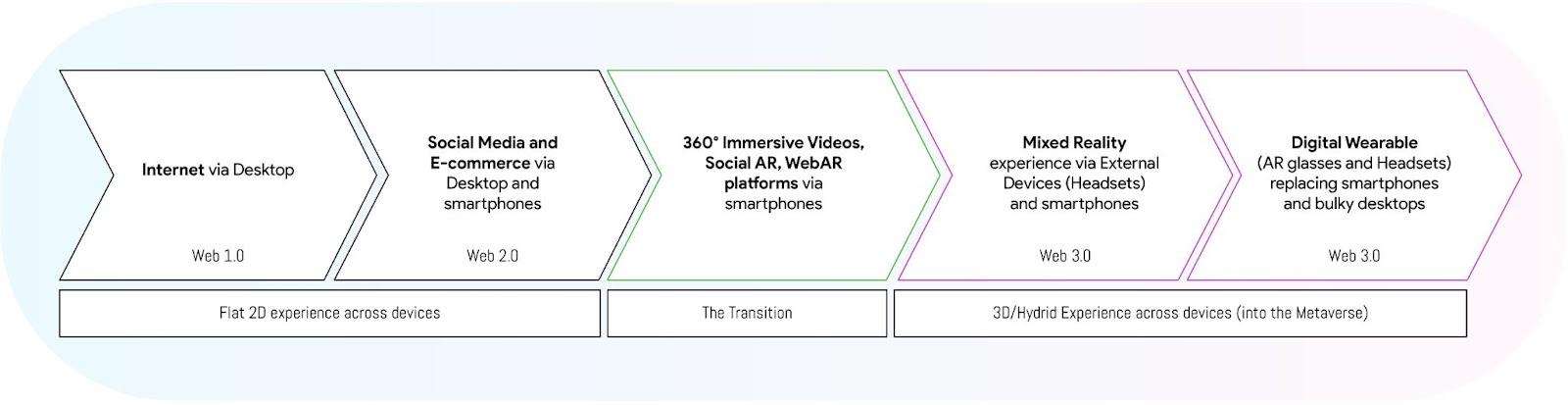
                Let us first start with telling you about Evolution of User Experience in the Digital space. 

                A picture containing diagram Description automatically generated

                Link to above image

                We are currently in the Transition phase and slowly moving towards AR VR Wearables & Mixed Reality devices as an everyday utility. While your customer base is moving towards the Web 3.0 it’s important for your brand to jump on the wagon.

                What it means is you change your communication and your content to something more engaging, a lot more immersive and definitely more interactive, allowing two way communication

                At retail level, we can explore Interactive store facades, Virtual try-on, In-store engagement games, Interactive Visual Merchandise and Immersive in-store experiences.

                What is Augmented Reality?

                Augmented reality (AR) is overlaying visual, auditory, or other sensory information onto the real world to enhance one’s experience. You don’t need fancy wearables like Heads sets or smart glasses to access it, rather it can be accessed through mobile apps or on your phone’s web browser. 

                Does AI come handy in building AR experiences?

                Yes, Use of Artificial Intelligence plugs computer intelligence into the entire user journey to make the experience seamless. Say, a chat bot or an AR bot to guide you through the entire journey will enhance the entire experience many fold.

                We integrate self-training AI modules into some experiences which understand Human behaviour and make the journey better.

                How Retail Businesses Are Using Augmented Reality?

                Augmented Reality allows brands to develop smart retail experiences that influence their customers’ perception or buying decisions.

                Retailers have traditionally relied on print advertising campaigns or other media to promote products. Being divided in the past, print, media and in-store marketing efforts are merged today into the comprehensive consumer experience via augmented reality.

                Retail AR spans from enhancing VM display windows to product Trial experience, from in-store engagement to Smart mirror installations and much more.

                Following the trend, augmented reality has emerged as an innovative tool that allows brands to interact with consumers on their mobile devices or on pre-installed set ups. Soon this experience will extend to smart glasses. 

                Below examples of AR speak for themselves:

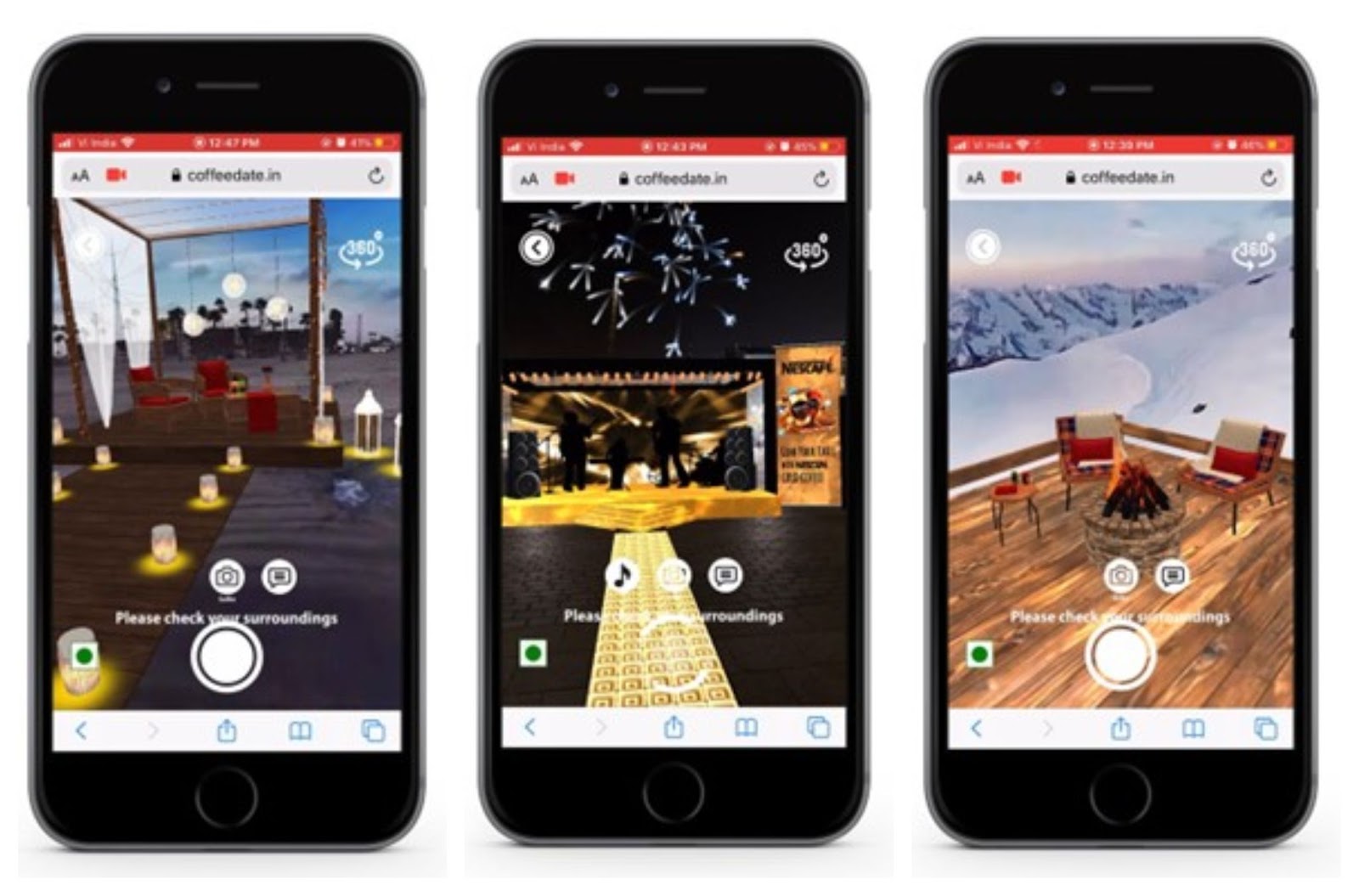
                Nescafe Virtual Date

                Link to above images

                A fabulous AR portal for the youngsters, where they can walk-in, explore, interact, and also share with loved ones. From writing the name of their loved one on a virtual canvas to watching a shooting star, this Valentine’s Day specific immersive activation was a grandeur. 

                Interesting Insight: This pack lead experience increased pack purchase and communicated appropriate content for the right TG

                Ponds Influencer campaign amplified by AR

                Link to above images

                A gamified Social-AR campaign on Ponds’ new product launch, where users had to move around the Ponds Serum with their face and pop the bubbles containing elements harmful to skin. Bursting bubbles increases “Glow meter” above the user, which when filled gratifies the user with a sparkling glowing skin.

                Interesting Insight: User Generated content saw a big jump during this campaign building the much needed hype a brand wants in the initial phase.

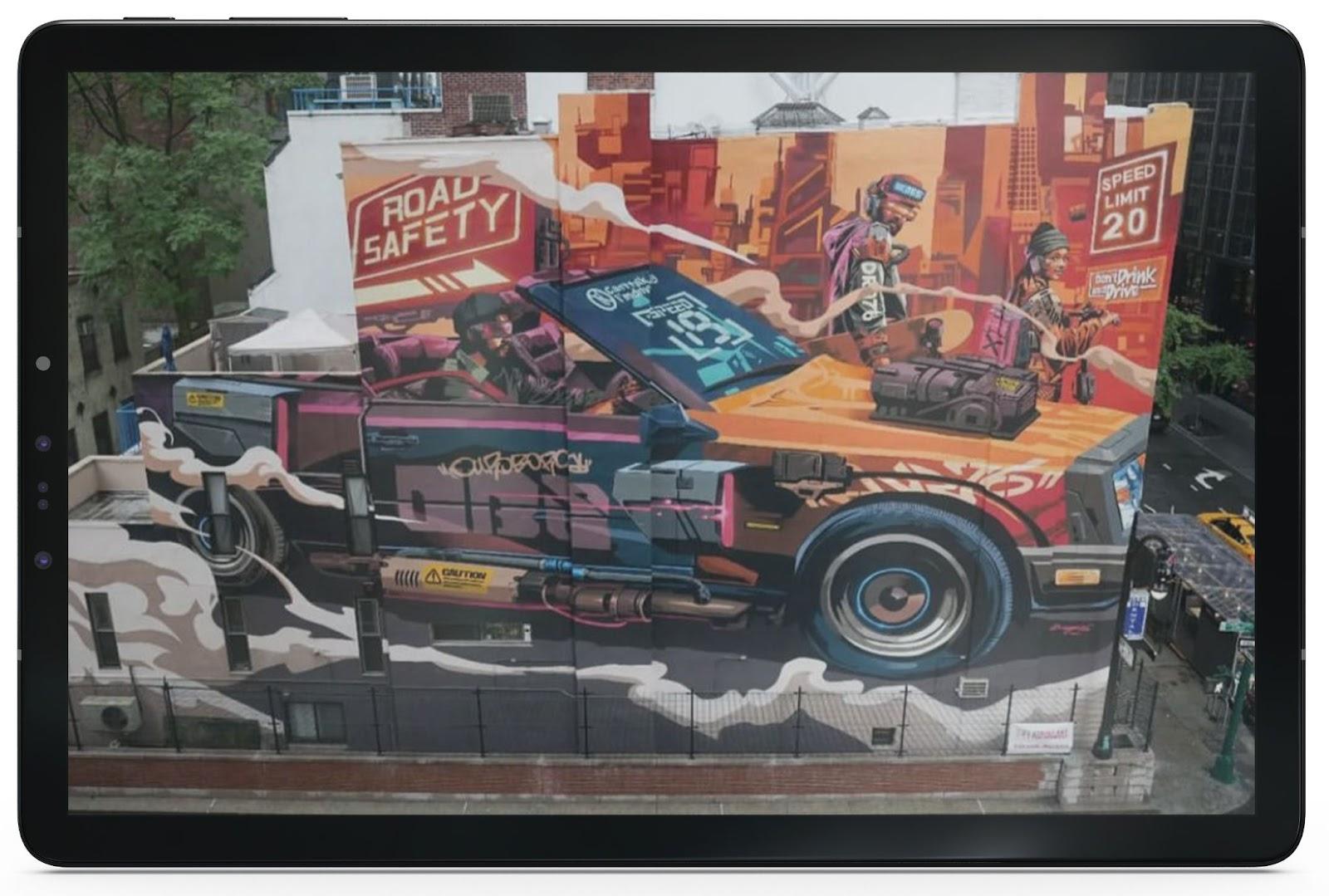
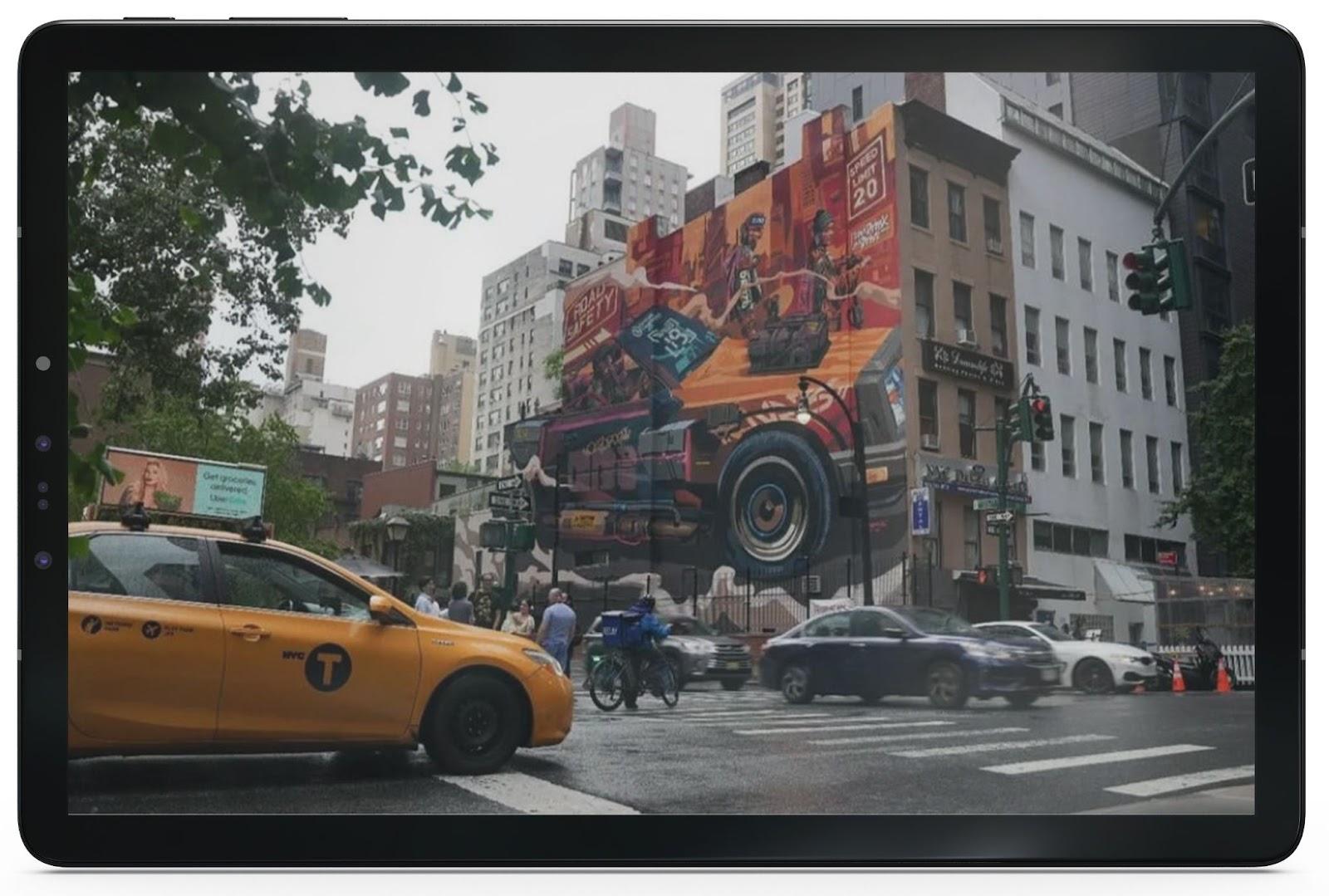
                Mural in Manhattan

                A picture containing text Description automatically generated

                A picture containing text, outdoor, street Description automatically generated

                Link to above images

                This Mural on Road Safety in Manhattan comes to life in AR when passers-by scan it via a mobile App, enabling Artists to add another creative layer to their work and elevate the message within the Art and communicate with the world. 

                Additional features: Location sensing, mapping the nearby area and taking a selfie with the art are additional features of this experience. 

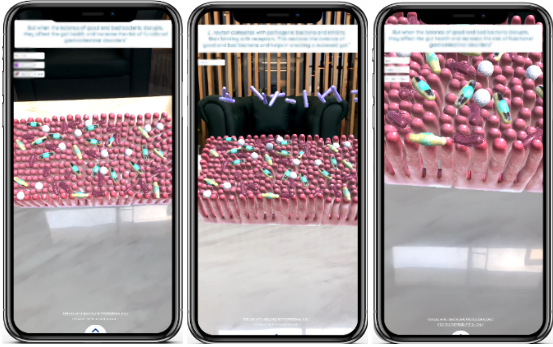
                1. Medical Team Internal Training for a pharmaceutical brand

                Link to above images

                This Micro-gastrointestinal simulation in AR has enabled a Pharma Brand to train their medical teams in research, product development and sales pitches. The Medical team could showcase the introduction of certain microbes and their effects in AR.

                What to expect in the coming years?

                With the mixed reality glasses recently launched in a big way in India, industries get more opportunities to share immersive & engaging content with its target customers

                By 2027 we will see a big jump in AR/VR/ MR/XR content floating around us in our day to day lives using our smartphones and other wearable devices.

                Impresario Tech build end-to-end brand campaigns focusing on Pre-purchase consideration or post purchase engagement, in store experience or on-pack brand communications with the use of Augmented Reality, Virtual Reality, Mixed reality, Artificial Intelligence & Machine Learning

                These immersive experiences can be built app-free (on web), deployed as special apps, rest on brands’ social media handles or installed physically in retail environments.

                Love to guide you through your brand’s transformation journey. 

                Write to us at Inquiry@impresariotech.io

                Most searched question

                What metaverse really means?

                How does the metaverse relate to the real world?

                Most searched queries

                Metaverse vs real life

                Metaverse technology

                Hello readers! Hope you liked what you read today. Click the like button at the bottom of this page and share insights with your colleagues and friends!

                For more such amazing content follow Digilah

                Categories
                Ad Tech

                My Digtal and Adtech Story

                Written by : Sophie Toth on Digilah (Tech Thought Leadership)

                What will this article be about? 

                Well, I will share my story, my philosophy, and thoughts in a nutshell. 

                My name is Sophie Toth, programmatic and AdTech professional form London, and I am one of the Co-founders of The Women In Programmatic Network. I also help various businesses in their digital transformation and navigating them in the fascinating programmatic and ad tech world to maximise their full potential. 

                We started our incredible journey with our members in 2020, and at that point, my tale. 

                Our digital world is so beautiful and evolving, but we didn’t focus on the users as a business in the last decade. Moreover, the industry became undoubtedly male-dominated.

                These two factors led us, with the other co-founder, to establish an independent and free network to address these gaps, work on solutions, and empower our members. 

                We essentially wanted to create a “safe place” for women where we treat everyone equally and keep everything confidential. 

                Digital is a contiguous personal journey and professional development for everyone, and the best is that none is alone in it anymore. The network has been expanding beyond the border, and many ladies expressed their interest in opening and maintaining regional hubs, advocating our legacy. 

                Being international and starting to work with people from all over the world, we have been learning ourselves as well. 

                This network means everything I’ve missed as a digital professional, from the digital community to events and professional opportunities.

                I didn’t anticipate this rapidly changing, sometimes demanding environment when I entered this industry more than a decade ago. 

                I needed to convince people about my knowledge and express myself in a different language. It was even more complex because programmatic advertising started gaining more attraction a little earlier when I started my career. 

                Talking about the unknown and presenting vision had their own challenges, but I never gave it up and never will. Programming is my profession; like a marriage, I will be here in good and bad times!

                But back to my journey. I am a person who always likes to think out of the box, explore new potentials and brainstorm on different topics. Without this practice, growth won’t happen, especially for people who work in our industry. 

                I always say that we need to be a bit of developer, a bit of economist, a bit of everything, but I know this is what I love, and honestly, you never can be bored here as it can be so intense and challenging than calm and relaxed. We combat with time when for example, troubleshooting a campaign. 

                Time is something we can’t turn back, and this is a skill to stay calm, focus on the solution in a difficult situation, and work under pressure. 

                Ad operation is something you love or leave. 

                On the other note, digital is fun with many events, meetings and fun, which creates a nice balance for everyone. Many friendships and marriages have happened, so we can’t complain about social life!

                When I think about the future and laser focus on the professional part, we have been facing many new regulations, measurements, and the new generation of digital consuming habits; we will settle our future soon. 

                I also believe in great talents who look forward to and proactively help us. 

                I always say: that Programmatic is a data-driven technology, and its potential is endless, pointing the way beyond what I call – traditional digital platforms. 

                Data and automisation (what essentially programmatic are) are living its revolution. 

                Actionable data became a currency and will gain more significance as well as programmatic execution will elevate the success of data but, of course, with innovation. 

                – I love innovative thinking and approach. 

                Finally, discuss relevant topics such as sustainability, user ID, privacy legislation, user experience and education. 

                Sustainability: Embracing it is already late, but we can still positively impact our world. Achievements can only happen together with a collaborative effort. I am passionate about being carbon-free or reducing it in digital media, and I would reward companies for it, plus show it on an ad as a label of its carbon score. 

                User ID and privacy: This is a sensitive topic, but I am happy that we must respect individual personal data and give a tool for everyone to take back control over it with international legislation such as GDPR or CCPA. 

                We have to organise this great approach without a doubt. An everyday user must understand: the why, the how, and the what this is for. As I see what we are facing, I am passionate about helping these everyday people understand this topic and adequately use the tool. 

                They have a tool without description, and it is so complex and new that even for us, who work in this industry, it is challenging to comprehend. So now we must be a bit solicitor to my previous list. 

                User: Based on the above, we as an industry must respect our users’ privacy and communicate with them proactively rather than making reactive amendments.

                We must lead this industry, and education is integral to it; if you remember what I wrote at the beginning of this article, you know how I talked about the unknown. Well, that was in the micro-environment, and now we must implement it in the macro-environment. 

                Success is in front of us, but we must work together and consider each other allies instead of competitors. 

                All these changes created an excellent opportunity for digital, and it will bring a much more transparent, trusted, and profitable future where the user will be in a place where they should have been a long time ago. 

                The market share will change, and with more equations and new technologies, we will soon have a more interlinked, controlled, and collaborative era. 

                I could continue the list with customisation, which is the outcome of the better value of the data and new creative assets. We will build them based on these findings of the information categorisation about the user. Unique, well-tailored user experiences and relevant information with the visitors’ right mindset will drive the world even more as people have less time to search for information.

                 – I call this practice: The mindset-based targeting.

                I arrived at my closing lines; therefore, I would like to let you go with four critical pillars: 

                Lean: With complete focus and attention, don’t be afraid to ask and discuss your questions openly. Always develop yourself and attend sessions, role related events.

                Listen: Absorb new knowledge, turn it to your advantage, be ready and interested in others’ opinions and thoughts, and be available for a good discussion.

                Lead: Give knowledge to the community, teach others, and encourage your younger colleagues or people who need your advice with passion but be humble always.

                 – Love: Work always towards your targets and love what you do; without love, you only have a job, and you should have a profession.

                Life is a circle, and it will balance everything eventually. 

                I hope you enjoyed the article, and if you would like to open a conversation with me, feel free to reach out. You can easily find me on LinkedIn or visit TWIPN website for more.

                Most searched question

                What are the 3 main types of digital ads?

                What is Adtech experience?

                Most searched queries

                Ad tech platforms

                Adtech tools

                Hello readers! Hope you liked what you read today. Click the like button at the bottom of this page and share insights with your colleagues and friends!

                For more such amazing content follow Digilah

                Categories
                Ad Tech

                Tired of Ads? Here’s what you need to know!

                Written by Rocío Rodríguez Hernández on Digilah (Tech Thought Leadership)

                In a time where users have more control over their ad choices than ever before, it’s no coincidence that an increasing number choose an ad-blocking solution. Currently, 42.7% of internet users worldwide report using an ad blocker. And the technology has expanded beyond the desktop, it is also available for mobile devices and tablets.

                Ad Blockers

                So, what is exactly an ad blocker and why is it so popular among users? An ad blocker is an application (plugins or browser extensions) that removes or alters advertising content on a webpage. This application removes certain kinds of ads, such as pop-ups, banner ads, and many other common forms of online advertisement. It allows the users to browse the web without being annoyed by disruptive ads that slow the page loading time.

                However, many ad-block users understand that publishers have the right to earn revenue on the content they publish. It’s often due to previous negative experiences with ads that users turn to ad-block technology. In fact, most internet users don’t mind ads as long as they are of good quality and don’t interfere with their experience.

                Cons for the user

                If the use of ad blockers continues to increase, website publishers will try new monetization models that might end up affecting the user. For example, we have already seen some publishers adopting the subscription-based model in which they start charging a fee to access the content they provide just like premium services do. It is an alarming situation as we might eventually lose open access to the content that we have today. On the brighter side, advertisers are now looking for ways to make ads less disturbing and more relevant thanks to new technologies like Unblockia´s solution.

                What is Unblockia?

                Unblockia is one of the leading companies in the Ad Tech sector that promotes a more transparent and respectful interaction between publishers, advertisers, and users while keeping the internet safe and free. It provides publishers and advertisers with the technology to deliver a better online experience to their users through Acceptable Ads.

                Acceptable Ads are ads that aren’t intrusive or annoying. They are respectful, don’t interfere with content, and are clearly labeled with the word “advertisement” or its equivalent. These ads are created with users in mind and are presented in noninvasive ad formats that they are happy to see. At the same time, these ads allow publishers to start recovering the revenue they were losing due to ad blockers.

                Delivering a good user experience while maintaining a profitable website is a big challenge for publishers. Without a doubt, new solutions like Unblockia are essential to build a strong and sustainable online future where the needs of users, publishers, and advertisers are met.

                Categories
                Ad Tech

                Shaping the way of digital advertising

                Written by Alex Martinez on Digilah (Tech Thought Leadership)

                The relationship that people have with the consumption of content in digital platforms is constantly changing.

                As an audience, our needs change, the way we consume information and what we expect from the online experience when we enter a website or an app. The truth is that as digital consumers we are increasingly demanding.

                All the parts that make up the digital world make a great effort to adapt to these demands.

                One of these is to provide a pleasant online experience. What factors can determine this? A well-worked UX (user experience), and that the user finds advertisements according to their interests.

                It is on this last point that we decided to work in order to contribute our technological value.

                Five years ago, together with Ricard Luquero and Pablo Salinas, we founded Adpone, an advertising technology company with a very clear mission: to shape the future of advertising with in-house technology to achieve high performance.

                We developed a technology that is little known to most people: a solution that places premium brand ads on websites from all over the world.

                This solution meets the needs of digital players so that they can continue to offer their audiences free and quality content.

                What are website owners and advertisers looking for? Let’s break it down.

                Publishers want to make the most out of their traffic.

                By monetizing advertising inventory

                The vast majority of websites generate income through advertising. This can be done in different ways, but it is usually done by placing banners or videos in the body of the website.

                By ensuring a great online experience

                Journalists and content creators make a great effort to generate original and quality content, and to position it organically in search engines. All this, to build trust in their audiences and make them want to return to the website.

                For this to be possible -and at the same time profitable- the advertising they show must be consistent with each content.

                Advertisers seek to make good impressions.

                By reaching their target audiences

                Every advertising campaign has at least two parts. The first is to design compelling creative content. The second, to implement this campaign by placing the ads on websites according to their content. This used to be done intuitively, now it is done through advertising technology.

                By placing their content in the right place

                Context matters. Let’s imagine that a user is reading a news story about the use of toxic fertilizers in soy production and suddenly a banner of a brand of soy-containing veggie burgers appears. Obviously the impression of the brand will not be positive.

                Agencies like Adpone are responsible for placing the ads in the right context.

                In short, providing a pleasant online experience, having a profitable website and providing adequate advertisements is possible thanks to adtech companies.

                At Adpone, we sum it up as #impressionsmatter.

                Categories
                Ad Tech

                An overview of Location-based Marketing

                Written by Christian Geissendoerfer – Digilah (Thought Leadership)

                Here we are in today’s world of Marketing 5.0, where technology and digital transformation play a significant part, it is essential that marketers leverage this to address customers’ needs and truly make an impact with their marketing strategies.

                Over the past decades, the older approach to marketing at the local level has undergone a paradigm shift. Businesses are all required to adjust and adapt new technologies to keep up with the dramatic shifts in consumer behaviours.

                Increasing brand awareness and position in the hearts of consumers has become extremely difficult, particularly in today’s fiercely competitive market.

                • How to increase revenue?
                • How to interact and attract customers to shop?
                • How to optimize marketing activities?

                Those are problems that keep every business owner up at night but have yet been solved.

                So how do businesses step up their marketing game? By integrating technological tactics to deliver their messages to target customers at a granular and personal level. In this article, we would like to discuss a new marketing strategy that is Location-based Marketing.

                How does it work?

                Location-based marketing is the technology of using location data that is shared from GPS, online transactions at shopping malls, grocery stores, or photos. Using this data, marketers will be able to reach their desired audiences with more relevant advertising and content. 

                Location-based marketing works great for any and all retailers, brick and mortars, restaurants, and small local businesses. It is the best fit with these industries because of customers’ physical footprint, which synchronizes with location data. Based on their actual previous customers, marketers can create an exact set of lookalike audiences for their strategy, thus retargeting and driving those customers to return and increase loyalty.

                Let’s take a deep dive into the reasons to use Location-based marketing.

                Attract more customers and increase engagement

                Location-based marketing can help attract more customers by bringing a business to the users at a time when they are interested in purchasing that business’s product/service. For example, there is a gym and its customers are people who live in that area. What they can do is to create ads on Facebook and limit the range to people in this area, which increases the potential customers for their services.

                Build trust relationship between your target audience and your business

                When selecting a target in a specific location, you can include in the advertising information about your business for the target based on the specific characteristics they represent in that area. The content should be relevant and help them feel more connected to your business. From there, nurture their beliefs with your business.

                Increase profits from Active Marketing

                The ultimate goal of the business is to increase sales and profits through marketing activities. Collecting, analysing, and using location data can help businesses entice more people to participate in promotions, helping to optimize marketing.

                To conclude marketers love location-based marketing because it allows them to provide the users with relevant and personalized offers and messages. “Factual reports that “84% of marketers currently use location data in their marketing and ad campaigns, and 94% plan to in the future.” Hence like with any technology the key with location-based marketing, is to test, measure and refine. 

                At YOOSE, we combine cutting edge technology with deep expertise, experience and passion to help global brands and advertisers capture the opportunities of this fast-paced, ever-changing world of mobile advertising. Our location-based marketing solution is tailored to deliver the most impactful campaigns and ensure the best ROI for our customers.