Digilah

Categories
Web 3.0 Tech Edu Tech

BLOCKCHAIN AND WEB3: A NEW ERA FOR LIBRARIES

Written by Alison Alexander on Digilah (Tech Thought Leadership).

An analysis of how blockchain and Web3 technologies can revolutionize library services and operations.

As a thought leader in enhancing public services through adoption of the evolving technology of Web3 tools, Blockchain, AI, Metaverse, and Crypto.

Libraries at the Forefront of Technological Adoption

Today I thought I would write about a specific local government resource that all politicians, community members feel passionate about – especially when the point is raised about potential closure to save money.

The community resource I am referring to is the Library

Blockchain and Web3: A New Era for Libraries

I believe that the integration of blockchain and Web3 technologies offers a tantalizing glimpse into a future where libraries are more accessible, secure, and democratically managed than ever before.

So a few thoughts on how the new technologies could transform our beloved public libraries.

Decentralized Access to Information – imagine a library system where access to information is not governed by a single authority but distributed across a network, ensuring democratic access to even the rarest texts.

Blockchain can make this a reality, providing equitable access to all, a step forward in democratizing knowledge.

Digital Identity and Privacy – in our data-sensitive world, blockchain can reassure library users that their personal information remains secure and private.

By creating secure digital identities, libraries can offer a wide range of services without compromising user privacy.

Enhanced Cataloguing and Metadata Management – Blockchain’s ability to maintain tamper-proof and up-to-date records can revolutionize how libraries catalogue their resources.

This means more efficient resource management and easier discovery for users, streamlining what has traditionally been a complex process.

Digital Asset Management – the transparent, immutable nature of blockchain is perfect for managing digital assets.

It ensures that digital books and resources are tracked effectively, respecting digital rights, and ensuring fair compensation for creators.

Smart Contracts for Streamlined Operations – from issuing library cards to managing book loans, smart contracts can automate and simplify library operations.

These contracts, embedded with the terms of agreements, can significantly reduce administrative burdens, allowing libraries to focus more on service and less on paperwork.

Conclusion: Embracing Change for Community Empowerment

Community Engagement through Tokenization – Blockchain can also foster a more engaged community. By rewarding contributions like book reviews or workshop hosting with tokens, libraries can encourage active participation, creating a vibrant, collaborative environment.

Preservation of History – for historical and rare documents, blockchain offers an unprecedented preservation tool. By storing detailed information on a blockchain, libraries can maintain a permanent record of these documents, safeguarding our history for future generations.

Global Collaboration – blockchain facilitates unprecedented global collaboration. UK libraries could partner with international institutions, sharing resources and information more efficiently, and greatly expanding the resources available to patrons worldwide.

Education on Cutting-Edge Technologies – finally libraries have always been pillars of learning. Wouldn’t it be great to see them host workshops on blockchain and Web3 technologies, they can continue this legacy, helping to bridge the digital divide and bringing these advanced technologies to the forefront of public education.

I really think the potential of blockchain and Web3 in transforming UK public libraries is immense. 

I don’t think it is just about keeping pace with technological advancements but about reimagining what libraries can be in the 21st century: more inclusive, more accessible, and more integrated into the digital fabric of our society.

This article is not about revolutionize libraries for the sake of innovation, but for the enrichment of our communities and the preservation of our collective knowledge.

Most searched questions

What is block chain?

What is web3?

Most searched queries

Block chain

Web3

Education and Web3

Hello readers! Hope you liked what you read today. Click the like button at the bottom of this page and share insights with your colleagues and friends!

For more such amazing thought leadership articles on technology follow Digilah people.

Categories
Ad Tech

Tackling the attention deficit, one impression at a time

Written by Hazel Broadley on Digilah (Tech Thought Leadership).

As consumers continue to be bombarded with up to 10,000 ads per day, the fight to gain real human attention has never been so rife. 

But as this figure rises – while attention spans remain the same – the chance of an ad being seen inevitably diminishes.

This results in what we call the attention deficit – something the ad industry is striving to overcome.  

But how do we begin to measure true attention, let alone improve it?

Combining viewability with attention

For years, the focus has been on standardizing metrics around how much of an ad is visible on screen and for how long, i.e., viewability. And this is still important, because after all, you can’t engage with an ad if you can’t see it.

But with the realization that ‘viewable’ does not equal ‘viewed’ (almost 35% of all programmatic display ads are ignored), it’s become clear that viewability metrics alone are not enough.

They are more like ‘hygiene’ metrics rather than predictors of quality. And that’s why we need to bolster this campaign insight with attention data. 

Steps to leveraging attention

As Rob Hall, CEO at Playground xyz explains, there are generally four steps to leveraging attention. First, you need solid research – from your own campaign data but also learnings from other brands who have tested the impact of different ad formats, content types, devices, channels or targeting strategies on attention metrics.

Second, once you’ve gathered this, you can use it to enhance your channel planning, by creating and scheduling campaigns that are predicted to deliver the best performance. 

Third comes the task of actually measuring attention, by tracking key attention metrics such as attention time, hover rate and touch rate on a mobile device, plus more traditional performance metrics such as CTR, bounce rate and conversion rate.

And finally, to have the best chance of engaging your audience in the long term, you need to be able to optimize in real time according to what’s working and what’s not. 

This kind of dynamic creative optimization (DCO), focused on attention, will be a key driver of campaign performance over the coming years. 

Using data across TV, desktop, tablet and mobile, we can measure a whole range of attention metrics. But perhaps the most prevalent is Attention Time.

Attention Time – the new metric in town

Attention Time is important in any campaign because it measures how long a user is physically eyeballing the ad.

Once you’ve measured this, you can then look at a host of other user activities, such as clicks, cursor position, touch rate, scroll rate and depth, audio on/off, volume etc. 

Measuring attention with eye-tracking data

As Lumen Research’s MD Mike Follett suggests, eye tracking data, used at scale across different channels, shows that “when users do look at an ad, it tends to perform really well”.

There are a number of attention technology partners on the market including Lumen, Playground xyz, Amplified Intelligence and Adelaide, that can help marketers determine true attention through two main types of eye-tracking measurement: proxy-based and gaze-based. 

When testing creative or context, gaze-based (or eye-gaze) metrics are generally thought to be a more accurate method than proxy-based metrics because they demonstrate that a user has actually paid attention to an ad. 

This data comes from vast opt-in panels of consumers allowing eye-tracking cameras to follow the path of their eyes across the screen as they consume the open web. 

By combining this with the other user activities above, you can get more granular with each impression, and optimise the ad creative or format more effectively.

Now is the time to tackle attention

When looking for an attention partner, be sure to ask them how they define attention (e.g. do they include all user actions?), what kind of eye-tracking they use (gaze-based or proxy-based data, or (preferably) both?), and how long they will apply optimization to ensure the most accurate measurement.

As the range of attention metrics grows, so too does the need for industry standardization of these metrics. 

But for now, there’s no time to waste in experimenting and A/B testing with different creatives and formats.

This way, you can get ahead of the curve before attention-first campaign strategies become mainstream and make every impression count. 

To read more from Hazel and her team, head to Lexical Llama

 Most searched questions

What is meant by attention deficit in advertising?

How do you tackle the attention deficit problem?

Most searched queries

Viewability

Attention deficit

Engagement

Hello readers! Hope you liked what you read today. Click the like button at the bottom of this page and share insights with your colleagues and friends!

For more such amazing thought leadership articles on technology follow Digilah people.

Categories
Mar Tech

Transforming the marketing function with technology

Written by Rena Tan on Digilah (Tech Thought Leadership)

The world of work has undergone a remarkable transformation in recent years, driven by the relentless march of digital and technological advancements. 

In the Marketing and Communications field, we have seen how the adoption of technological and digital tools have similarly caused a seismic shift in the way we work.

Our marketing and digital tech stack now cuts across various marketing and communications disciplines, ranging from content development, SEO, lead generation, media monitoring and database, inbound marketing, right through to project management and customer experience.

This article will highlight some of these game-changing tools that have completely enabled me and my team at Randstad Singapore to work better – and more efficiently.

Engaging and qualifying prospects with conversational AI chatbots

The digital revolution has upended traditional work paradigms, and this transformation has been particularly pronounced in my line of work.

One of the most significant changes has been the way businesses interact with their customers. With the advent of chatbots like Drift, our company’s website has become more than just a static online presence.

Drift, a sophisticated AI-powered chatbot, allows us to engage with website visitors in real-time, delivering personalised experiences, answering queries, and providing assistance 24/7. 

With the ability to deploy various playbooks based on web visitors behaviours and personas, our AI chatbot can speed up sales cycles by engaging prospects with valuable, real-time conversations that lead to opportunities.

This has not only improved customer satisfaction but has also generated leads and conversions that were previously untapped.

With A/B testing, we were able to find out that almost 50% of our web visitors (potential customers) prefer to chat with the bot than fill up a query form, which led to us dropping all query forms from our website.

This significantly improves user engagement and experience – which in turn resulted in more visitors converting to actual marketing and sales qualified leads.

Bridging the gap between sales and marketing

Another area where technology has revolutionised my work is email marketing. One of the main gripes marketing leaders have with their sales teams is the lack of follow ups for the leads that have been handed over from Marketing to Sales.

The introduction of AI-assisted email marketing tools, such as 6sense, has been truly pivotal in bridging this gap between sales and marketing. It brings lead conversion to a whole new level.

6sense AI assistant is programmed to understand intent, which allows it to determine if a lead has expressed interest and choose the right responses. 

Depending on how the campaign playbooks are being deployed, this email bot can understand specific customer requests, personalise email responses and follow ups, and engage with leads automatically.

It helps marketers like me automate conversations with leads and lead nurturing, converting them into sales meetings, and ensuring that no potential customer falls through the cracks.

Every single lead is being followed up on, and handed off to the sales guys once the intent matches the objectives we have set for the bot (e.g book a meeting).

The sales guys are now getting super-hot leads that have already been nurtured and qualified by the bot, which means they can now move in and take over clients who are ready to meet or buy.

The result has been a significant increase in conversion rates and revenue, improved customer experience, and a more streamlined email marketing process – cutting down the time the sales guys have to spend on call calling and lead chasing. 

In addition, the sales guys can now spend more time delivering better and more personalised services to leads that are worth their time.

Effortless content creation with Jasper

Content creation is a crucial aspect of me and my team’s work, and here too, technology has made a significant impact. Jasper, an AI-powered content writing tool, has been instrumental in simplifying the content creation process. 

It can generate high-quality and optimised articles, blog posts, and reports with remarkable speed and accuracy.

Besides articles and blogs, my team also uses Jasper to craft responses for Google reviews, generate headlines for Google or LinkedIn ads, suggest video captions for Youtube and Tiktok, write press releases, summarise email content into persuasive bullet points, generate landing page content and create polls, just to name a few.

While we still provide the creative input and direction, Jasper takes care of the heavy lifting, saving us valuable time and energy in the creation of content and other relevant assets.

The quality of the content produced by Jasper is so impressive that it has become an indispensable tool in our arsenal.

SEO optimization made easy with Frase.io

Effective SEO (Search Engine Optimization) is vital for ensuring our online content reaches a wider audience, more so in this answer-driven economy. Frase.io is a next-gen content and SEO optimisation tool powered by AI, and claims to be the fastest and easiest way to create content that ranks on Google.

This tool not only helps us to generate content that incorporates facts and background research from the top search results of any query, it also provides keyword suggestions, analyses competitor content and offers recommendations for optimising our content to rank higher in search engine results. 

Definitely a real time and life-saver!

Growing share of voice with Telum Media

In the ever-evolving landscape of public relations and media outreach, staying connected with journalists, influencers, and media professionals is paramount for building brand awareness and share of voice. 

This is where Telum Media, a cutting-edge media intelligence platform, has made a significant impact on our communications work. 

Telum Media is the most comprehensive, earned-media database in the Asia Pacific region – a live platform connecting PR and communications professionals with media contacts across the globe.

This online media platform provides real-time updates and alerts, allowing us to track media mentions, industry developments, media requests, editorial opportunities and journalist movements. 

Its user-friendly interface enables us to craft personalised pitches and communications tailored to the interests and preferences of specific media contacts and journalists.

This level of customisation not only increases the likelihood of securing media coverage but also fosters stronger relationships with journalists and influencers who appreciate relevant and thoughtful outreach.

Using this tool has empowered our team with timely insights, ensuring we are always in the know and allowing us to capitalise on relevant news and opportunities to enhance our media outreach strategies and grow our share of voice.

Challenges in Embracing Digital and Tech Tools

While the benefits of adopting digital and tech tools in the workplace are undeniable, there are also challenges that come with their implementation and use. Some of the common challenges include:

Learning Curve: Many digital and tech tools require a learning curve, and employees may initially find it challenging to adapt to new software or platforms. 

Training and support are essential to help employees overcome this hurdle.

Integration: Integrating various tools and ensuring they work seamlessly together can be complex. 

Compatibility issues and data synchronisation problems can arise, leading to inefficiencies.

Data Security: With the increasing use of digital and SAAS tools, data security is a paramount concern. 

Protecting sensitive information from cyber threats and breaches requires constant vigilance and investment in cybersecurity measures.

Costs: Implementing and maintaining digital and tech solutions can be expensive. 

Companies need to carefully assess the return on investment and budget accordingly.

Human Resistance: Some employees may resist the adoption of technology due to fear of job displacement or concerns about their job security. 

Overcoming this resistance requires effective communication and reassurance.

Conclusion: The Power of Integration

In conclusion, my journey with digital and tech tools over the past five years has been nothing short of transformative.

These tools, including Drift, 6sense, Jasper, Frase.io and Telum Media, have not only accelerated our work, but also significantly improved its quality and efficiency.

These tools have enabled us to connect with prospects, clients and talent, automate marketing processes, create content effortlessly, and optimise SEO strategies. 

However, it’s crucial to acknowledge and address the challenges that come with embracing these tools.

The learning curve, integration complexities, data security concerns, costs, and human resistance are all valid issues that need to be considered and tackled proactively.

As leaders in our respective fields, we must recognize that the integration of technology with work processes is not a choice but a necessity in today’s fast-paced digital world.

It’s imperative to invest in the right tools and provide the necessary training and support to our teams.

Embracing digital and tech solutions can significantly improve efficiencies and productivity, ultimately driving greater performance in our ever-evolving work environments. 

By doing so, we position ourselves and our organizations for continued growth and success in the digital age.

The future belongs to those who are willing to adapt and harness the power of technology to work smarter and better.

“What new technology does is create new opportunities to do a job that customers want done.” – Tim O’Reilly

Most asked questions

How AI can be used in improving marketing?

What is integrated marketing communications?

Most asked queries

Email marketing?

Jasper

Hello readers! Hope you liked what you read today. Click the like button at the bottom of this page and share insights with your colleagues and  friends!

For more such amazing thought leadership articles on technology follow Digilah People 

Categories
AI Tech

AI Agent Workforce

Written by Brian Ho on Digilah (Tech Thought Leadership).

How AI Can Transform Jobs and Enable Agents to Work together with humans

In the ever-evolving landscape of the modern workforce, artificial intelligence (AI) is emerging as a transformative force. Within this realm, AI agents are assuming increasingly pivotal roles, revolutionizing industries by automating tasks, enhancing efficiency, and facilitating smarter decision-making. As AI continues to advance, the collaborative synergy of AI agents promises to reshape the workforce as we know it.

Understanding AI Agents and the Workforce Transformation

An AI agent is not just another piece of software; it is a dynamic program capable of learning and adapting to its surroundings with a singular objective: achieving goals.

These agents can automate mundane tasks, craft creative content, and provide comprehensive and insightful responses to complex queries, ultimately making them indispensable in various sectors.

The potential of AI agents to transform the workforce is vast and multifaceted. Here are some keyways in which AI agents are reshaping the working landscape:

  • Automation of Routine Tasks: By taking over repetitive and time-consuming tasks, AI agents free up human workers to focus on more intricate and creative aspects of their jobs.
  • Enhanced Efficiency: AI agents streamline processes and minimize errors, thereby significantly improving operational efficiency across industries.
  • Informed Decision-Making: With the ability to analyse vast datasets and identify patterns that often elude human perception, AI agents empower organizations to make more informed decisions.
  • Augmentation of Human Capabilities: AI agents complement human workers by offering insights and recommendations, elevating the quality of decision-making processes.
  • Creation of New Jobs and Industries: The emergence of AI agents also leads to the creation of entirely new job categories and industries that were previously unimaginable.

Collaborative Potential of AI Agents

AI agents are not solitary entities; they can work together seamlessly to achieve common goals. Their collaborative capabilities include:

  • Task Collaboration: AI agents can collaborate on various tasks, combining their strengths to achieve a shared objective efficiently.
  • Knowledge Sharing: These agents can exchange information and knowledge to improve their performance, effectively learning from one another.
  • Action Coordination: AI agents can coordinate their actions to prevent conflicts and ensure all agents are working cohesively towards the same overarching goal. 

Introducing Multi-Agent Frameworks: MetaGPT and ChatDev

In the realm of collaborative AI agents, two standout frameworks take the spotlight: MetaGPT and ChatDev.

  • MetaGPT: A formidable large language model, MetaGPT boasts the ability to generate text, perform language translations, create diverse types of creative content, and offer informative responses to questions. Additionally, it serves as an excellent tool for training AI agents for specific tasks.

  • ChatDev: This versatile platform empowers users to create and manage AI agents, providing an array of essential tools and resources. Features include a natural language processing engine, a comprehensive knowledge base, and a dynamic dialog engine.

Real-World Examples of AI Agent Workforces

The integration of AI agent workforces into various industries is already evident, with applications including:

  • Customer Service: AI agents are deployed in industries such as banking, insurance, and retail, offering 24/7 support by answering customer queries, resolving issues, and providing valuable assistance.

  • Sales: Sales teams benefit from AI agents that generate leads, qualify prospects, schedule appointments, and provide customer support, ultimately boosting sales effectiveness.

  • Marketing: AI agents are invaluable in creating and managing marketing campaigns, generating content, audience targeting, and tracking campaign performance for optimization.
  • Software Development: In the realm of software development, AI agents automate tasks like code generation, testing, and deployment while aiding developers in decision-making processes.

  • Manufacturing: AI agents play pivotal roles in the manufacturing sector, automating quality control checks, production planning, and supply chain optimization.

A New Era of Workforce Transformation

AI agent workforces are poised to revolutionize the way we work, redefining efficiency, productivity, and profitability across industries. The transformative potential of AI agents is boundless, creating novel opportunities and optimizing existing processes.

As we continue to explore the possibilities of these collaborative AI agents, we enter a new era where human and artificial intelligence work hand in hand, forging a future defined by innovation and efficiency.

Examples of AI Agents Working Together

AI agents working in tandem open the door to countless possibilities. Here are some illustrative scenarios:

  • Onboarding Automation: An AI agent can guide new employees through onboarding processes, acquainting them with company policies, answering questions, and ensuring a seamless transition into their roles.

  • Continuous Customer Support: AI agents can provide round-the-clock customer service support, offering assistance and resolving issues promptly.

  • Sales Team Synergy: AI agents can identify potential leads, qualify them, and seamlessly schedule appointments, augmenting the efforts of sales teams.

  • Marketing Campaign Management: Collaborative AI agents can generate content, target audiences, and simultaneously monitor multiple marketing campaigns for performance optimization.
  • Software Development Dream Team: In software development, AI agents can collaborate on code generation, testing, and deployment, ensuring smoother project execution.

  • Manufacturing Process Optimization: AI agents working together can orchestrate quality control checks, plan production schedules, and fine-tune supply chain logistics, enhancing manufacturing efficiency.

The possibilities for AI agents working collaboratively are virtually limitless, ushering in an era of unparalleled productivity and innovation in the workforce.

Most searched questions

What is MetaGPT?

What is ChatDev?

Most searched queries

MetaGPT

ChatDev

Hello readers! Hope you liked what you read today. Click the like button at the bottom of this page and share insights with your colleagues and friends!

For more such amazing thought leadership articles on technology follow Digilah people.

Categories
Mar Tech Ad Tech

How MarTech and AdTech have transformed the Market

Written by Sumesh Raghwani on Digilah (Tech Thought Leadership)

However, a majority of people don’t understand the major differences between the two. While they are both closely related to each other, they perform very different functions.

So, we can deep dive into the topics to understand them better:

What is MarTech?

MarTech refers to “Marketing Technology”

The technologies that are used to execute a comprehensive digital marketing plan.

All the technology used from the point of lead capture throughout the sales funnel until the conversion is considered MarTech.

MarTech spending is only going to rise in the future.

There are more than 8,000 tools that populate the MarTech landscape, and this number is only expected to grow in the future.

That’s not all 60% of marketing experts have stated that they expect MarTech to grow even more soon.

This can include the following technology tools:

  • Email marketing tools
  • Lead magnets
  • Digital marketing analytics tools
  • Customer data platforms
  • Social media management tools
  • Marketing automation programs
  • Content marketing tools
  • CRM software
  • Web analytics tools

MarTech-specific tools are designed to help businesses understand their audience in a better manner. For example, if you publish a blog on your platform, you can use an analytics tool to determine the number of conversions that it generates.

Real-life examples of MarTech:

  • Mixpanel is a commonly used business analytics tool that tracks user interactions with a product. It allows users to analyze data such as sign-ups and conversions and help them track the effectiveness of different marketing campaigns.
  • Buffer is a social media management tool that allows businesses to offer better support to their customers through social media channels. It is a marketing tool that helps businesses understand the needs of their customers better and tailor their products accordingly.

What is AdTech?

AdTech refers to “Advertising Technology”

The technologies that allow for programmatic ad buying and digital spending.

Tech advertising primarily focuses on demand-side and supply-side platforms and ad exchanges.

With the help of advertising technology, companies can focus on a targeted audience.

This helps save a great deal of money and improves returns on advertising spend. The cost of consumer acquisition also dips sharply.

Needless to say, AdTech can help companies maximize the returns from their advertising spending by focusing on audiences that are interested in buying their product.

AdTech primarily measures the effectiveness of every campaign. Ultimately, this helps marketers get the best bang for their money.

Examples of AdTech include:

  • Data management platforms
  • Ad exchanges
  • Ad servers
  • Programmatic advertising tools
  • Tag managers

The Adobe Advertising Cloud is an example of a tool that’s used commonly in AdTech.

The two major platforms that play an integral role in AdTech are demand-side platforms and supply-side platforms.

So, what are Demand-side platforms and supply-side platforms?

Demand-Side Platforms

A demand-side platform is a digital platform, or a software program used by advertisers to purchase ads from a centralized marketplace.

Google Ads is a primary example of a demand-side platform.

Why they are important: Demand-side platforms remove the human element from the equation, thus making the process cheaper and much more efficient.

Supply-Side Platforms

A supply-side platform is a software program that allows publishers to sell their ad inventory.

The underlying technology beneath demand-side and supply-side platforms is the same. Whereas advertisers use demand-side platforms to purchase cheap ads, supply-side platforms use supply-side platforms to maximize the price for their impressions.

Common examples of supply-side platforms include Google, OpenX, AppNexus, and AOL.

Why Are They Important: Publishers actively avoid negotiating with human ad buyers for their media prices. Instead, they prefer using technology to buy ads more efficiently. A supply-side platform helps maintain a balance and allows publishers to effectively manage their relationships with several buyers.

Popular Examples of AdTech:

  1. Tapad is a simple tracking tool that assigns a unique digital ID to each user and then tracks their activity on multiple devices.
  2. Undertone helps its customers design advertising campaigns over multiple platforms. The company focuses primarily on mobile advertising.

AdTech primarily focuses on the use of programs and tools that can be used to analyze buyer behavior, evaluate the performance of ad campaigns, and improve them.

Conclusion:

So, now we have learned both MarTech and AdTech technology tools play a crucial role in the business.

Businesses are increasingly looking at different ways by which they can employ both AdTech and MarTech to segment their audiences in a better manner, which ultimately results in better value for the business.

Synergistic gains between the two will only help businesses in the long run.

In the future, we will probably see MarTech, a mixture of both MarTech and AdTech platforms deployed together to create a bigger impact on advertising and marketing techniques.

Most asked questions

What is the difference between AdTech and MarTech?

What software tools can be used to track user records in sales?

Most searched queries

Advertising

Marketing

Hello readers! Hope you liked what you read today. Click the like button at the bottom of this page and share insights with your colleagues and friends!

For more such amazing content follow Digilah People

Categories
HR Tech Digi Tech

The technological and digital evolution of a remote business 

Written by Kiran Bhatia Tandon on Digilah (Tech Thought Leadership)

As the world becomes more connected and technology continues to advance, remote work has become increasingly popular among businesses. 

The demand for digital and technological tools has increased more than ever as a result of the COVID-19 pandemic, which forced many businesses to move to remote work. 

A remote company’s digital and technological journey can be both exciting and difficult. Companies have had to modify their strategies and tools to meet the demands of a distributed workforce as a result of technological advancements and the rise of remote work. 

The need for constant adaptation to new technologies and tools was one of the biggest obstacles the company faced on its digital and tech journey. They recognized that technology is constantly evolving, and they needed to be agile and adaptable in order to stay ahead of the curve. 

This meant investing in ongoing training and development for their employees to ensure that they had the skills and knowledge needed to work with the latest tools and technologies.

Here are some common strategies adopted by companies to manage a distributed workforce:

1. Use of collaboration tools

One of the most difficult aspects of managing a distributed workforce is ensuring effective communication and collaboration among team members who may work in different locations and time zones. 

To get around this problem, companies used a variety of strategies and tools to improve communication and collaboration, such as Zoom, Microsoft Teams, and Slack for video conferencing, instant messaging, and project management. 

2. Regular check-ins

Regular check-ins with remote employees can help to ensure that they are on track and that any issues are addressed in a timely manner. These can be done with the use of collaboration tools

3. Clearly defined goals and expectations

Clear goals and expectations can help remote employees stay focused and productive. These goals should be measurable and communicated effectively.  These can be defined using technology in a variety of ways. Here are a few examples: 

  • Project management software: Project management software, such as Asana or Trello, clickup can be used to create tasks and assign them to team members. This allows for clear expectations and deadlines to be set, and progress to be tracked in real-time.
  • Performance tracking tools: Performance tracking tools, such as OKRs or KPIs, can be used to set measurable goals and track progress towards achieving them. This provides a clear framework for employees to work toward specific outcomes.
  • Communication tools: As stated above, tools, such as Slack or Microsoft Teams, can be used to facilitate regular check-ins and goal-setting conversations between managers and team members. This helps to ensure that goals and expectations are clearly understood and can be adjusted as needed.
  • Learning management systems: Learning management systems, such as Udemy or Coursera for Business, can be used to provide employees with training and development opportunities that align with organizational goals and expectations.

4. Flexible work schedules

Companies can offer flexible work schedules to their remote employees to help them balance their work and personal lives.

5. Performance-based assessments

Performance-based assessments can help managers evaluate the productivity of remote employees and provide feedback to help them improve.

6. Regular team meetings

Regular team meetings can help remote employees feel connected to their team and can improve communication and collaboration.

7. Virtual team-building activities:

Virtual team-building activities such as online games and virtual happy hours using collaboration tools can help build a sense of camaraderie and boost morale among remote employees.

8. Training and development

Companies can provide training and development opportunities to help remote employees improve their skills and stay up-to-date with industry trends.

In addition to the above, companies had created well-defined policies and guidelines for remote work and provided employees with the necessary support and resources to ensure that they remained productive and engaged while working remotely.

Cybersecurity has become a top concern for remote companies, as remote workers often use their personal devices to access company data. To address this challenge, remote companies have had to implement robust cybersecurity measures, such as two-factor authentication, encryption, and virtual private networks (VPNs).

Companies need to be flexible and adaptable in their approach to managing a distributed workforce, and they should be willing to experiment with different strategies and tools to find what works best for their organization.

Overall, the company’s digital and tech journey is a critical part of their success as a remote company. By embracing technology and using it to their advantage, they will be able to overcome the challenges of remote work and build a thriving remote workplace that could compete with traditional brick-and-mortar companies. Their journey is a testament to the power of technology to transform businesses and create new opportunities for growth and success.

Hello readers! Hope you liked what you read today. Click the like button at the bottom of this page and share insights with your colleagues and friends!

For more such amazing content follow Digilah People

Most asked questions

How advancing technology affect remote business?

How remote employees cope with advancement in technology?


Categories
Art Tech AI Tech

Computers can now create art! But is it the same as human creations? 

Written by Science Centre Singapore on Digilah (Tech Thought Leadership)

For those of us mere mortals, aka not art inclined, we may think of art as the sole bastion of talented creative masters. These individuals epitomise the very best of human creativity. 

On the fundamental level, art is really not just limited to the masters, everyone of us can indulge in a spot of artistic creativity.

We’ve been using art as an intrinsic way of expressing ourselves; our emotions, and our knowledge to other people.

If we think of art in this way, it can be seen as a form of communication that is unique to us humans. However, recent events have shown that Artificial Intelligence (A.I.) has begun to intrude into the art scene. 

An example would be the painting, Edmond de Belamy that was sold for $432,500 – nearly 45 times its highest estimate. This begs us to question if A.I. has begun to eat into this realm that once belonged only to humans.

The present

Currently, A.I. hasn’t had too much influence over the art industry. With people still producing paintings and music albums, we can still believe that art is something that’s made by humans.

However, like the example above, we’re already starting to see signs of A.I. creating paintings. ‘Edmond de Belamy’ is an A.I.-generated painting by a Paris-based collective called Obvious.

Hugo Caselles-Dupré, a member of Obvious, said that “We found that portraits provided the best way to illustrate our point, which is that algorithms are able to emulate creativity”.

Just like Edmond de Belamy, A.I. is also taking its baby steps into the music industry. One example of this is a program called ‘OpenAI’. 

As Jon Porter from TheVerge says, “OpenAI’s MuseNet is a new online tool that uses A.I. to generate songs with as many as 10 different instruments”. 

Not only that, but it can create music in as many as 15 different styles, imitating classical composers like Mozart, contemporary artists like Lady Gaga, or genres like bluegrass or even video game music”. Soon enough, there’s likely to be A.I.-generated songs and art forms.

Now, the question here is – 

If artificial intelligence were to be able to emulate creativity, would that be beneficial or disadvantageous to us? 

Would artists still be able to create inspiring artworks? Would musicians still be able to create soothing pieces? 

Or would all these be taken away from us, and be dominated by A.I.?

We’re already over-reliant on technology in many parts of our lives, and that reliance on technology might rub off with the art scene, and lead us into losing the ability to differentiate human-created art and A.I.-created art.

We might also be wholly dependent on technology in the future to be creative. This might sound a bit far stretched, but it is definitely something that could happen.

AI and Machine Learning

With these questions in mind, we have to plan out the risks that we might take by letting A.I. into the art and music industries.

It might be like letting babies into a playground, or it might be like letting a pack of wolves into a herd of sheep. 

As of right now, A.I. definitely isn’t able to create art with the same quality as humans. 

They’re only able to create art from taking the data provided to them and piecing them together, making them seem unique, but in fact they are still replicated from human creativity.

This is because “art” is a complex thing. It’s not simple for A.I to just learn how to make art out of nowhere. Ken Weiner, a blogger on Scientific American, says that

“Even though the Cloudpainter machine (an artificially intelligent painting robot) has evolved over time to become a highly intelligent system capable of making creative decisions of its own accord, the final piece of work could only be described as a collaboration between human and machine”.

What this means is that with our current set of technologies, the artwork of any A.I still involves a human touch. But what about the future?

There is something called ‘machine learning’, and it is an application of artificial intelligence that provides the system with an ability to take in data and learn and improve from its past experiences and uses.

This is extremely important since machine learning could allow A.I. to create distinctive forms of art and music that may not even closely resemble the input data, opening the concepts of originality and creativity to A.I.-generated art and music.

The future

In the future, with the development of machine learning and A.I., the question is: Is this handmade, or is this made by A.I.?

A.I.-generated images already lurk around in our daily lives, and we might not even notice it until we look more closely. 

A.I.-generated faces, where they take 2 different photos and merge them together; or Snapchat filters, where they locate different spots on your face, such as your nose or your eyes, and put a mask on it, are both examples of A.I.-generated images and videos that have become part of our daily lives.

Sooner or later, A.I., along with the help of machine learning, will be able to adapt to our current world and will eventually create everything for us.

Art would be made by taking previous paintings in order to make a new one, while music would be made by taking previous songs of a specific genre and re-produce beats, patterns, and rhythms all on its own.

A.I. might even emulate human creativity and produce never-before-seen pieces of art.

It feels like we are on the verge of an A.I. revolution in the art and music scene. Just like how jobs were changed, for better or worse during the industrial revolution, A.I. may change the way we view and appreciate music. 

New, different art and music styles could be produced, styles of the past like Mozart’s music could be recreated, resurrected, revamped.

The question here is, in what way will A.I. change the art and music world, and how would we, being creatures able to emulate creativity and the people who gave life to these machines in the first place, deal with it?

Illustrations by Toh Bee Suan

Sources cited:

“Why Is Art so Important to Mankind?” Artist, artist-strange-work.com/why-is-art-so-important-to-mankind/.

“Is Artificial Intelligence Set to Become Art’s Next Medium?: Christie’s.” The First Piece of AI-Generated Art to Come to Auction | Christie’s, Christies, 12 Dec. 2018, www.christies.com/features/A-collaboration-between-two-artists-one-human-one-a-machine-9332-1.aspx.

Porter, Jon. “OpenAI’s MuseNet Generates AI Music at the Push of a Button.” The Verge, The Verge, 26 Apr. 2019, www.theverge.com/2019/4/26/18517803/openai-musenet-artificial-intelligence-ai-music-generation-lady-gaga-harry-potter-mozart.

Weiner, Ken. “Can AI Create True Art?” Scientific American Blog Network, Scientific American, 12 Nov. 2018, blogs.scientificamerican.com/observations/can-ai-create-true-art/.

Most searched queries

Can computers be more creative than humans?
What type of art can you create using the computer?

Most searched question

How does AI art work
Does AI art steal art

Hello readers! Hope you liked what you read today. Click the like button at the bottom of this page and share insights with your colleagues and friends!

For more such amazing content follow Digilah

Categories
Sustainability Tech

Eye on Science: Tech-ing Solar Power Generation To The Next Level

Written by Science Centre Singapore on Digilah (Tech Thought Leadership)

Reference image of Singapore’s largest solar farm

With the effects of climate change worsening by the day, scientists around the world are venturing into the world of renewables in search of a better alternative for producing clean energy.

Many countries are turning toward the use of solar energy as it is one of the cleanest and most sustainable forms of alternative energy.

For instance, Singapore has built one of the largest floating solar farms in the world to reduce its reliance on natural gas for the production of electricity. 

That being so, researchers have now extended their study of generating solar power not only from the Earth but also in space!

Reference image of a Solar Power Station in Space

The concept of capturing solar power from space and then transferring it to Earth was first introduced in the 1920s by a scientist named Konstantin Tsiolkovsky.

 Now, scientists are bringing this concept to reality by developing a new form of cutting-edge technology known as the space-based solar power station (SSP). An SSP works the same way as it does on Earth, except that it floats in space. 

The solar power station collects energy from the sun using large sheets of metal known as solar panels. Each solar panel is made up of combining multiple photovoltaic cells, also known as solar cells.

Solar cells are the key component in a solar panel that helps to create an electric current when it comes into contact with sunlight. For energy to be utilised on Earth in the form of electricity, solar panels in space have to transmit the collected solar energy back to earth through radio waves.

Why Build A Solar Power Station in Space?

Today, solar power plants can be found in many countries like India, China and the US. Each solar plant consists of millions of solar panels which can help generate electricity for as many as 200,000 homes.

 However, solar plants on Earth can only function during the day to produce energy, when there is sunlight. Their ability to effectively capture sunlight also depends on environmental factors like weather, cloud cover, air pollutants and dust. 

Unlike on Earth, solar panels in space can be directly exposed to more powerful sunlight at all times of the day. It is estimated that solar panels in space can generate up to 2,000 gigawatts of power constantly. 

This is nearly 40 times more energy than a solar panel would generate on Earth. With such potential, space-based solar stations can undoubtedly help offset the rate of carbon emissions produced through the burning of non-renewables like fossil fuels. 

Challenges to Building A Solar Power Station in Space

Although deemed more functional and effective, there are some challenges to successfully build and maintain a space-based solar power station.

Currently, one of the most significant issues is about finding a safe and suitable way to send the energy generated in space back to Earth for consumption. 

The main concern is that some of the energy will be lost during the travel, leaving only a small amount of solar energy that may reach Earth in the end.

Reference image of a football stadium

There are other challenges to building a solar power station in space, given that a single solar plant may be as huge as 1,400 football stadiums. 

To build something of this size, a large number of heavy solar panels will need to be taken into space using rockets. 

This will require countless rocket launches from Earth, which is expensive and harmful to the environment. On top of this, solar panels in space can be damaged by space debris or any floating objects. 

They may also degrade faster from being continuously exposed to extremely powerful radiation from the sun. 

Future of Solar Power Stations in Space

Despite the challenges, countries like China, the UK, the US, and Japan are already making huge strides in improving current technology and experimenting with building small solar power stations in space. 

For instance, the UK is planning to undertake a huge project to build a solar power station in space as part of the government’s Net Zero Innovation Portfolio, to achieve net zero energy consumption by 2050.

 Similarly, researchers from Japan and the US are working on developing high-efficiency solar cells that can help with the safe conversion and transmission of solar energy from space to Earth. 

With more developments, this groundbreaking invention of building solar power stations in space can revolutionise the future of renewables while helping to curb the effects of climate change on our planet. 

Reference Links Used: https://www.straitstimes.com/singapore/singapore-now-home-to-one-of-the-worlds-largest-floating-solar-farms

https://singularityhub.com/2022/03/18/a-solar-power-station-in-space-heres-how-it-would-work-and-its-potential-benefits/

Most searched questions

What is the future of solar technology?

What are some new technologies in the field of solar power?

Most searched queries

Commercial solar power plant

Commercial solar power plant cost

Hello readers! Hope you liked what you read today. Click the like button at the bottom of this page and share insights with your colleagues and friends!

For more such amazing content follow Digila

Categories
Digi Tech HR Tech

The hidden life-changing (and money-making) power of Change Management

Written by : Lata Hamilton on Digilah (Tech Thought Leadership)

It’s no secret that digital transformation is the hottest thing since sliced bread, and everyone wants a piece of this money-making pie.

Whether it’s going to make your company money or save your company money, the future is new technologies that turn old, manual processes into faster, simpler, automated magic.

But what happens when your digital transformation dream goes up in smoke, and you’re left holding the ashes? You’ve spent bucketloads on innovation and development but for some reason your amazing platform, system or app hasn’t hit the mark, isn’t being used properly by your staff, customers or clients, has run over deadline, and left you feeling you’ve wasted not just money, but also time, effort, energy and hope.

You wouldn’t be alone. 

A massive number of digital projects fail. A 2020 Forbes article found that the number of technology projects which experience serious issues in things like cost, schedule, and goals can be up to 60%! I’ve seen it myself on major digital transformation projects that I’ve worked on with some of Australia’s biggest companies.

But there is a silver lining. The same Forbes article found that the secret to reducing technology project failure rate is often: people.

How?

Through the power of Change Management – which can not only transform your transformation, but also your results.

My simple definition of Change Management is: “moving people from one way of doing something to a new way of doing something, through communications, training, and business readiness, to realise the benefits of the change.”

People are the users of any digital technology – they are the ones that unlock its potential. The sad truth is that people are hard-wired to hate change. 

Even when a new technology could save time, effort and expense, most people will still resist it. 

Change Management encourages inviting people in to co-create and co-design what the change will mean for them, give them, and bring them. It builds trust instead of fear, empowers your people to own their future, and helps them get ready for a new way of doing things.
Here are some practical Change Management-inspired approaches you can use to help launch your digital technology more successfully with staff, customers and clients:

  • Co-design the features and processes of the new system with actual end users so it’s fit-for-purpose, user-friendly, and loved before launch.
  • Get your teams ready for the new way of doing things by clearly explaining to them how their processes and tools will be different and what they need to do to prepare.
  • Build a microsite and provide regular project updates, news, training tools, and resources – as well as a countdown to launch and a forum to ask questions!
  • Do live demos of the technology all the way through development – seeing is believing!
  • Give people the chance to get hands-on with the system before it’s launched – even if there’s still bugs, it will help build confidence in the solution.
  • Create an exciting launch event – bring it to life with a quiz, competition, or lucky draw that requires people to try out the new system, with super cool prizes on offer.

Bringing people on the journey not only changes your experience of leading a digital project, but improves the likelihood of success.

The Forbes article also suggests building soft skills, supporting leadership, and offering better training experiences – which are all things a great Change Management expert can provide.

If you want to learn more about the power of Change Management, download my free “Change Hackathon Planning Workbook” here which steps through how to crowdsource and co-create future ways of working during transformation and change.

Name and title:

Lata Hamilton – Change Leadership and Confidence expert

Bio:

Lata Hamilton is a pocket rocket burst of energy with a big heart… and big hair! She helps women carve their own paths for change in their career, leadership and life. Lata is a Change Leadership and Confidence expert, the creator of the “Leading Successful Change” program, and the Founder & CEO of Passion Pioneers.

Websites:

www.latahamilton.com 

www.passionpioneers.com.au 

Most searched question

What are the 5 key elements of change management? 

What are the 3 C’s of change management?

Most searched queries

Change management failures examples


Hello readers! Hope you liked what you read today. Click the like button at the bottom of this page and share insights with your colleagues and friends!

For more such amazing content follow Digilah

Categories
Mar Tech Logistic & Travel Tech

Revive Customer Experience (CX) in the Hospitality Industry

Written by : Krutant Iyer on Digilah (Tech Thought Leadership)

The travel restrictions in many countries have eased. Hotels and group tours are filling up. The travel and hospitality industry were the worst-hit sectors during the pandemic.

The challenges of going through the lockdown. No more dining out, partying with friends, or even setting out on a staycation with family.

We have come a long way. Even though most countries around the world have lifted travel restrictions, people are still apprehensive about booking a flight ticket, pre-paying for a hotel booking, or even dining at their favourite restaurant. But that doesn’t mean people are not keen to go out again.  

The pandemic has changed the hiring landscape in nearly every industry, including hospitality. Now that the worst of the pandemic is over, the industry needs to thrive with the highest focus on customer experience (CX). 

Leaders from the hospitality industry are well aware that compassionate customer service is the key to creating an excellent guest experience and winning their trust and loyalty.

Silent Pitfalls of Customer Experience 

  1. A New Generation of Well-Informed Customers

The post-pandemic traveller is savvier than before and has higher expectations from businesses.

The new-age customer is smart enough to not make a booking online before searching all avenues for the best price available, and if by chance the price on the official website is higher than the one offered by an online travel agency, then that business is likely to see a dent in their revenue. 

From searching and booking the experience to sharing stories about the experience, customers expect businesses to go over and beyond in fulfilling their expectations for ‘something different and hip’ to be considered a full-course 5-star service. 

  1. Bad Experiences Shared by Customers

One bad experience is all it takes for customers to take to social media and vent about their negative experiences.

It is also true that customers are not so driven when it comes to sharing positive experiences and need to be goaded with enticing add-ons or coupons to share one. 

Customers expect instant gratification and to accommodate customers’ on-the-fly requests, businesses need to have holistic visibility of their entire journey to craft top-notch experiences.  

  1. Data Collection and Personalisation

Most hospitality businesses have marked their presence on various digital channels to actively engage with their customers and offer personalised services. However, this is not the case.

Their efforts are hindered by the lack of availability to collect data from various distributed systems and use this data to fulfil customer expectations. 

When customer data is distributed across multiple systems that have no way of integrating into one, centralised destination, it leaves the customer-facing teams grasping at straws to fulfil customer expectations.

  1. Disconnected with Customer Service Touchpoints

Multi-channel communication hailed the pre-pandemic era. 

However, the landscape has seen unprecedented changes. Most businesses are out of touch with how they handle customer enquiries across individual touchpoints. 

To deliver great customer experiences, the hospitality industry needs to first provide its employees with the resources they need to thrive in any situation. 

An increased focus on CX opportunities as we head into 2023 and beyond will be crucial to boosting team productivity, performance, and engagement. 

Let’s take a look at some important pillars of how the hospitality industry can reboot customer experience with an omnichannel transformation.

Roadmap to Experiential Transformation

  1. Deliver Proactive Customer Service

Having an online presence is just half the battle. The other half is taking a more proactive, consultative approach for online visitors. Rather than depending on conversion rate optimisation (CRO) techniques, have a smart greeting function to welcome visitors. 

While some visitors prefer to browse alone to find the best deals, others will appreciate you asking questions to better understand what they are looking for, and their requirements. 

The most pleasant moment is when the visitor is greeted in the native language. When the customer-facing agent speaks the customers’ language, this shows the efforts the business is willing to make to satisfy their needs. 

A visitor clicks on the live chat link below the smart greeting, for example. From the enquiry window, your sales agent knows the visitor browsed a cosy resort. 

When it comes to the hospitality industry, the customer experience begins right from the moment of discovery and the first interaction. Businesses need to proactively engage with visitors to convert them into paying customers.

  1. Connect Customers with the Right Experiences

Bridge the gap between telecom and digital experiences, by unifying all touchpoints on a single platform.

Businesses can create frictionless and contextual experiences by effortlessly switching between social media channels, emails, SMS, video, and phone to adapt responses. 

Post-pandemic customers are looking for live human support on their preferred channel of communication. Go further and provide them with real-time, humanised experiences at every touchpoint backed by customer intent and sentiment data from a unified dashboard.

Some visitors are hesitant to move forward, in this instance for the cosy resort booking because of some safety measures of the theme park.

It takes a split second for them to leave a chat and never return if their needs are not addressed optimally. 

The ability to share files within the chat widget ensures that the chain of conversation does not get broken, and empowers the agent to keep the interaction contextual. 

To ensure the visitor can make an informed purchase decision, your sales agent even turns the chat into a video call and offers a virtual tour of the resort. 

Conversational AI capabilities can turn the live chat into a live video tour to seamlessly assist customers through the booking process. This will expedite the decision-making.

  1. Humanise Customer Relationships in a Digital World

The hospitality industry needs to transform its customer experience to emulate real-world, personalised services. 

This can be achieved by using smart capabilities such as sticky routing. Sticky routing empowers businesses to direct returning customers to the same customer support agents who attended to their previous enquiries.

Let’s say the customer who booked the resort returns to your website again after a few weeks. This time, the customer enquiries about the availability of corporate booking packages for the company’s annual event. The customer is then directed to the same agent who attended to the previous enquiries. 

Intelligent routing and binding rules act as tunnels to ensure customers receive personalised service and help in establishing efficient workflows. 

  1. Adherence and Compliance with Data Security

Keeping data secure, private, and safe from breaches takes precedence when businesses decide to digitalise their traditional processes.

Currently, many businesses are limited by the strict regulations implemented by the governing bodies on outbound telecom communication services, which impedes their ability to effectively use calls and text messaging services.

Customers’ details are a wealth to a business.

They are highly confidential. Empowering the business with a robust cloud-based unified communication solution is highly essential. 

To connect customers with businesses securely and offering data retention capabilities following the government regulatory requirements is critical.

Key trends driving the hospitality industry

If you are wondering about the forces that are driving the hospitality industry after coming out of the pandemic, these numbers would make you sit up: 

  • 97% of millennials share their travel experience on social media 
  • Approximately 90% of customers are willing to share their behavioural data if it can lead to them being offered an affordable brand experience  
  • 80% of customers feel more emotionally connected to a business when customer service solves their problem
  • Sales in the leisure tourism market are projected to grow at 19.5% CAGR 
  • 86% of customers are willing to pay more for a superior customer experience 
  • Customers who are loyal to a business spend 67% more than new customers

Look forward and understand your customers better

To deliver on ambitious aspirations, the hospitality industry needs a deep understanding of its customers. The needs and expectations are constantly shifting. 

With the right omnichannel CX solution, businesses can offer secure and personalised experiences to their guests while eliminating loopholes from disjointed touchpoints. 

Businesses are paving the path to a brighter future by making efforts to enhance their relationships by proactively engaging with their customers on channels of their choosing.

Leverage the power of a unified CX and EX solution to create a truly connected, intuitive, and immersive experience. To learn more about CINNOX, request for a demo or sign up for a free trial.

Most searched questions

How can you enhance the experience of the client in facilities for the hospitality industry?

What is CX in travel?

Most searched queries

Examples of good customer service in travel and tourism

Future of travel industry after COVID

Hello readers! Hope you liked what you read today. Click the like button at the bottom of this page and share insights with your colleagues and friends!

For more such amazing content follow Digilah

Categories
Ad Tech Web 3.0 Tech

IS YOUR BRAND METAVERSE READY?

Written by : Srishti Jain on Digilah (Tech Thought Leadership)

You need not answer that. It’s clearly a rhetorical question. What we mean is how ready is your brand to start the Web 3.0 Journey.

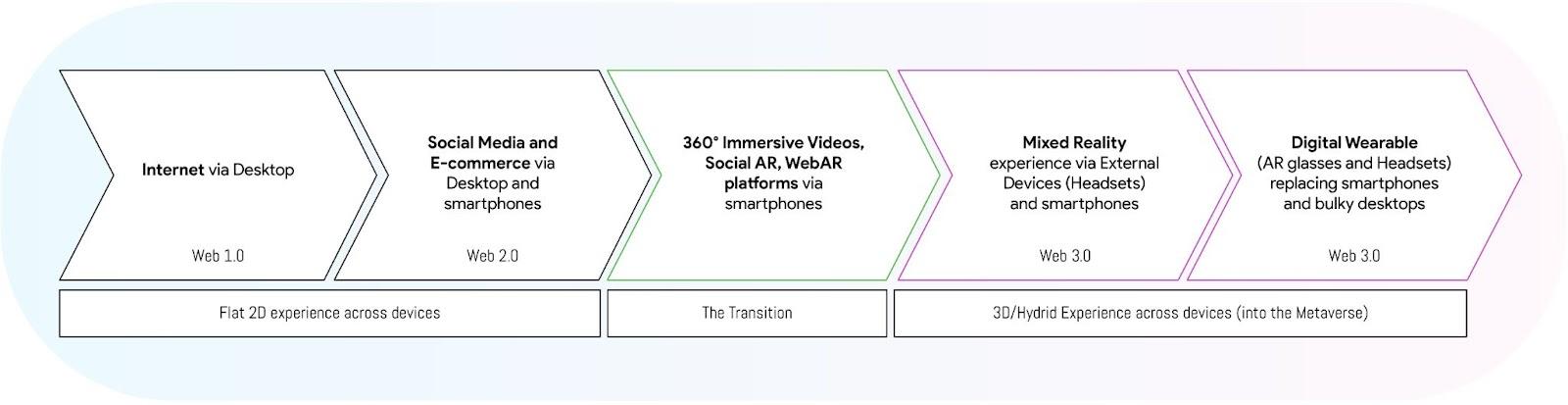
Let us first start with telling you about Evolution of User Experience in the Digital space. 

A picture containing diagram Description automatically generated

Link to above image

We are currently in the Transition phase and slowly moving towards AR VR Wearables & Mixed Reality devices as an everyday utility. While your customer base is moving towards the Web 3.0 it’s important for your brand to jump on the wagon.

What it means is you change your communication and your content to something more engaging, a lot more immersive and definitely more interactive, allowing two way communication

At retail level, we can explore Interactive store facades, Virtual try-on, In-store engagement games, Interactive Visual Merchandise and Immersive in-store experiences.

What is Augmented Reality?

Augmented reality (AR) is overlaying visual, auditory, or other sensory information onto the real world to enhance one’s experience. You don’t need fancy wearables like Heads sets or smart glasses to access it, rather it can be accessed through mobile apps or on your phone’s web browser. 

Does AI come handy in building AR experiences?

Yes, Use of Artificial Intelligence plugs computer intelligence into the entire user journey to make the experience seamless. Say, a chat bot or an AR bot to guide you through the entire journey will enhance the entire experience many fold.

We integrate self-training AI modules into some experiences which understand Human behaviour and make the journey better.

How Retail Businesses Are Using Augmented Reality?

Augmented Reality allows brands to develop smart retail experiences that influence their customers’ perception or buying decisions.

Retailers have traditionally relied on print advertising campaigns or other media to promote products. Being divided in the past, print, media and in-store marketing efforts are merged today into the comprehensive consumer experience via augmented reality.

Retail AR spans from enhancing VM display windows to product Trial experience, from in-store engagement to Smart mirror installations and much more.

Following the trend, augmented reality has emerged as an innovative tool that allows brands to interact with consumers on their mobile devices or on pre-installed set ups. Soon this experience will extend to smart glasses. 

Below examples of AR speak for themselves:

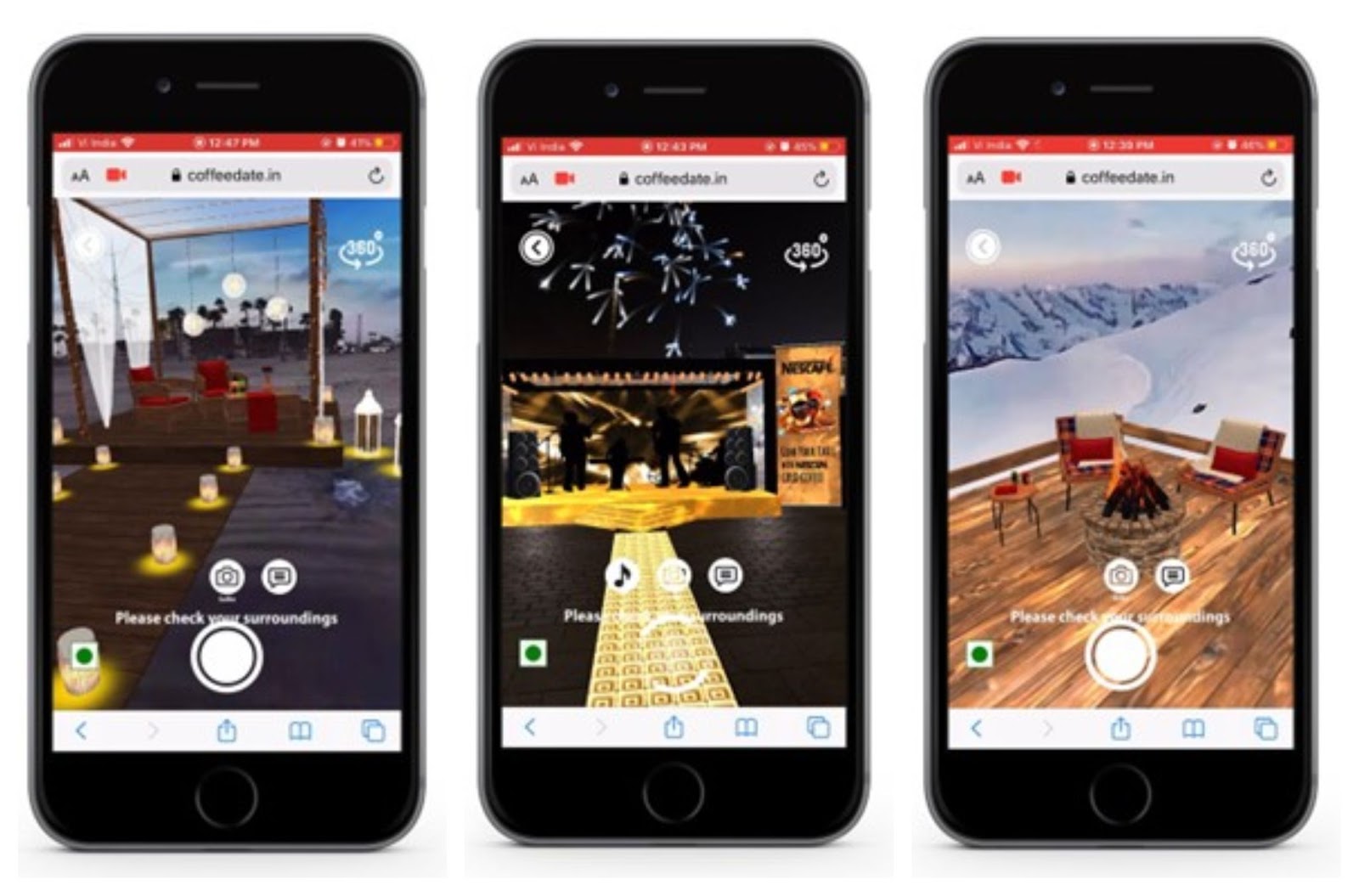
Nescafe Virtual Date

Link to above images

A fabulous AR portal for the youngsters, where they can walk-in, explore, interact, and also share with loved ones. From writing the name of their loved one on a virtual canvas to watching a shooting star, this Valentine’s Day specific immersive activation was a grandeur. 

Interesting Insight: This pack lead experience increased pack purchase and communicated appropriate content for the right TG

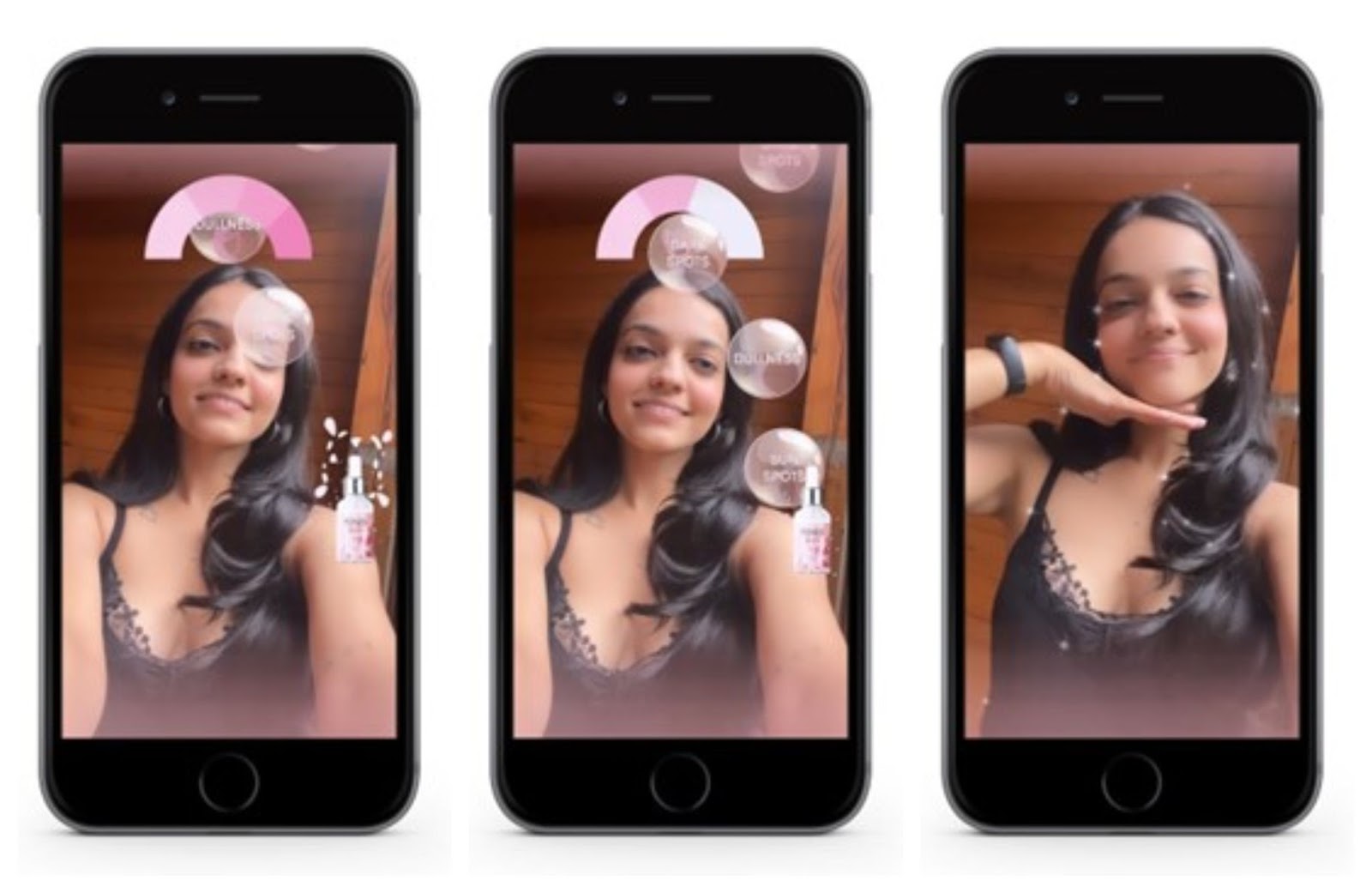
Ponds Influencer campaign amplified by AR

Link to above images

A gamified Social-AR campaign on Ponds’ new product launch, where users had to move around the Ponds Serum with their face and pop the bubbles containing elements harmful to skin. Bursting bubbles increases “Glow meter” above the user, which when filled gratifies the user with a sparkling glowing skin.

Interesting Insight: User Generated content saw a big jump during this campaign building the much needed hype a brand wants in the initial phase.

Mural in Manhattan

A picture containing text Description automatically generated

A picture containing text, outdoor, street Description automatically generated

Link to above images

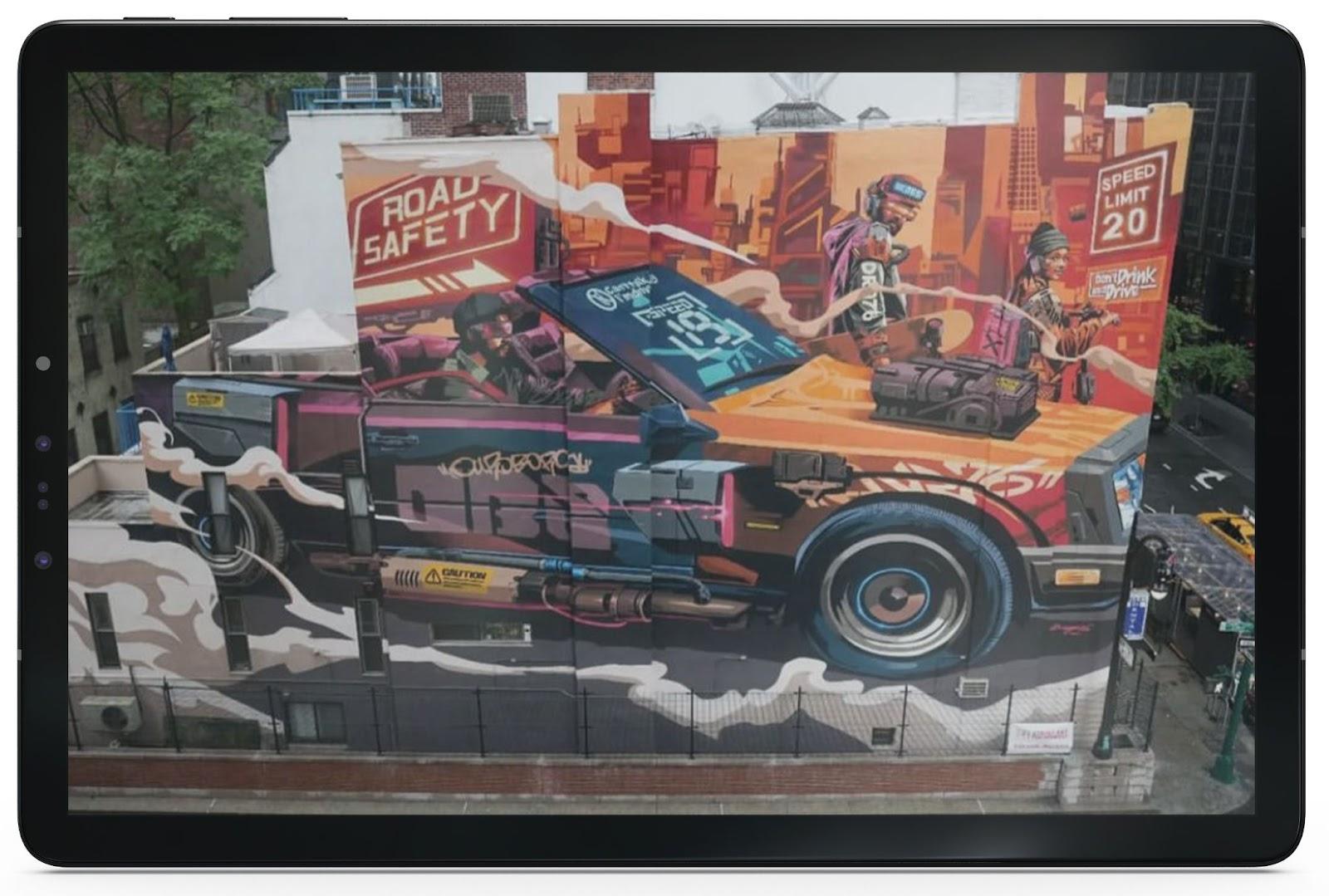
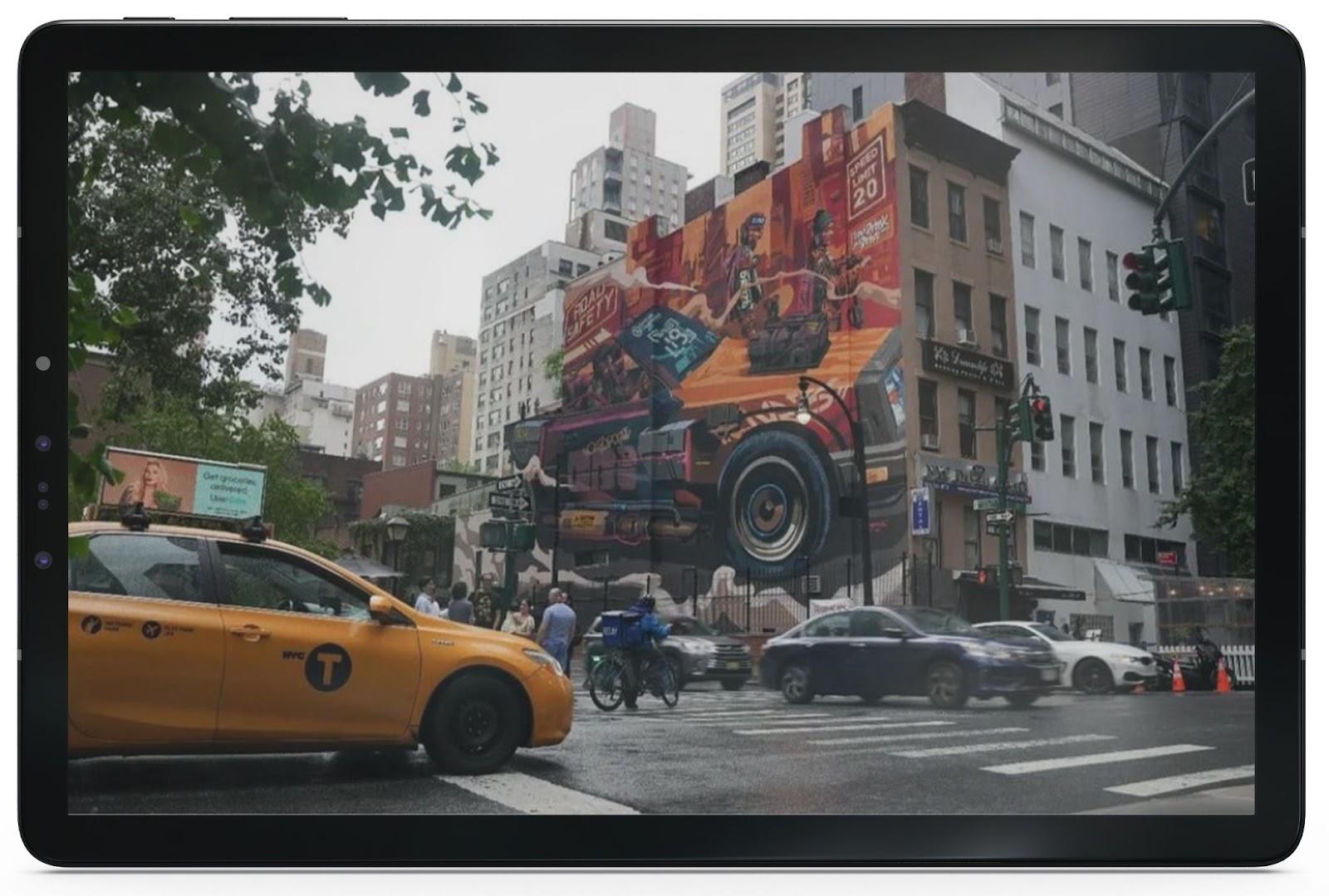
This Mural on Road Safety in Manhattan comes to life in AR when passers-by scan it via a mobile App, enabling Artists to add another creative layer to their work and elevate the message within the Art and communicate with the world. 

Additional features: Location sensing, mapping the nearby area and taking a selfie with the art are additional features of this experience. 

  1. Medical Team Internal Training for a pharmaceutical brand

Link to above images

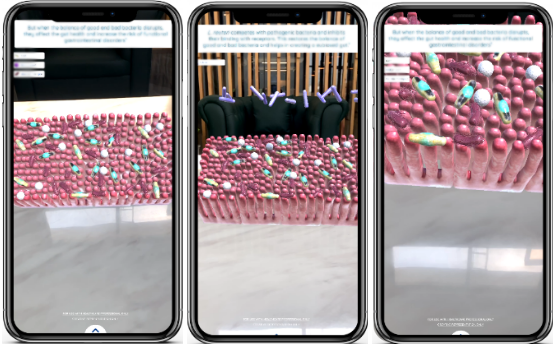
This Micro-gastrointestinal simulation in AR has enabled a Pharma Brand to train their medical teams in research, product development and sales pitches. The Medical team could showcase the introduction of certain microbes and their effects in AR.

What to expect in the coming years?

With the mixed reality glasses recently launched in a big way in India, industries get more opportunities to share immersive & engaging content with its target customers

By 2027 we will see a big jump in AR/VR/ MR/XR content floating around us in our day to day lives using our smartphones and other wearable devices.

Impresario Tech build end-to-end brand campaigns focusing on Pre-purchase consideration or post purchase engagement, in store experience or on-pack brand communications with the use of Augmented Reality, Virtual Reality, Mixed reality, Artificial Intelligence & Machine Learning

These immersive experiences can be built app-free (on web), deployed as special apps, rest on brands’ social media handles or installed physically in retail environments.

Love to guide you through your brand’s transformation journey. 

Write to us at Inquiry@impresariotech.io

Most searched question

What metaverse really means?

How does the metaverse relate to the real world?

Most searched queries

Metaverse vs real life

Metaverse technology

Hello readers! Hope you liked what you read today. Click the like button at the bottom of this page and share insights with your colleagues and friends!

For more such amazing content follow Digilah

Categories
Mar Tech Property Tech

Total Experience Strategy in Proptech: Improve the Real Estate Market

Written by : Sean Cho on Digilah (Tech Thought Leadership)

Property technology, or PropTech, refers to the use of information technology (IT) to help individuals and companies research, buy, sell and manage real estate. 

Typically, the participants in the real estate industry are brokers, agents, developers, buyers, sellers, landlords, and lenders. This technology-based sector allows them to be more efficient by automating manual tasks such as managing inventory and communicating with clients.

The real estate sector encompasses a wide range of processes and transactions, ranging from how real estate is planned and designed to how it is bought and sold. The Proptech sector consists of start-ups and innovative products across the commercial and residential real estate markets. 

The convergence of technologies, cloud, and digital transformation are forces driving the rapid growth of PropTech. 

PropTech aims to minimize the cost and resources associated with real estate transactions, maximize efficiency, save time, and personalize property management.

Digital Innovation is Transforming the Property Sector

Real estate is a highly specialized industry, so these agencies require considerable flexibility when considering a digital solution. 

If a solution matches their often highly customized requirements, then it will be able to support their prospect’s pipeline — which is a combination of marketing, in-person meetings, property showings, and property closings — as well as the customer journey in real estate.

The property industry is undergoing a shift from traditional to digital services, as a result of the rapid rise of online and virtual services. 

Customers are increasingly being exposed to new technologies, which have affected the way they communicate with sales and lettings agents and property businesses. 

To remain competitive in this rapidly changing market, businesses need to implement a customer experience strategy that will best meet the needs of their particular audience.

To learn how property industry players can leverage PropTech to create memorable customer and employee experiences, keep reading! 

We’ll also share some use cases to show how a total experience platform can turn ordinary property interactions into extraordinary ones.

Customer Experience Still Evades Many Real Estate Agencies

A statistic that is widely quoted in the industry is that 1 in 3 customers will walk away from your brand after just one negative experience. 

Multiple studies echo this, always with the same message that it’s cut-throat: that your business needs to act fast to retain them. The numbers are not exaggerated, but rather represent a normal part of everyday life, and most businesses miss these small details. 

Not responding to a phone call or email quickly enough is an example of a small detail that can have major consequences.

If you don’t respond well to these kind of details, customers will leave your business in favour of another company that provides better service. 

According to recent studies, 86% of consumers will not remain loyal to a company after a negative experience; and if they do stay, it is likely because they are unable to find what they need elsewhere in which case you got lucky.

In a highly competitive market, providing a great customer experience will help build loyalty, nurture repeat business, and create brand advocates. Agents and employees need tools to stay productive and collaborate effectively online from wherever they are.

4 Customer and Employee Experience Strategies to Boost Business

Here are some examples of how you can harness Customer Experience (CX) and Employee Experience (EX) in your business to create a competitive advantage. 

Great customer service can differentiate real estate products and services from competitors, while time-saving tools and hacks for employees can turbocharge their productivity and keep them from burning out.


      1. How Communication Builds Trust between a Tenant and an Agent

    Georg and Berta, who are relocating from Germany to Hong Kong for an expatriate posting, browse your property agency website and shortlist a few rental apartments.

    Wanting to know more, Berta clicks on the smart widget on your website and watches a branded video featuring an agent while being connected with him directly.

    The call routing system detected the customer’s browser language and routed them to an agent who speaks German. The customer is delighted to be talking to someone in their native language.

    Your agent then suggests they switch to a video call for a more interactive conversation, taking just one click to seamlessly make that change while still on the same call.

    By chance, your agent is currently showing a property in the Mid-Levels area with rents of around HKD 40,000 a month. Using the mobile app, she checks Georg and Berta’s browsing history and sees they are coincidentally looking at the Mid-Levels area with rents of the same price range.

    Qualifying the lead further, she gets their expected move-in date which helps to narrow down the listings more.

    While a real estate agency website can contain virtual reality walkthroughs and videos, nothing beats a personal live video tour from the agent. Sensing the prospect’s eagerness, she conducts an impromptu walkthrough and adds her commentary on the apartment’s condition.


        1. Discover new ways to market a property and generate interest

      Keanu, who lives in New Zealand, saw an advertisement for your company’s new beach resort in Hajodae, South Korea. To promote the launch of the property, your firm took out a full-page advertisement in his local newspaper with a QR code.

      Wanting to know more, he instantly connected via web call to an English-speaking property agent in South Korea.

      The property is still in the pre-launch stage, so the only way to get a sense of the completed unit is to visit a show flat. Your agent switches easily to a video call, slowly panning his phone to show Keanu what he can expect from the resort property once it has been completed.

      Currently, you only have a basic landing page for visitors to register their interest. However, your property agent screen shares from the video call and plays him a promotional video of the property.

      As Keanu is an enthusiastic surfer, he inquired about the facilities. Your agent provides you with a link to a VR walkthrough of the resort.

      Your property agent mentions that the firm has a tie-up with a financial institution that can offer loans denominated in South Korean Won, and Keanu seems excited by the possibility of such financing.

      As he discusses his plans for the property, your agent invites the expert to the ongoing call.


          1. Transform the way of closing a new residential lease

        Taiwan real estate agent Annya has just ended a virtual tour of four apartments with a couple from France, who are now considering the properties. Although she feels they are good prospects, she knows that they may change their minds at any time, or another agent they’ve contacted might win the deal.

        Annya received a message on her phone. The couple had used the web link on the agency’s website to send a message; they liked the last viewed apartment in Taipei and wanted to offer a two-year lease at TW$80,000 per month. Thrilled by this news, she called the landlord through the smart app, and he happily agreed. 

        Annya prepares a provisional tenancy agreement and attaches it to a live chat session with the French couple.

        She reminds them to wire the initial deposit to the landlord once they have digitally signed the contract. Receiving signed copies of both the contract and a screenshot of the telegraphic transfer, she calls the tenants.

        She walks the tenants through the landlord’s leasing process during a video call. The landlord’s solicitors will prepare a draft tenancy agreement for them to review. In the meantime, Annya suggests that she recommend a lawyer who can represent them. They agree, and she invites the lawyer to join the conference call.


            1. Increased communication and collaboration by overseeing commercial tenants

          As the property manager of a large-scale commercial complex consisting of a shopping mall and offices above it, Shoba is responsible for hundreds of retail and office tenants. A member of a dedicated team of accountants, technicians, and procurement and contracts specialists working in the onsite management office, she leads her team in providing an exceptional level of service to all clients.

          The use of a lightweight CRM offers tenants a chat room environment, centralizing every interaction and communication.

          Through the use of interaction history, she is able to chart the correspondence over time, enabling to resolve issues quickly. 

          In addition, Shoba uses CINNOX as a cloud communications tool, enabling her to manage chats, calls, video calls, and emails from one place, thereby avoiding the cost of installing a more complicated PABX system!

          When a new tenant moves into an apartment community, he or she is given a laminated card with QR codes printed on it.

          When scanned, the codes direct callers to the appropriate team for help with payments and statements—saving tenants time from searching for a number. The same teams are also shared via web links in an email, giving tenants an option to chat instead.

          CINNOX helps teams collaborate. For example, if a new tenant wants to move in after hours, Shoba can create a chatroom to notify operations about the loading bay, advise facilities to keep the lights on, inform security about the removalists, and add the external moving company as a contact so everyone is kept updated.

          An Experience-Driven Approach To PropTech

          From the examples above, it’s clear when you address your immediate CX and EX needs with a total experience platform. You are also laying the groundwork for future success. 

          By putting all your interaction data in one place, you are creating a treasure trove of data that can be analyzed with powerful machine learning and AI tools to discover valuable insights in the future.

          PropTech is a new industry that combines property with technology, allowing developers, landlords, property agents, and property managers to leverage technology to keep in step with digital-savvy customers. 

          When choosing the right partner to develop your customer experience, look for a business that puts the customer (your customer) first and foremost, and who demonstrates that they too take that approach from their business.

          Leverage the power of a unified CX and EX solution to create a truly connected, intuitive, and immersive experience. To learn more about CINNOX, request for a demo or sign up for a free trial.

          Most searched question

          How PropTech is changing real estate?

          What is the future of PropTech?

          Most searched queries

          PropTech market report

          Proptech companies

          Hello readers! Hope you liked what you read today. Click the like button at the bottom of this page and share insights with your colleagues and friends!

          For more such amazing content follow Digilah86

          Categories
          HR Tech

          Embed clear PRINCIPLES

          Written by : Lori Figueiredo on Digilah (Tech Thought Leadership)

          As we are shaping how we work AND LEARN together with our ecosystem of Stakeholders, a clear set of “rules of engagement” or team rules are needed. This is usually assumed that people are on the same page and not discussed. 

          This may lead to miscommunication, disagreements and stress as there are likely to be different expectations and/or ways of operating.  

          Being an agile team that is open to learn, adapt and improve as a daily habit, takes some emotional maturity and adaptability amongst all the team members.

          Though a very simple practice or tool, which is to agree on how the team will work and learn together is a basic fundamental which will increase the chances of success as a group. 

          This is especially true when we bring together a wide variety of Stakeholders from different backgrounds, professions, areas of expertise and functions.

          Again, begin with the end in mind – take a moment to imagine NEW possibilities. Imagine creating a safe space that allows you and your various Stakeholders to deliver value to the organization, to each other and to the end customer.

          You need to be conscious of your set of conscious AND unconscious assumptions about the possible challenges or areas of friction across the set of individuals in the team.  

          Let’s explore this a bit more deeply. Our assumptions and thoughts determine our behaviours and results.  

          We each have certain thinking habits which are patterns we keep repeating. These are the “anchors” which influence our view of the world and the way we interact in the world.  These patterns are called our mindset which is based on our past and present experiences (learning and conditioning). 

          Thinking about our own thinking raises our level of self-awareness. This activity is called Metacognition.  

          It is a powerful habit to develop. If we are not aware of our mental pictures, we can limit our own success. To help us become more aware, we need to take time out to become conscious of our assumptions and thinking patterns.  

          A belief is a thought we keep thinking. We can have self-limiting beliefs which block us from progressing. We also have empowering beliefs which enable us to achieve great things and breakthroughs.  

          To create safe spaces to imagine and create new possibilities while collaborating with others, required conscious positive thinking which will help you develop yourself, your ecosystem as well as improve your collective performance to achieve positive change.

          Agreeing on the rules or principles will determine how effective you work and learn together in achieving a positive impact. You may also agree on the forums and the frequency you will use to meet and connect. 

          Raise and discuss the possible obstacles you may have and ways you can minimize them – from the outset. Finally keep checking in to ensure you are adopting these rules as you go about your day or adapt them – if new ones are required. 

          Examples of rules could be that “we will…be positive, be open to new ideas and to think out loud as a way to share and generate more ideas”.  

          Below is one of the rules we have adopted in our Team…whatever we do we must deliver value and have a positive IMPACT.  Or if not possible, we would rather do nothing!

          Hello readers! Hope you liked what you read today. Click the like button at the bottom of this page and share insights with your colleagues and friends!

          For more such amazing content follow Digilah

          Categories
          Mar Tech

          5 Brilliant Ways to Use Live Chat for Ecommerce Experience

          Written by : Shadz Loresco on Digilah (Tech Thought Leadership)

          Consumers no longer see shopping as a mere transaction; it’s about providing an entertaining and engaging experience.

          When you don’t win a customer’s trust, they go to a competitor or change their mind about making a purchase altogether.

          What can you do to provide a great customer experience that generates loyal customers and maximizes revenue?

          Humanizing the customer experience is one way to differentiate yourself from your competitors.

          Instead of offering discounts that hurt sales, engage with customers, and provide a personalized experience to increase customer loyalty and drive repeat purchases.

          While most e-commerce stores offer self-service options such as knowledge bases, FAQs, and perhaps an automated chatbot, many consumers prefer to speak with a real human being. For businesses, live chat is a low-cost alternative to expensive phone calls.

          Here are five ways to use live chat to make your online shopping experience more personal.


              1. Be sure to make a good impression on your online visitors

            Visitors’ first impressions of your e-commerce store are determined by many of its elements, including design, user experience, and product offerings. Others include how easy it is to get customer support and service when they need it, and the channels available.


                • Customize the look and feel of your live chat widget

                • Enable a friendly Smart Greeting that welcomes your visitor

                • Design your widget icon and chat box in a way that matches your brand image

                • Even better, embed an in-call video or image to introduce your brand

                • Localize your live chat; enable Smart Routing on your widget to automatically assign visitors to the most suitable staff based on device language or geographical location


                  1. Give your customers the option to contact you at any time

                Live chat support is a fast, efficient way to help customers.

                Customers don’t have to wait for an email response or pay long-distance phone charges to get help; they can just chat with you directly!

                You can also set up offline contact forms so that people can leave their contact details for immediate follow-up when staff are online.


                    • Enable web calls from the live chat widget for consumers who prefer to speak with a staff rather than type in a message

                    • Visitors can also access a directory of staff members to find the best person to answer their questions, such as exchanges & returns, shipping, or payments


                      1. Create an emotional bond with shoppers

                    Inspire consumer trust by showing the human side of your staff. Live chat allows customers to interact with real people, rather than automated messages, bringing e-commerce one step closer to humanizing the customer experience.

                    For example, if your staff are into running, they can share their recommendations on running gear. Providing instant replies to customer inquiries can make customers feel valuable and important in addition to reducing customer churn by keeping your best customers and encouraging repeat sales.


                        • Having a live chat widget that allows you to seamlessly switch between chat, video calls, and voice calls inside the same app is a winning feature that can help you stand out from the competition

                      Video: https://www.youtube.com/watch?v=mD2XIFwcYL8


                          1. When you add value to a conversation, you make it more meaningful

                        As your customers progress through their purchase journey, you should be creating and sharing content to keep them engaged. The best way to do this is by creating content that is timely and relevant to the conversation your brand is having with its audience.

                        This could be a new product offering, promotion, or even a social media post showcasing your brand personality.


                            • Add a web link to push visitors directly into a live chat session, or a web call with a staff who previously helped them

                            • A great way to keep offline interactions going is with QR codes. Stick these on the backs of your products so that customers can easily access help if they need it

                            • Print QR codes on your marketing materials so that leads can be generated from printed posters, leaflets, and brochures in addition to your e-commerce website


                              1. Personalize the chat as often as you can

                            Customers expect to be treated as individuals, so try to tailor your responses based on the information you have about them. Great customer service means using the customer’s name in the conversation, whenever possible and appropriate.

                            This helps the customer feel like they’re speaking with a human person behind the brand rather than an automated bot.


                                • Personalize conversations by asking for additional information through pre-chat forms

                              Get the most out of your e-commerce customer experience

                              When e-commerce stores are focused on generating leads and growing sales, it’s easy to lose sight of the personal touch. The simple truth is that people return to brands they know and trust to give the best buying experience. 

                              Live chat is the perfect antidote to this problem: Provide a human touch with your customers’ questions and concerns, and you’ll transform transactional experiences into memorable and pleasant ones.

                              Leverage the power of a unified CX and EX solution to create a truly connected, intuitive, and immersive experience. To learn more about CINNOX, request for a demo or sign up for a free trial.

                              Most searched question

                              What is live chat in e commerce?

                              What are the benefits of live chat?

                              Most searched queries

                              Companies with live chat support

                              Best live chat for ecommerce


                              Hello readers! Hope you liked what you read today. Click the like button at the bottom of this page and share insights with your colleagues and friends!

                              For more such amazing content follow Digilah

                              Categories
                              HR Tech

                              Define the shared PURPOSE

                              Written by : Lori Figueiredo on Digilah (Tech Thought Leadership)

                              External rewards, such as fair pay, only AVOID dissatisfaction.  

                              External rewards are NOT the most critical motivators.  

                              Internal rewards are the most critical motivators. Striving towards a PURPOSE that is meaningful to you – is a powerful internal reward.  It may include enjoying what you are doing and experiencing personal growth.  

                              Even more powerful than this, is when we have a shared PURPOSE with those whom we respect and connect with.  The larger common purpose we co-create with others is usually:

                              • aligned to our own personal purpose
                              • inspirational and uplifting so we connect to it emotionally and deeply
                              • aspirational as a breakthrough which goes beyond our current achievements

                              Based on these findings, we formulated the SYZYGY® PURPOSE. It is a tool to envisage and define your direction, value and roles of your ecosystem of Stakeholders.  As we get clear on who are the right PEOPLE, co-creating a shared PURPOSE is the next habit.  

                              A pre-defined PURPOSE ensures you target, track and measure the required IMPACT! We always need to begin with this end (shared PURPOSE) in mind to anchor, motivate and inspire ourselves and others. 

                              Think about…? Do you have a clear picture of the impact of your efforts and activities on your organization and people?

                              How might you pre-define a shared PURPOSE as you engage your ecosystem of Stakeholders?

                              With your Stakeholders you discuss and define the broader purpose which is your collective value to the organization and/or larger community:

                              • Your breakthrough goals with concrete measurable indicators
                              • Your strategy which is simply your approach or plan to get there

                              Then you discuss and define the roles. This means you define and communicate what each Stakeholder group needs to:

                              • ACHIEVE = results
                              • DO = behaviours
                              • LEARN = knowledge, skills and attitudes

                              When you breakdown performance into very simple, clear and measurable terms, the desired IMPACT on organization performance and people performance becomes very clear. 

                              This role clarity empowers and aligns each Stakeholder group to take targeted, critical and meaningful action. Once all your Stakeholders understand and are aligned to your breakthrough goals and strategy – this state of alignment is called SYZYGY. When aligned, with less effort we achieve greater results.

                              For example, while working, learning, and empowering people to improve their performance – we found it worked best when those involved imagined their own shared purpose.

                              In addition, we found when there is alignment, all the Stakeholders within the ecosystem share information and insights up and down the value chain every day. All those involved can then use this feedback loop to continuously improve what they LEARN and DO to ACHIEVE their shared PURPOSE.   

                              Pre-defining and then targeting to impact the desired performance outcomes is one of the most critical advantages of using the SYZYGY® methodology. Let’s move onto the other 3 of the 5P framework…

                              Hello readers! Hope you liked what you read today. Click the like button at the bottom of this page and share insights with your colleagues and friends!

                              For more such amazing content follow Digilah