Digilah

Categories
Med/Health Tech AI Tech

Unleashing Human Potential Through AI

Written by Dr Suresh Devnani on Digilah (Tech Thought Leadership).

The Automation Revolution

We stand at the crest of a tidal wave of technological disruption. Artificial intelligence is automating tasks that have consumed our productive hours for decades: data entry, analysis, manufacturing, and creative work. AI systems can now shoulder the repetitive drudgery, freeing our time and consciousness for higher pursuits.

Leading companies have already embraced this automation revolution. At JPMorgan Chase, AI models now handle mundane tasks like data entry and document processing, saving the bank 360,000 hours of work annually. Pharmaceutical giant Novartis uses AI to crunch massive datasets and rapidly identify promising new drug candidates based on molecular interactions. 

Embracing Our Humanity

Rather than viewing AI as a threat, we should welcome it as a liberating force to help us reclaim our humanity. By offloading rote labor to intelligent machines, we can redirect our energy toward the uniquely human capacities that spark innovation, deeper connection, and meaning.

An Abundance of Possibility

AI is gifting us a precious new resource: time. Imagine an extra 20–30 hours per week because tedious tasks were automated by intelligent systems. How might you spend that liberated time?

You could finally nurture creative passions—painting, music, and writing. Be truly present with loved ones on adventures over heartfelt conversations. Prioritize nourishing self-care like exercise, cooking nourishing meals, and mindfulness practices.

AI handles the draining, obligatory labor that consumes so many hours. In doing so, it provides the ultimate modern luxury: abundant time to experience the simple joys that light up our human spirits. We regain the spaciousness to live each day with more intention, purpose, and richness.

The automation revolution doesn’t just optimize productivity. It alchemizes our most limited resource into an abundance of what makes us feel vibrantly alive. How will you spend this reclaimed gift of time?

Catalyzing a New Renaissance

Some fear AI will make us lazy, unskilled, and purposeless. However, unburdened from menial, robotic toil, we’re empowered to cultivate the loftier capacities that only we possess: abstract reasoning, emotional intelligence, and radical ingenuity. AI could catalyze an explosive renaissance across the spheres of human inquiry, creation, and growth.

Consider how Pfizer adopted natural language processing AI to scan millions of genetic databases and academic papers, accelerating the identification of a potential drug target for COVID-19. Augmented by AI’s analytical scale, human scientists and physicians can rapidly unearth insights that dramatically accelerate innovation.

Uplifting Society’s Masses

Most transformative, AI-driven production efficiencies and abundance can economically uplift millions globally from the cycle of empty labor performed solely for survival. By making the essentials of comfortable living affordable for all through advanced AI systems, we expand access to quality education, creative leisure, and self-actualization for humanity’s masses—key drivers of cooperation, societal flourishing, and progress.

Human Skills for the AI Age

But to truly thrive in this era, we must cultivate the vital human skills that intelligent machines cannot yet replicate: creativity, emotional intelligence, adaptability, grit, and a sense of higher purpose.

As “The Happy Doctor,” I’ve spent 28 years helping thousands of professionals across six continents unlock these capacities through science-backed strategies blended with spiritual wisdom and transformative frameworks. Top companies like AC Delco, Continental, Qualcomm, Fitness First, Commonwealth Bank & Trust Company, ITC Hotels, Famous Amos, and Kawasaki covet my guidance to inspire thriving, engaged, innovative cultures amidst the uncertainties of technological upheaval. 

Rekindling Human-Centered Living

Ultimately, the rise of AI beckons a revival of human-centric living. As intelligent systems take on ever more obligatory labor, we gain the freedom to mindfully sculpt our days and energies with greater intention. We rekindle imagination, emotional depth, and purposeful presence—the wellsprings of rich, vibrant, and meaningful living. AI is not a threat, but an invitation to reconnect with the essence of our humanity.

The future made possible by AI is wondrous if we have the wisdom to embrace its liberating possibilities. Let’s harness this powerful technology not just for the sake of automating efficiencies but as a catalyst to unleash the highest, brightest, and most joyful expression of our human potential. 

A testimonial for my work I would like to share: Happiness Hero Sparking: A Global Awakening

One conversation with Suresh and his vibe is infectious—you’ll see why he’s called “The Happy Doctor.” This pioneering thought leader blends spiritual wisdom, science, and transformative methods to awaken human excellence amidst technological change. Suresh has ignited tens of thousands across six continents, proving happiness is an essential skill we can cultivate. His work unlocks creativity, resilience, and boundless potential—key qualities companies need to thrive.

Most asked questions

How is AI helping the banks?

At JPMorgan Chase, AI models now handle mundane tasks like data entry and document processing, saving the bank 360,000 hours of work annually.

How much time does AI help us to save weekly?

AI can help us save 20-30 hours per week and gifts us a beautiful opportunity to upskill ourselves.

What is the purpose of Pfizer?

Pfizer is an American multinational pharmaceutical company. It also took the initiative to produce vaccines against the COVID-19 pandemic.

Who is known as “The Happy Doctor” and why?

Dr. Suresh Devnani is called “The Happy Doctor.” He is a tech thought leader who blends spiritual wisdom, science, and transformative methods to awaken human excellence amidst technological change.

Most searched queries

Novartis

Pfizer

Artificial Intelligence

Emotional Intelligence

Automation revolution

Hello readers! Hope you liked what you read today. Click the like button at the bottom of this page and share insights with your colleagues and friends!

For more such amazing thought leadership articles on technology follow Digilah people.

Categories
Med/Health Tech

Micro-Robots – Macro Advances: The R-evolution of Precision Medicine ⚕🌞

Written by Marcus Parade on Digilah (Tech Thought Leadership).

Imagine a world where tiny robots navigate our bodies, fighting diseases and fixing problems at a cellular level. Sounds like science fiction, right? Well, hold onto your hats 🎓👒, because this is a rapidly becoming science fact!

Welcome to the fascinating world of precision medicine and nanorobots.

First off, what’s precision medicine? It’s like having a tailor-made suit, but for your health. Traditional medicine takes a one-size-fits-all 💊 approach, but precision medicine is all about personalization.

It considers your genetic makeup, environment, and lifestyle to provide treatments that are just right for you.

Now, enter the nanorobots. These microscopic marvels, often smaller than a human hair, are set to transform our medicine.

Think of them as tiny doctors 👨⚕️👩⚕️ travelling through your bloodstream, delivering drugs precisely where they’re needed, targeting tumors, or even repairing damaged tissues.

It’s like having a mini medical team inside you, working round the clock!

💡 Let’s dive into some mind-blowing research. Scientists are already making headway with these mini miracles. For instance, researchers have developed nanobots that can identify and isolate cancer cells much more efficiently than traditional methods! 

These bots are like skilled snipers, taking out the bad guys without harming the innocent bystander cells.

And it’s not just about tackling the big C (cancer, that is). Nanorobots could play a crucial role in managing chronic diseases like diabetes, by continuously monitoring blood sugar levels and releasing insulin as needed. 

Imagine saying goodbye to constant finger pricking and injections! 💉

But wait, there’s more! These nanorobots aren’t just about treating diseases; they’re also about prevention! With their ability to monitor your health at a microscopic level, they can detect potential health issues before they become serious problems.

It’s like having a crystal ball for your health! 🔮

Now, I give you some examples: Imagine a nanobot that’s like a tiny plumber, unclogging your arteries to prevent heart attacks. Or think of them as microscopic gardeners 🌻, pruning away the bad cells and nurturing the good ones. 

The possibilities are endless and quite inspiring to think about!

Of course, with great power comes great responsibility. The ethical implications and safety concerns of having these tiny robots in our bodies are topics of hot debate. 

💚✅But one thing’s for sure, the future of medicine with these nanoscopic helpers is bright and incredibly exciting.

So, there you have it – a peek into our future where nanorobots team up with precision medicine to keep us healthy. It’s not just about curing diseases anymore; it’s about enhancing our lives, one tiny robot at a time.

Stay tuned, because the future of healthcare is also looking incredibly small – and that’s a big deal!

Please share your thoughts, experiences, place a Like or even share this article if my article was somewhat inspiring to you 🌞 to Marcus Parade, who is the international sales manager at Messe Frankfurt GmbH

References

https://pubmed.ncbi.nlm.nih.gov/36377485/

https://www.ncbi.nlm.nih.gov/pmc/articles/PMC9584632/#:~:text=,as%20nanomedicine%2C%20and%20environmental%20monitoring

https://www.ncbi.nlm.nih.gov/pmc/articles/PMC9146405/#:~:text=,1

https://onlinelibrary.wiley.com/doi/10.1002/advs.202002203#:~:text=,1%20Introduction

Most searched questions

How does Nano technology can be used to prevent or cure diseases?

What is precision medicine?

Most searched queries

Nano robots

Precision medicine

Hello readers! Hope you liked what you read today. Click the like button at the bottom of this page and share insights with your colleagues and friends!

For more such amazing thought leadership articles on technology follow Digilah people.

Categories
HR Tech Med/Health Tech

Need for Coaching to combat the always on work environment!

Written by Sophie Toth on Digilah (Tech Thought Leadership)

The importance of having a safe place where everyone can find understanding and full attention. But how can we find a proactive way to address life and career challenges proactively in our always on world? How can we create an opportunity to encourage our colleagues and friends to talk about themselves with a professional?

In digital media, many of us have strict targets to hit, travel and sometimes live on the edge when a big deal is about to be signed or delivered. This requires a specific stress management type and a mindset that understands goals beyond hitting revenue targets.

These goals are essential for all of us to live our lives more meaningfully and have a high quality of life experience. Many have had signs of exhaustion or even burnout after a stressful time and needed to take shorter or longer time off from work to shift the focus to their SELF as opposed to constantly performing on a high level without finding a way to create a state of the family which most of the time referred as “work–life balance”.

Racing to be the best and get our bonuses is just one side of the coin. We need to think about how these fears and negative thoughts create the feeling of guilt, and as we all know, guilt creates pain.

Operational departments have different types of pressure. I call it the back-office syndrome. It means that they need to be capable of being the technical experts of the online campaigns, constantly train themselves, understand the issue and make decisions in absolute real-time.

These professionals are continually racing with time, and a little glitch can significantly impact the company. Carrying this weight of responsibilities is not easy either, especially if they are the only experts in a global company without having a frank conversation with anyone who can understand them, and they can open up freely.

Well, this is one reason I advocate for a coach approach rather than a mental health practitioner. I want to be there for people who struggle and have none to talk to because they fear losing their jobs.

Coaching is not about good or wrong answers or thoughts; coaching is about finding the best possible outcome of situations, goals, etc..… by using the individual or team’s full potential for achieving these objectives. The other central aspect of having a coach is that you need an independent person who can mean a safe place to everyone.

Coaching is about trust and willingness to listen to people who can be overwhelmed with work, technology and so on…

In the last year, I have seen mainly two types of people in terms of their connection to the digital industry, which pushed me to write this article with my inner need to do something to care about the individuals behind roles and job titles.

The two cohorts are:

– Job seekers who try to create groups and support each other.

– Workers who are primarily exhausted, overworked, sad to see their colleagues go, and possibly feel guilty that they weren’t part of the recent redundancy processes. These people are more likely to have anxiety and fear of the future, thinking about when they will be the next.

This negative thought slowly poisons everyday lives and results in self-doubts, burnout and, eventually, time off from work.

The modern online world must adopt a new mindset and approach professionally and how companies create a healthy, motivating environment for their workforce.

Yearly budgeting and investment ideally have a space for team coaching or budget for individual coaching or mentoring programs.

Many of us miss something in life or want to achieve grand visions and life goals, but these only stay as a “want” within our minds as we block them immediately with our limited beliefs.

Let me tell you the secret of life: we can achieve our aspirations if we are ready for the change and all the work. Moreover, we all have the answers to the “HOW?”

Coaches are now studying hard and have specialities they want to work with. This connection is based on a mutual rapport and has an entirely equal manner. As I say, live and breathe with the “coachee” without judgment during the client’s journey.

Before I explain why coaching is essential for all of us, I want to clarify some crucial points.

Coaching is not mentoring. The coach won’t tell you what to do, but she will guide you to use your resources and explore your hidden potential.

Coach is not a medical practitioner; she focuses more on your inner balance, aspirations, and the healthy functioning between body-mind- and soul.

If you want to start your journey to your better self with a coach, you must be patient and determined and progress at your own pace. There is no one-size-fits-all solution, as we are unique and unrepeatable.

Now let’s talk about our fantastic but many times stressful, target-heavy industry and why I, as a digital media professional, decided to learn and became a coach.

Well, I am an observer and a listener. When talking to my industry colleagues, I pay attention to words and nonverbal signs. During my 12+ years in the industry, I experienced many ups and downs, but since 2020, something has radically changed in our online world.

After the pandemic, these changes and the new lifestyle created an overwhelming, fast and even more performance-focused world, with more restrictions and new ways of approaching online marketing. We also have less face-to-face and more virtual interactions that force us to adapt to a new lifestyle. Some of us had fewer issues, and others had more; this is why mental health became the forefront of almost every company.

This is so much of a reactive way of treating one of the most difficult challenges and keeping employees and people safe with a healthy mind and thoughts. Well, this is how coaching as a proactive solution comes into place.

First and foremost, listen and see, then seek an expert who can be the best asset to help achieve overall company effectiveness with compassionate leadership, creating a place for the employees where they can talk to an independent person who can understand, explore, and with the company on individual motivation or group achievements. A coach can also anonymously address employees’ wants and needs as a mediator.

I see the future much brighter than digital is now.

I want managers to become mentors, and I can use my coaching knowledge to guide many great professionals from all levels.

Most asked questions

What is the importance of mental health?

What is the importance of coaching in stress management?

Most asked queries

Mental health

Mentoring

Hello readers! Hope you liked what you read today. Click the like button at the bottom of this page and share insights with your colleagues and friends!

For more such amazing thought leadership articles on technology follow Digilah People 

Categories
Web 3.0 Tech Med/Health Tech

Thoughts On How India Can Leapfrog In Web3 


Written by : Ajit Padmanabh on Digilah (Tech Thought Leadership)

Introduction

For an entrepreneur and a technologist like myself, the potential of Web3 bringing in a Hardware manufacturing and R&D revolution in India, feels like music to the ears. India has long been viewed as a cheaper alternative for software services, an industry largely responsible for creating millionaires and scores of ambitious tech entrepreneurs.

Now, with the Hitech Manufacturing facilities being set up in various states, including Mysore and Bangalore, it’s time the world takes notice of India for their high-end hardware needs.

India – The Potential

India is the fastest-growing trillion-dollar economy in the world and the fifth-largest overall, with a nominal GDP of $2.94 trillion. India became the fifth-largest economy in 2019, overtaking the United Kingdom and France.

India is expected to overtake Germany to become fourth-largest economy in 2026 and Japan to become third largest in 2034, according to a recent report by the UK-based Center for Economics and Business Research (CEBR).

The Indian Software services industry contributes 8% to the overall GDP currently (from 1.2% in 1998), and is among its largest contributors. 

India is blessed with a demographic dividend – 60% of the 1.3Bn population being under 35 years of age. Compared to other Asian giants like China and Japan, India is in an extremely favorable position to chart out a growth trajectory for the 21st century, especially in tech sectors like Hitech Manufacturing, Semiconductors, Device Hardware etc.India has been striving to attract foreign investment across sectors and is steadily climbing up the ladder as far as ease of doing business is concerned, worldwide. 

India is also the second largest mobile phone market in the world, next only to China. 

The government is taking steps to boost local manufacturing through initiatives such as the Production Linked Incentive (PLI) scheme for large-scale electronics manufacturing, Scheme for Promotion of Manufacturing of Electronic Components and Semiconductors (SPECS), and the scheme for modified Electronics Manufacturing Clusters (EMC 2.0). Recently, the announcement of India’s first semiconductor plant to be setup in Mysore at a cost of ₹22,900 crore ($3 billion), has ushered-in a new wave of focus on hardware across the nation. 

The semiconductor plant is expected to generate 1,500 high-tech and high-caliber jobs, and about 10,000 ancillary jobs, according to K.S. Sudheer, General Manager, Karnataka Digital Economy Mission (KDEM), Mysore Cluster. 

Opportunities in Hardware Development with Web3

As far as systems’ topology for Web3 is concerned, the visualization landscape is driven by VR/AR. For decades, VR has seemed like a futuristic dream that is just around the corner, but never reaches its full potential. 

This time, however, might really be different. Recent advances in the power of VR hardware, notably the headsets and processors used to produce realistic VR experiences, suggest that VR is finally powerful enough and cheap enough to go mainstream.1 It, however, remains clunky and heavy leading to a cognitive loss of immersion for the user. 

To add to it, multi-sensory experiences demand peripheral wearables like Haptic Gloves and suits, among others, further depleting the embodied cognition necessary for Web3 immersive experiences. In fact, one of the reasons for VR not being adopted mainstream is the weight and discomfort with the present HMDs (Head-Mounted Devices).

R&D Opportunities with Head-Mounted Devices

This is a great opportunity for India to shine with indigenous R&D that could not only look to reduce the size and increase the comfort of these HMDs but also price them so as to disrupt the global market. 

In terms of XR devices, a beginning has been made with JioGlass (Tesseract) and AjnaLens but complete indigenous technology across the supply-chain is still undeveloped. Some of the areas for R&D include assessment of the underlying optics technology in HMDs. For example, a technique called polarization-based optical folding is a way to design lenses so light bounces in the right way to the human eye so on-screen images are displayed properly—but the light doesn’t need to physically travel as far as it does in traditional optics. That makes the space needed for VR optics smaller. 

The other technique under consideration is holographic optics, an optics technology that “bends light like a lens but looks like a thin, transparent sticker”. Holographic optics replace glass or plastic lenses, making the resulting VR headset much lighter. In fact, these advances could make the VR headsets of tomorrow, with proposed designs less than 10mm in thickness. Meta is at the forefront of this research with large investments.2

Clearly, the stakes are high and so is the investment. It’s definitely a bus India cannot afford to miss. Timely interventions have already been initiated by the Govt.

Our innovative minds need to be brought together from multiple domains like Physics, Material Sciences, Nanotechnology, Neurosciences etc. across research institutes like IITs, IISc to help crack the pilot-prototype-fabrication-commercialization cycle. 

R&D Opportunities with Multi-sensory Peripheral Devices

Today, research into multi-sensory experiences yields peripheral devices for each sensory experience – Gloves and Suits for Haptics (touch), scent-based devices (smell) and gustatory (taste) devices

A person who wants to be immersed in the virtual world should have no cognition of the real world. In this case, however, the user is well aware of these devices clinging to him, thanks to their weight and design, thereby hampering the experience and the power of Web3, for the user.

The opportunity, therefore, is to look at an integrated multi-sensory device as well as BCI (Brain-Computer Interface) capabilities that can be leveraged to create a seamless, immersive experience for the user. It is noteworthy to mention that initial steps in this regard have been undertaken at various IITs, especially IIT Chennai (Haptics), IIT Jodhpur (Sensory Devices) and IIT Bhubaneswar. 

A Defense-Academia-Industry collaborative setup would help accelerate targeted research into design and usage of such devices. 

This has huge potential for India in terms of IP ownership, Manufacturing and Commercialization, on a global scale. The aesthetics and function of these devices are equally important. These devices should be disruptive and act as lifestyle products which could yield greater market access globally.

Conclusion

Some of you reading this article may have your own ideas/concepts. The need of the hour is to institutionalize hardware R&D for Web3 and execute it on mission-mode much like what India did with institutions like ISRO and BARC.

It’s time for the world to take note of India as a viable and necessary market and destination for hardware launches and cutting-edge research & development in hardware manufacturing and testing. India needs to set itself up and be laser-focused on the path of R&D, Aesthetics and Commercialization of indigenous hardware for Web3, to realize that leapfrog moment.

References

  1. https://cacm.acm.org/magazines/2021/2/250071-the-state-of-virtual-reality-hardware/fulltext
  2. https://cacm.acm.org/magazines/2021/2/250071-the-state-of-virtual-reality-hardware/fulltext 


Most searched question

Does Web3 have a future?

What are the benefits of Web3?

What are the possibilities of Web3?

Most searched queries

Web3 crypto

How to invest in Web3

What is Web3


Hello readers! Hope you liked what you read today. Click the like button at the bottom of this page and share insights with your colleagues and friends!

 For more such amazing content follow Digilah


Categories
Med/Health Tech

The Story of Love and Faith, Touching Lives with Tech where it Matters

Written by : Arunoday Singh on Digilah (Tech Thought Leadership)

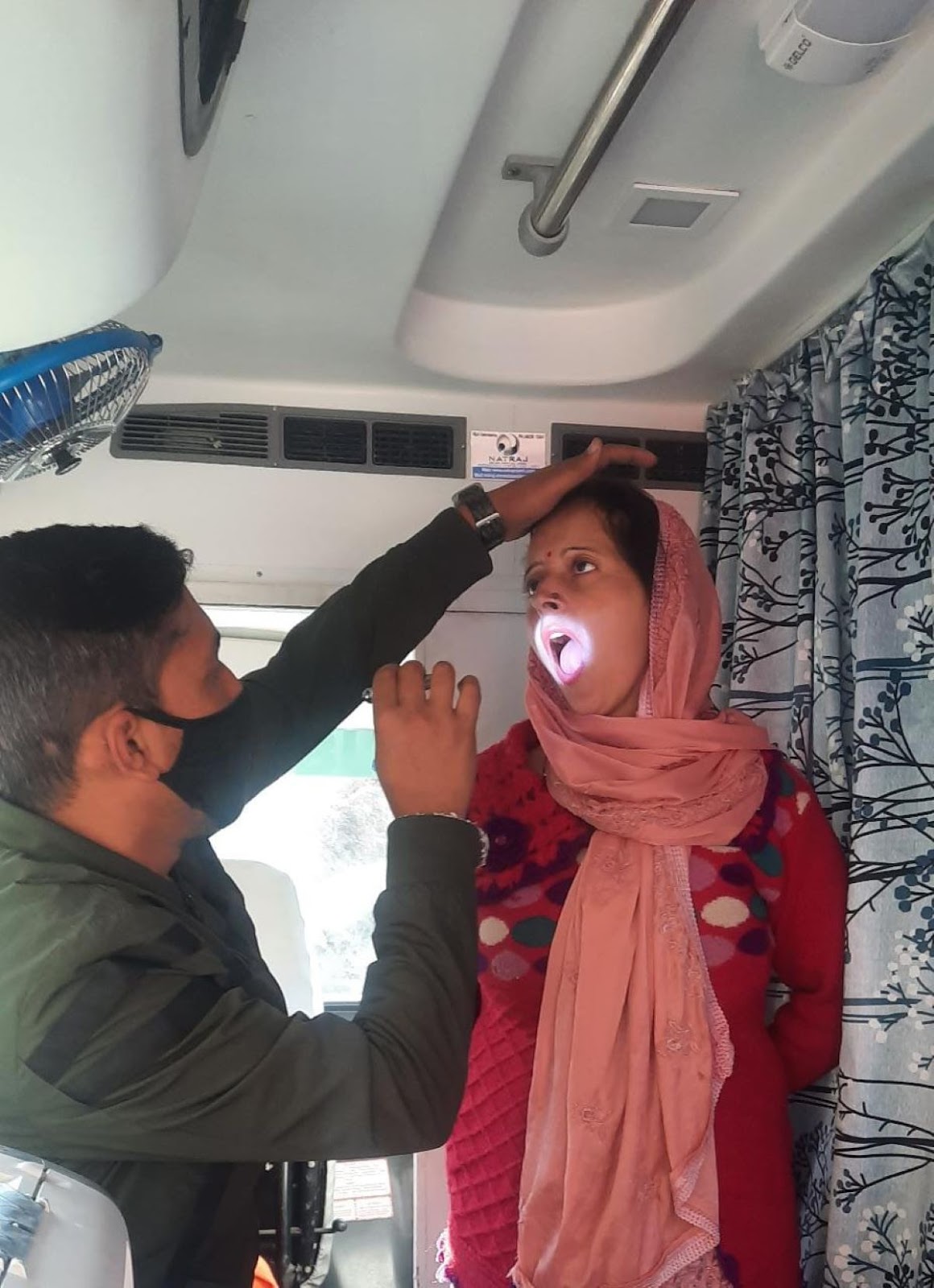
“We used to travel several kilometres for basic medical facilities, and many times lost precious time at work and our wages but this medical Van which comes to our village now has proved to be a boon,” says Damyanti Devi as she deftly embroiders beautiful patterns on a shawl she is working on at the cottage industry she works.

“My husband had undiagnosed diabetes which was posing many health issues for him making him miss work, making it difficult for us to make ends meet”, adds Veena who works at the same place, “The doctors who talks through the ‘Television’ at the van in consultation with Para-medical staff on the van which reports the vitals to the doctor and explains the medicine & treatment to the patients, not only diagnosed it but have also treated it effectively and now he is leading a normal life and goes to work regularly”.

This is a heart whelming story of many in these rural areas of Jammu and Kashmir. Set in the interiors of the region, the villagers had to travel long distances to avail themselves of medical care. But the mobile medical Van by O-health, fully equipped with telemedicine facilities has changed the lives of people in these remote villages.

Changing Lives and Landscapes

Srinath, a construction worker who hails from Bihar, is working in the Kathua district of J&K, beams at us when we asked him about what he thinks about the facility. He has just finished his teleconsultation with a specialist in Delhi. He says he was suffering from fatigue and restlessness for many months but after this ‘Doctor Wali Van’ (Van with Doctor) started coming, his BP was diagnosed, and he is now well with regular medication and checkups. He says that with this Van people can avail affordable health care almost at their doorstep.

The telemedicine service provides the facility of Tele-Consultation with India’s Top qualified doctors and specialists who provide evidence-based care and boasts of having done over 8000 consultations till date. The state-of-the-art telemedicine facility by O-health has the facility to conduct clinical tests and supply medicines to people who are living in remote areas.

The Man Behind the Mission

Visioned and conceptualised by Arunoday Singh, a Biomedical Engineer with an MBA and MSc in Health Economics from the London School of Economics, O-Health is born out of Arunoday’s vision to bring accessible and affordable quality healthcare to rural India and take the best of medical facilities to the patients at the farthest of villages, in J&K, some of which are merely 01 km from Indo-Pak border, with Pak army posts clearly visible from camp sites.

Arunoday Singh has strived to serve the rural population of the country in a way that could bring a major positive change in their lives. Thus, in the process of striving to provide universal access to primary healthcare, he came up with the idea of this telemedicine Van, equipped with the best of diagnostic, pharma and speciality care which has now fast become the ‘Saviour’ for the rural population in these remote villages of the region.

“There is no denying that, unlike in olden times, there is much better road connectivity to rural areas these days but still these places continue to face the paucity and lack of good medical facilities and doctors at par with towns and cities. Most doctors wish to set up their practices in bigger towns and cities after having dedicated many years of their lives studying, but many of them also wish to serve the marginalized section of the society in some way” Arunoday said. “With the fast improving internet connectivity in the villages, digital healthcare can really make a powerful change in the healthcare landscape of rural India”, he added. 

This telemedicine facility on wheels allows O-Health access to the patients in the far-flung rural areas, without having to compromise their careers.

 “The main motive of the project is to extend healthcare facilities to the needy at their doorstep,” says the staff we met in the van, which is like a mini-hospital on wheels with all the facilities of a good clinic put together comprehensively.

The Challenge and the Solution

Rural patients are seen to be somewhat averse to new technologies, especially in healthcare, due to some of the reasons – paucity of awareness and knowledge about the technology, lack of trust on the individuals running the services and inefficient ways of care delivery leading to ineffective treatment outcomes. “It is critical to send an accurate patient parameter feedback to the remote doctor for a correct diagnosis, otherwise the treatment remains incomplete and hence, leaves the patient ill. We use high fidelity digital health devices like digital stethoscope, digital otoscope, digital derma-scope, etc to capture the parameters and images, to be shared with the specialist for accurate diagnosis leading to an effective treatment. When patients start feeling better after consultation, their level of trust on the technology shoots up”, said Arunoday.

Wheels of Change

Soon, O-Health also aims to setup a larger mobile van to cater to other remote areas with even more health services as well as plans to pilot a static clinic to position itself as a permanent care giver in the region. The service is fast becoming popular as lack of access to affordable and quality medical care is a huge challenge in rural India. This innovative Medicine Facility provides people of remote regions with easy access to quality health services and has worked towards improving the general health of the population in the area as patients can now avail regular diagnostic check-ups. It has also changed their perspective towards their health and well being, making them aware of the value of timely action and lifestyle changes when it comes to their health.

Committed to bringing a change where it matters, in the area of rural health, the wheels of O-Health move ahead with a conviction to bring a change in the area of the health sector in rural Jammu and Kashmir and there is no stopping them!

The landscape of the region seemed buoyant with health and hope when we visited it and people brimmed with a promise of newer, healthier horizons!

Currently, the service is completely free as it has been fully funded by a Public Sector Enterprise. We have examined over 8000 patients for free till date.

Most searched questions?

What is MED technology? 

What is the future of medical technology?

How is technology used for health?

Benefits of technology in healthcare??

What is included in MedTech?

Most searched queries.

Health technology example

Importance of medical technology

Medical technology articles

New medical technology blogs

Categories
Insur Tech

Malaysia Insurtech Ecosystem

Written by Christopher Khoo Teng Soo on Digilah (Tech Thought Leadership)

With the growth of digitalization and enhance usage of fintech in our daily life, such instances also involved the introduction of digital insurance technology (insurtech). The insurance ecosystem in Malaysia has always been dominated and overshadowed by agency model and local agent-centric insurance landscape. As such, such consequence contributed to the lacked in innovation and modernisation but nevertheless, the insurance industry is shifting rapidly, with 2021 and 2022 witnessing some of the biggest shifts in recent years accelerated by the ongoing Covid-19 pandemic.

As it is overshadowed by agency model and local agent-centric, sales and marketing are therefore overseen by each individual agency while underwriting and claims processing are managed by insurance company themselves where such practices are highly inefficient and bound to be replaced by A.I, big data, and machine learning technology. In time to come, insurance premiums could be appraised based on big data and predictive analytics while sales and marketing are bound to be replaced by interactive aggregators platforms. As the present Covid-19 impacts daily activities, physical distancing and other quarantine measures have altered activities previously considered critical to have in person to digital and remote channels which affect insurance distribution.

As the world circumnavigated the pandemic, particularly in health and safety, more people are questioning about life and health insurance protection while demanding better personalized digital solutions. The digitalisation trend that has been progressively expanding ground in the centuries-old insurance industry also triggered incumbent insurers to work more closely with insurance technology (insurtech) start-ups.

Malaysia insurtech ecosystem focuses on underwriting, predictive analytics, insurance carriers and peer-to-peer which provides great opportunity for start-up to venture into the ecosystem and the government had made efforts to push innovative bounds within the fintech industry with the introduction of various digital initiative.

Additional difficulty which arises include the slow and lagging rate of technology adoption and implementation in the insurance processing and management steps. The soaring cost associated with insurance policy concurrently contributed to the arising difficulties as Malaysia total population comprises majority bottom 40 (B40) group and middle 40 (M40).

Source: Life Insurance Association of Malaysia, 2022

Insurance company in Malaysia are expected take measures to deal with impacts of Covid-19 shifting employees to remote setup and developing online customer service channels. Currently, insurers are focused on the next set of challenges, including how to reconceptualize distribution in a more remote world while technology, in the form of automation and personalisation, subjugated the insurance landscape, encouraging insurtech players to further diversify their products and services, and compelling incumbent insurance companies to adapt to technological advancements.

These companies in Malaysia were persuaded and encourage to work with insurtech companies as there were clear prospects to drive collaborations as well as more revenue channels. This has inadvertently and unintentionally created up more opportunities for insurtech players to collaborate simultaneously to ­co-create and develop products.

Digitalisation and personalization the way forward

In the current digital age environment, insurance companies in Malaysia are seeing a consumer shift towards easy-to-use and convenient interactive digital platforms which is further accelerated by the pandemic that forces companies in adapting such measure. Concurrently, with the rise of personalization and customization, policy holders in Malaysia are expecting companies to offer various needs and demands.  

Digitalisation enables the removal of obstacles of time and space, spurred by the pandemic and doing so helps increases higher engagement. Which in turn increase convenient and efficient that makes the process seamless and secure. Instantaneously, introduction of new services such as telemedicine services, Pay-per-use, and bite-sized insurance (microinsurance)

Source: Digital News Asia, 2022

Due to lower cost in infrastructure and cloud implementation in Malaysia, connecting to the cloud-based external ecosystem becomes simpler guided by artificial intelligence (AI) and the Internet of Things (IoT), highly customizable and personalized solution can be tailor suit to individual policy holder.

Moving forward, Malaysia’s insurtech ecosystem could be foster to greater heights based on the improvement of digital banking services for the underserved, better emphasis on financial inclusivity for the B40 community, more cloud-based solutions, improved collaboration between insurtech and incumbents and progress of digital insurance licenses

Categories
Digi Tech

I’m Linda

Written by Linda Wells on Digilah (Tech Thought Leadership)

I am not a tech geek. I am not an academic professor at your local university. I’m just me! and all I want to do is show people what they are eating/drink/consuming and the harm it does and nudge them to pivot to healthy food and drinks, plus increasing their physical activity.

Before the global pandemic happened, I had a small business that did just that – face to face workshops and speaking gigs at conferences, workshops and meetings – all within a few kilometres of where I lived (well, maybe up to 500kms).

Now … My clients are global, some of them 16,500kms away. Why? Because of technology and the digital revolution, we are currently in.

Whilst I ran live workshops on my topic of healthy food, drinks and exercise and I always dreamed of creating online content, making some online courses on a digital platform. The truth is, I didn’t think I was smart enough to do that!!

I am smart in my thought leadership sector (for example I know what artificial numbers 950 and 951 mean and what harm they do to our body … check the closest drink you have on your desk while reading this and see if it includes those), but tech guru: NO. I know how to achieve the goal of 10,000 steps a day, but how to understand the digital world: NO.

When the pandemic hit, I had just moved to another State with no friends, no business contacts, not a member of any business forums or groups and had no work opportunities at all. So, guess what I did?

I decided to put my content online. I searched digital platforms, chose a few to test and ended up subscribing to Thinkific and put my courses online. I made video content. I learnt how to edit the content, how to add to YouTube, how to create the captions etc. I created resources and pdfs for students to download as well.

I used to use all the MS(Microsoft) things, MS Word, MS PowerPoint, MS Excel and had used these for many, many years (I’m not telling you how many as I don’t want to disclosure how old I actually am – haha).

Now I use Google Drive, Google Docs, I use Zoom (doesn’t everyone), I use MS Teams, I create content in Canva, I’ve do email video messages via Loom, I use Mailchimp for my newsletters – I have learnt so much from my digital and technology journey since 2020 – all the while teaching people how to understand what is in discretionary, ultra-processed food and drinks.

I’m Linda from e-RAW.

e-RAW is a digital learning company that helps people transform their lives from consuming ultra-processed food/drinks and risks to their health to the best version of themselves they have ever been. Bonus: they get to pass it on to their family and friends – at home and in the workplace.

In fact, the word ‘discretionary’ wasn’t in my narrative, until I asked a group of smarter people than me on an online Retail Food Environment course from Monash University with me, what word I should use instead of ‘crap food’ to be a little bit kinder. This was on a digital Zoom weekly course roundup and guest speaker gig. So, I learned from my fellow students the word ‘discretionary’ on a tech video helping us with our online course we were studying from our home offices or workplace offices. See how important tech has been, even when it is just in the background!

Categories
Digi Tech Fin Tech Med/Health Tech

HOW INDIA IS GETTING DIGITALLY LITERATE

Written by Rishikesh Patankar, Ph.D. on Digilah (Tech Thought Leadership)

The need for digital literacy in a country as populous and diverse as India is critical. The gap between limited availability of resources as against vast requirement could be addressed by use of technology. Technology can provide effective ways to scale up solutions and bridge the gaps. The technology and connectivity together can make a huge difference to the socio-economic levels of a community, and ultimately, the country, true progress comes from inclusive growth.

The Government of India has launched ‘Digital India’A programme to transform India into digitally empowered society and a knowledge economy. The Digital India programme envisages to ensure that Government services are available to citizens electronically. Under the ‘e-Kranti – Electronic Delivery of Services’, one of the initiatives includes ‘Technology for Education – e-Education’ under which ‘Universal Digital Literacy’ at the National level is envisaged.

I would like to share the experience gained in implementation of a successful Digital Literacy programme across India, led by CSC.

THE NEED FOR DIGITAL LITEREACY IN INDIA

The technology and connectivity could be utilized effectively for delivery of education, healthcare, citizen services, financial services etc. The true potential for these aspects can only be realized if all the citizens are made digitally literate.

The key is to have sustained efforts by harnessing collective energies, strengthening partnerships and leveraging them to pull down the divisive digital wall.

Digital literacy is therefore a key component of the Government’s vision of building an empowered society as envisaged under “Digital India initiative”. Spinoff effects of digital literacy especially in the context of rural India would address a number of socio-economic issues.

  • Rural population can gain immensely from the ‘Digital Literacy’.
  • ‘Digital Literacy’ would bring the benefits of ICT to daily lives of rural population in the major thrust areas of Healthcare, Livelihood generation and Education.
DIGITAL LITERACY GAP

As per Census of India 2011, 68.84 % (883 Mn) of population resides in rural India. The number of rural households is 168 million. 5.2% of these rural households possess a computer.

Computer Literacy (who can operate a computer) by age group in rural India:

14-29 years – 18%

30-45 years – 4%

46-60 years – 1%

In addition, a significant number of these households don’t have computer access and are likely to be digitally illiterate.

IMPLEMENTATION OF DIGITAL LITERACY

The implementation of the PMGDISHA Scheme is being carried out by the CSC e-Governance Services India Ltd. (CSC-SPV) which acts as the Programme Management Unit (PMU). More than 250,000 Training Centres have been empaneled under PMGDISHA to provide enrollment/training to the candidates. The Training Centres are spread across the country and are participating in achieving the goal of making India digitally literate.

In the years 2014 to 2016, two Schemes entitled “National Digital Literacy Mission” (NDLM) and “Digital Saksharta Abhiyan” (DISHA) were implemented with certification of 5.4 million candidates, out of which around 42% candidates were from rural India.

In February, 2017, the Government approved a scheme titled “Pradhan Mantri Gramin Digital Saksharta Abhiyan” (PMGDISHA) for ushering in digital literacy in rural India by covering 60 Million households.

Under this Scheme, as on 08/01/2022:

– 54.5 Mn candidates have been enrolled

– 46.2 Mn candidates have completed the training

– 34.30 Mn have been certified

TRAINING ESSENTIALS

  • Online Portal, Real-time Online Monitoring Tool for Analytics & Reports (www.pmgdisha.in )
  • Handbook & Multimedia content (in 22 Scheduled languages of India and English)
  • Mon-Sun, between (8 AM to 8 PM) we conduct online Remotely Proctored Examination System
  • Digital Signed Certificates are generated for all passed candidates. Digital Locker has been integrated with the system
WE COULDN’T HAVE DONE THIS ALONE

We had the support and capability of the below companies in carrying out this humongous task through their CSR initiatives.

IMPACT ASSESSMENT

3 impact assessment studies of the Scheme were carried out by:

  1. The Council for Social Development (CSD) in 2017-18.
  2. Indian Institute of Technology (IIT) – Delhi in the year 2019.
  3. Indian Institute of Public Administration (IIPA) in FY 2020-21.

The aim of the study was to analyze the ground level situation of the scheme with a larger aspect of continuation of the scheme.

The brief highlights of the impact assessment reports are:

  • PMGDISHA training has had a formidable impact on the use of ICT and other forms of digital media
  • 59% of the respondents stated that after attending the IT literacy training, their digital ability & confidence levels using digital has increased
  • Women participation is very large and their inclusion at the rural level will open the path for the learning of the whole family.
  • However, less participation of very poor and very illiterate was observed

We are very proud the Digital literacy drive continues in the country, aided with the integration, and help of NGOs and others under the leadership of CSCs.

Facilitated by PMGDISHA (Universal Digital Literacy for Rural India through Prime Minister Rural Digital Literacy Mission)

Subscribe to the below link for Digital lessons in many Indian languages: https://www.youtube.com/channel/UCbFPVWaOPS4tZ8EnXgXWwUg

Categories
Med/Health Tech

Digital Health Care – Fast Forwarded

Written by Vinita Sethi on Digilah (Tech Thought Leadership)

Far too much illness and uncertainty, and far too many disruptions have characterised the Covid-19 pandemic.  With the onset of new waves of infection and emergence of variants, we are confronted with the same question repeatedly – what’s the future of ‘brick & mortar’ healthcare delivery system, and how will we ensure the resilience of healthcare systems?

Each time we have been hit by a new wave or by reinfections, there has been a pause on visits to hospitals, elective surgeries get postponed and even routine vaccination schedules get thrown out of the window. All steps and interventions towards preventive healthcare or chronic disease management are first to be displaced or put on a backburner.

The only silver lining in all this, is the seamless healthcare provided through digital healthcare tools. The pandemic has compressed digital transformation timelines in healthcare to 6-12 months, from earlier estimated 4-5 years.

India has emerged as one of the biggest adopters of digital healthcare– nearly 80 % rise in consumption of digital healthcare services after Covid-19. Aarogya Setu & Cowin have achieved global recognition for contact tracing and streamlining digitalized vaccination processes for our 1.3 billion population. Start-ups and innovations that emerged during the pandemic, be it personal wearables, 24*7 tele-medicine, robotics and 3D printing, or process automations, AI(Artificial Intelligence) & ML(Machine Learning) based predictive tools, all have put digital on a fast track and are transforming healthcare like never before.

There is no turning back, as digital healthcare has improved healthcare outcomes, processes and is building more equity. Covid-19 has given us a moment to rethink healthcare in ways that will help us reach those whose needs and access issues were not being catered to earlier. India’s 900 mn active internet users by 2025, rising tele-density and increasing smartphone base, augurs well for digital healthcare apps and tools. This in turn should lead to more value based, equitable healthcare.

Here is an illustration on how value-based care will get a boost through digital health care modules. India has approx. 77mn people, who are diagnosed with diabetes. This has made India, the diabetes capital of the world. Usually the focus is on episodic acre and it is the patient who visits the doctor with an issue. Digital healthcare is transforming these mechanics and design of healthcare delivery. Diabetes focused apps can connect patients with doctors, give them regular reminders for medicine compliance, updates such as dietary or exercise counselling, at low cost and across geographies. This implementation of continuum of enhances patient experience and standardises outcomes, cost of care, and treatment delivery through a collaborative chain of activities.

This is particularly beneficial to those living in remote or rural parts of our country, where the doctor-patient ratio is dismally low- often just one doctor per 25,000 population. It is estimated that innovative healthcare solutions like tele-medicine could save India between USD 4-5 bn every year, replace half of in-person outpatient consultations, and reduce the cost by 30% less than equivalent in-person visits. Reduced waiting time, on-demand doctor availability, no infection risks, EMRs availability, have all increased the demand for digital health.

Digital apart from strengthening the iron triangle of cost, quality & access, will go a long way in streamlining the supply side- reduced administrative burden on providers, real time updated registries & repositories of doctors and other healthcare workers, availability of full medical history of the patient to consulting doctors, and better time management for doctors who can spend more time on patients. In the not-so-distant future, a software platform could emerge as the biggest provider of healthcare, creating a smart bed less hospital just as Airbnb has emerged as the biggest hotel chain without owning any rooms.

However, for the future of healthcare to be successfully anchored in omni, we need to bridge the digital divide. For instance, 47% of global population is not using the internet, & the cost of available broadband exceeds affordability targets in 50% of developed countries. Similarly, in lower income economies, only 32% of population has basic digital skills.

We need to address these underlying issues of lack of skills, connectivity, affordability and accessibility. Multi-stakeholder participation is the way out, along with upskilling healthcare professionals in digital tools, sustaining investments, and providing conducive policy support. Initiatives such as the National Digital Health Mission (NDHM)  are timely and will provide necessary support for integration of digital health infrastructure in the country.

What stands out most in digital health ecosystem, is that it empowers the patient, who can now make informed decisions about treatments basis medical history, lifestyle preferences and other factors. It offers immense opportunities to integrate continuum of care with insurance and pharma, and thus reduce drops offs in patients’ funnels from diagnosis to treatment. Providing digital health access and tools to all could go a long way in accelerating our mission towards achieving Universal Health Care, that leaves no one behind.