Digilah

Categories
Web 3.0 Tech

My Tech Journey – is a wave

Written by Bolarinwa Odupe on Digilah (Tech Thought Leadership)

Matt Mullenweg a social media entrepreneur once quoted “Technology is best when it brings people together.” 

The evolution of digital technology is such that even if we wanted to, we can’t stop the impact, especially in a community like ours. The average man today has better medical care, unlimited access to information and education. Better options to travel in and communicate with one another across long distances more than the wealthy monarchs in time past.

A few years ago, I was just an average individual who loved tech. I was so enthusiastic about tech that I regularly kept up with the latest trends by learning new technologies. Now, I have clients whom I communicate with virtually most of the time. As a matter of fact, I have never met most of them physically, why? This is because of the rapid revolution of digital and technology that the global pandemic brought. The world has now become a global village where there is a dramatic increase in the standard of living due to labor productivity.

From the industrial age to modern age, it is quite obvious that digital and tech has greatly improved working conditions.

The impact has covered long working hours and has replaced tedious work conditions with efficient tools that speed up work processes and make you achieve  more in record time.

The digital and tech sector is a competitive industry and it requires new strategies and practices. Most brands have grown to recognize how much of an impact digital technology holds for their businesses. Through technology, we have seen the growth of emails, virtual meeting places, work tools which we have increasingly grown to depend on because they help to give more efficiency and visibility to your startup.

One thing about my thought leadership is the fact that I’m not just content with my basic knowledge of tech. Tech and digital is a sector that keeps evolving over the years and to keep updated on trends, one must be willing to learn new technologies. I had the knowledge of coding, digital marketing and a whole of other technical know-hows before I created my startup. Now I use Google sheet, Google drive, Google docs, Google meet for my meetings and canva for my product designs. I had to learn more than the basic knowledge of product and web design.  I have learnt quite a lot from tech between 2020 and till now, and I have not stopped learning.

It should also be observed that the global pandemic was a major propeller for the growth of digital technology all over the world. The pandemic caused most brands and startups to create temporary solutions to meet any demand brought upon them suddenly much more quickly than they had thought possible before the global crisis. 

The reliance on digital and technology also became much more profound as they began to recognize the importance of technology and how far its reach was.

It also helped because many consumers naturally leaned more onto technological channels and platforms they’ve been using over the course of the pandemic.
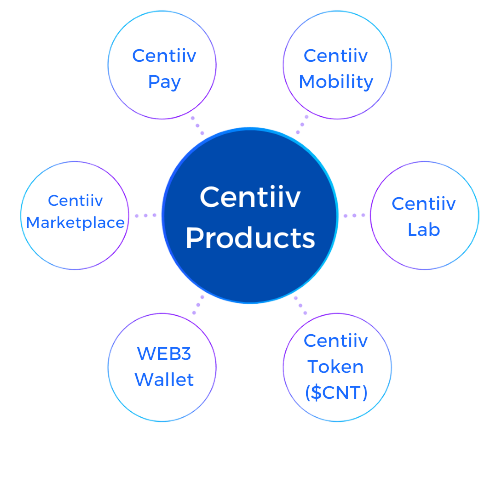
The pandemic helped me create a tech startup which sped up in a space of a few years due to the world’s new outlook on tech and digital. My tech brand Centiiv is founded on a community of blockchain enthusiasts like myself who are curious to learn all they can about blockchain. The growth of technology is a wave that cannot be stopped. 

Every day more people discover new inventions that make life simpler and work more efficient. My workplace productivity has grown by a huge margin and the numbers keep rising because thanks to online communication tools, technology enables us to work more closely in some ways even while working remotely. Teamwork is now simpler to achieve even when workers are not in the same place. 

Most searched  question

What is a Web 3.0 website?

What programming language does Web 3.0 use?

What skills are needed for Web3?

Most searched queries

Web 3.0 crypto

Web 3.0 blockchain

Web 3.0 applications

 
Hello readers! Hope you liked what you read today. Click the like button at the bottom of this page and share insights with your colleagues and friends!

 For more such amazing content follow Digilah

Categories
Edu Tech

Edumoms

Written by – Mona Sutrave on Digilah (Tech Thought Leadership)

Technology has been re-shaping and re-organising the economic dynamics of the world. The Internet brought about the revolution at the turn of the century.

Today, Technological advancement in almost all fields is NORMAL. Technology drives daily life. From a simple purchase of vegetables to complex algorithm driven activities. Technology has crept into our lives like we have never realised before.

Consumerism has shifted gears from a sellers’ market to a buyers’ market. While marketplaces created demand for products. Today, demand for a marketplace of convenience has brought the market place virtually to the customer. Making customers’ access products from different regions. Without having to travel the distance.

Education has its fair share in this technological revolution. The information available to the world at a click of a ‘mouse’ has been astounding. Just that one needs to access their relevant information with care.  

Online videos are in millions which speak about various topics. But little do they teach in a way a mother or a teacher would teach.  Content companies show content as they have understood a concept while in their college days.

The real challenge is how a young mind is wired? Does that young mind fire connections like a 25 year old? Does someone doing so make a school teacher obsolete? The Answer is a simple ‘NO’.

The growing years are so important in framing a personality. What one is at 10 is not the same as 14 and 16 and definitely not the same as while one is 25.  This goes on to prove that ‘ONE SIZE DOES NOT FIT ALL’. 

Each child is unique and each of their needs are certainly unique.  One needs to step into the mindset of the student and help them nurture their learning skills to adapt to the challenges. That One person, is the Teacher

A Teacher is not just educated, they are “QUALIFIED”. They understand every child in their class. They understand their abilities and Capabilities. They do not treat the child as a robot to max marks sheets.  They treat the child as a human being and help them with the abilities to form the very basis of LIFE SKILLS. The choice to PICK n CHOOSE.

DHII came into existence for the very fact that there were so many contents, videos, pdfs of chapters, but the whole personal touch was missing.  Kids are kids, they need to be nurtured, spoken to, cared and loved while teaching, which technology still hasn’t achieved.  It’s just not the topic which the kid is learning, but the whole universe around that particular topic, which only a teacher sitting across can bring it down.  

We at DHII believe in this very concept of teaching.  Help the students realise their true potential and enable them to experience the HIGH POINTS. We are available to the student through-out the duration of the course, in person. We proudly say, we just don’t teach subjects, but we BUILD CONFIDENCE.

We call ourselves, the new era EDU MOMS, simply because the first guru for any human being is a MOM. The affection which MOMs can give, can be compared to none! 

The onslaught of content companies camouflaged as edtechs are widening the gap by denying reasonable opportunities to the lower end of pool.  

We propose to take our ONLINE Teaching to Tier II and Lower areas, make quality education affordable to the aspiring students to cross the hurdle first.  Break the barriers of the regional languages and enable them to realise their dreams.

Technology is indeed making this possible. We have started this journey of providing customised education to the far and beyond corners of India with an initial investment. We now hope to achieve our mission with right investment opportunities sooner than we imagined!

most searched question?

Why education is the key to success?

What are 3 types of education?

What is the role of education in society?

most searched queries

Education importance

Education Department

Education Portal


Hello readers! Hope you liked what you read today. Click the like button at the bottom of this page and share insights with your colleagues and friends!

For more such amazing content follow Digilah

Categories
HR Tech

Why Agile Leaders Need to Be Master Strategists and Three Ways to Get Started

Written by Chuen Chuen Yeo on Digilah (Tech Thought Leadership)

This article originally appeared as a Council Post on Forbes here.

Albert Einstein is often credited with saying, “If I had an hour to solve a problem, I’d spend 55 minutes thinking about the problem and five minutes thinking about solutions.”

For leaders today, that five minutes packs in even more activities — communicate and create buy-in from key players, then assemble a capable team that will implement the actions decisively and effectively. In a bid to save time, some leaders jump straight to action without fully understanding the context, but a weak, flimsy, poorly constructed solution based on lopsided facts and warped logic almost never goes down well.

From technology disruption to climate change issues to the unwelcome COVID-19 crisis, leaders are now faced with a monumental task of transforming even more complex systems. And the clock is ticking.

If business leadership is a mathematical problem, the rules of engagement have changed. Corporate executives need to embark on a journey to re-understand business challenges and formulate solutions that can work in this new normal. And they must do so with agility.

Businesses require a strategy — a leadership strategy that secures a ready supply of capable leaders — should they wish to survive these tumultuous times. Armed with the right skills, capabilities and mindsets, these agile leaders can ensure that both the short- and long-term business needs are met.

The task of navigating complexities is one that all leaders need to undertake, and it requires people who can handle the cognitive complexity and draw on multiple frames of reference or intelligence at the same time as part of systems leadership.

The Traits of a Master Strategist

In my work as an executive coach, I often support leaders in becoming master strategists by challenging their thinking so they may formulate the best solutions (or assemble a team to do so), communicate with charisma and implement to perfection. We seldom arrive at well-designed solutions unless there is thorough contextual understanding, deep subject-matter-expertise, and clarity of thought. Over the years, I have observed that some corporate professionals do better than others in this area.

These are the traits that I have found are common among those who can call themselves “master strategists”:

1. They ask questions that elevate the quality of discussions and thinking.

2. Key stakeholders often welcome their opinions.

3. They are great storytellers, able to engage and inspire a wide range of audiences, draw them in and involve them in a compelling vision.

Some ask if strategic thinkers are born or developed. Everyone sits somewhere on the spectrum of strategic thinking so instead of asking “Do I have it?” leaders would benefit more if they instead ask, “How do I get better at it?” To remain low on the spectrum of strategic thinking is unthinkable. A leader may have excellent communication skills and the resolve to follow through with bold actions, but the lack of substance — strategy — can be their downfall.

How To Become A Master Strategist?

Here’s the good news: With deliberate and consistent actions, leaders can quickly level up their cognitive abilities and be well on their way to becoming master strategists. Here are three actions that can help you.

1. Incorporate structured reflection into your daily routine.

In his book Sometimes You Win—Sometimes You Learnleadership guru Dr. John C. Maxwell wrote, “Experience isn’t the best teacher, evaluated experience is.”

There are many learnings leaders can glean from daily experiences, but not having the discipline for regular reflection can mean you will miss them. Structured reflection helps you maximize your learning and experience, be it through daily readings, observations, or interactions. Reflecting in a structured way helps you analyse facts and processes and translate them into future hypotheses and actions. Reflection is a very powerful tool for continuous improvement. I recommend Kolb’s Learning Cycle and Gibb’s Reflective Cycle for this purpose. Both are very easy to implement and offer robust frameworks.

2. Think unconventionally, not automatically.

Thinking is such an automatic process that we often take it for granted. When we ask someone to think, what do we really mean? Given the world has changed so much and things we learn in formal education are often obsolete even before we graduate, we need to unlearn, relearn, and repeat.

Fortunately, there are many powerful thinking frameworks out there. You can tap into visible thinking routines or thinking frameworks to understand problems thoroughly. Paul’s Wheel of Reasoning is a useful critical thinking framework that I have seen work wonders for my clients many times.

3. Understand the needs of others.

Master strategists are great storytellers. In every compelling vision, there’s a part that everyone can play — they can see themselves in your story, hence the strong commitment. The question master strategists must address when communicating with others is, “What’s in it for me? Why should I care about this?”

You could begin by examining your audiences’ motivation, love language, mental models, strengths and more. Keep a lookout for what is important to them, and you will find a way to create the best story that onboards others.

The world as we know it now is different. The speed of digitalization has increased in the last few months in this new world created by the pandemic. As a leader, you must stay persistently curious and keep stretching your mind to learn, unlearn and relearn so that you may create the best master strategy.

For more articles on agile leadership click hereACESENCE

Categories
Ad Tech

Shaping the way of digital advertising

Written by Alex Martinez on Digilah (Tech Thought Leadership)

The relationship that people have with the consumption of content in digital platforms is constantly changing.

As an audience, our needs change, the way we consume information and what we expect from the online experience when we enter a website or an app. The truth is that as digital consumers we are increasingly demanding.

All the parts that make up the digital world make a great effort to adapt to these demands.

One of these is to provide a pleasant online experience. What factors can determine this? A well-worked UX (user experience), and that the user finds advertisements according to their interests.

It is on this last point that we decided to work in order to contribute our technological value.

Five years ago, together with Ricard Luquero and Pablo Salinas, we founded Adpone, an advertising technology company with a very clear mission: to shape the future of advertising with in-house technology to achieve high performance.

We developed a technology that is little known to most people: a solution that places premium brand ads on websites from all over the world.

This solution meets the needs of digital players so that they can continue to offer their audiences free and quality content.

What are website owners and advertisers looking for? Let’s break it down.

Publishers want to make the most out of their traffic.

By monetizing advertising inventory

The vast majority of websites generate income through advertising. This can be done in different ways, but it is usually done by placing banners or videos in the body of the website.

By ensuring a great online experience

Journalists and content creators make a great effort to generate original and quality content, and to position it organically in search engines. All this, to build trust in their audiences and make them want to return to the website.

For this to be possible -and at the same time profitable- the advertising they show must be consistent with each content.

Advertisers seek to make good impressions.

By reaching their target audiences

Every advertising campaign has at least two parts. The first is to design compelling creative content. The second, to implement this campaign by placing the ads on websites according to their content. This used to be done intuitively, now it is done through advertising technology.

By placing their content in the right place

Context matters. Let’s imagine that a user is reading a news story about the use of toxic fertilizers in soy production and suddenly a banner of a brand of soy-containing veggie burgers appears. Obviously the impression of the brand will not be positive.

Agencies like Adpone are responsible for placing the ads in the right context.

In short, providing a pleasant online experience, having a profitable website and providing adequate advertisements is possible thanks to adtech companies.

At Adpone, we sum it up as #impressionsmatter.

Categories
Digi Tech

Who Wants To Be a (Digital) Millionaire?

Written by Wendy Scott on Digilah (Tech Thought Leadership)

I do.

If you recognize the reference to the Frank Sinatra/Celeste Holm song from the 1956 film, High Society, you are probably a Boomer like me. So what business does a fifty-nine-year-old have wanting to be a digital anything, let alone a digital millionaire?

I didn’t grow up with tech. We didn’t even have a landline at home. I took my ‘O’ Levels in 1978, which was the first year in the UK we were allowed to take calculators into exams. I struggle with tech, and I say ‘interweb’ to annoy the kids.

But what I do have is at least forty years of leadership and learning & development knowledge that I can share online. And technology has made it possible for me to make money doing that.

What the heck is a digital millionaire?

Otherwise known as a digital entrepreneur or content creator, it’s someone who sells digital products online such as templates, books, or courses. It’s also possible to sell membership newsletters, coaching, and exclusive coaching groups called masterminds.

How it all works

I’ve spent the last eighteen months reading, doing courses, and attending webinars to find out how to be a content creator, and as far as I can tell, this is what digital millionaires do:

Step One – Create online content – whether you create a blog, an Instagram post, a podcast, or articles, put free content online.

I write articles on Medium, a writing platform anyone can post on. When people read an article, the author gets a small amount of the reader’s membership fee.

Medium writers share articles on FB, Instagram, LinkedIn, Twitter, Quora, and Pinterest.

Step Two – Collect email addresses – Followers on Instagram or other social media are useful, but you’d have to start again if the platform disappears. The trick is to collect the email addresses of people that like your work. The list can’t disappear overnight, and you use the list to send newsletters and sell your products.

I’ve just started an email newsletter that goes out weekly and contains free links to my training, leadership and dating articles.

It’s said that successful online creators make one dollar a month income from each email subscriber.

I’m using convertkit for my list; They provide helpful resources, such as an online creator community, online tutorials, and live zoom tutorials.

Step Three – Give free content to your email list – Email your list once a week and give them valuable content for free. Content could be an article in the body of the email, sources you have found helpful, book recommendations, templates, short email courses, short video courses, or access to an exclusive podcast episode.

Step Four – Sell your content via your email list – You can sell templates, ebooks, and courses. I’ve seen online courses from $29 US to $3000 US, and some big earners sell masterminds for $10,000 US per year.

Currently, I’m writing an ebook and a course which will be my first digital products.

I use Atticus for my book, Teachable to create my course, and Canva to create the slides and workbooks.

Next tech on the list

A subscription to Later to automatically schedule my posts on social media.

I also use a writing assistant called Jasper.ai and a note-taking tool called RoamResearch.

How I’m finding all the tech

I believe in a growth mindset, so after the screaming, tears, and tech-induced lie-downs with a nice cup of tea, I persevere. Google is my friend. I’m learning very slowly, but each gain I make is a small step forward.

The upside is that I’m enjoying myself while learning about a whole new world. The downside is that none of my friends can understand what I’m talking about and think I’m getting mixed up in an online pyramid scheme scam.

Am I a Digital Millionaire yet?

No. I’ve made a loss with the subscriptions to tech and courses I’ve taken. But I’m having fun, learning heaps, and keeping current with new tech.

And you never know, this time next year I could be a millionaire…

Digital Millionaires I follow: Denise Duffield-Thomas, Jeff Walker, Amy Porterfield, Marie Forleo, and Dr. Benjamin Hardy.

Movers and Shakers on Medium: Tim Denning, Zulie Rane, Ayodeji Awosika, Tom Kueglar, Sean Kearnan, Nicolas Cole, Sinem Gunel.

Categories
Decision Making Tech

Better than Before: Making sense of data in an age of information overload

Written by Ira Gilani Lal  on Digilah (Tech Thought Leadership)

In a 2016 Harvard Business Review article, Scott Anthony shared some insights from a study on S&P 500 companies:

  • 61-year tenure for average firm in 1958 narrowed to 25 years in 1980 – to 18 years in 2012
  • At current churn rate, 75% of the S&P 500 companies will be replaced by 2027

Business leaders commonly refer to the military acronym VUCA (Volatility, Uncertainty, Complexity, Ambiguity) to describe the world today. The external environment is changing at a rapid pace and companies cannot afford to be caught off guard. How can companies continue to thrive, in this ever-changing external environment? While there are several challenges, and there are also plenty of opportunities. Deep-rooted assumptions hold us back from unlocking this hidden potential.

Today’s information and digital systems are capable of providing a huge amount of data at the click of a button. Most organizations measure a large number of metrics for each business unit, division, department, employee level etc. The underlying assumption is that the more we measure, better we are! Most senior executives are quite familiar with their local measurements (e.g. tons, units produced, order book, number of subscribers etc.) but are ignorant of the overall financial measurements. 

Everyone in the company should understand financials; it is not just for Accounts or Finance function. In most organizations, the top management team does not have a good understanding of Free Cash Flow. In his book, Conspiracy of Fools, Kurt Eichenwald writes that in 2001, just a month before the collapse of Enron, its chairman Kenneth Lay, CEO Jeffery Skilling, and CFO Andrew Fastow did not know that Enron would run out of cash in a matter of weeks!

Dr. Eli Goldratt, author of the best-selling book The Goal, repeatedly emphasized that “Measurements Drive Behavior!”. The purpose of measurements is to take decisions for corrective actions. At the organization level, a few simple parameters are good enough. Timely data and corrective actions can help individuals to connect the dots and see the big picture.

Most companies review performance monthly. This leads to a significant time lag in getting key data or MIS. We recommend a weekly review mechanism with focus on 3-5 key metrics. The objective of the review is only to take decisions for corrective action. The weekly report should be simple and accurate, leaving no room for analysis paralysis, and facilitating effective decision-making.

Increasing digitization of data across the organization has been a key enabler for running the weekly reviews successfully. Companies that have adapted this methodology, provide a very high degree of focus on getting the reports right first time, as soon as the week ends. Many companies have integrated their digital systems (based on ERP such as SAP, Oracle, Tally, Zoho) and provide simple excel based reports and dashboards which can be accessed across devices such as mobile phones or tablets.

During the last two years of the pandemic, there have been lot of uncertainties in supply chain. Moving to a digitally enabled model has allowed these companies to be extremely nimble and agile in their decision making. Several companies have pivoted their business model quickly in order to capitalize on the emerging opportunities in the market. These decisions have been backed by analysis of marketing trends using simple AI and ML based algorithms, dynamic decision making matrix and partnerships across the digital ecosystem.

Technology acceleration has also helped some companies to take specific actions to address business challenges posed by the pandemic. For e.g. to deal with the disruption in logistics, companies have invested in GPS based end to end tracking systems. In manufacturing businesses, use of IOT based sensors has picked up significantly to collect data, and share timely alerts for predictive maintenance.

At Goldratt India, we have been working with Indian companies for over 23 years to help them increase their sales, profit and cash flow by an order of magnitude. Weekly reviews have been the cornerstone of all our engagements. Companies have been able to achieve quantum improvement in performance, just by changing a few metrics and review processes. Some of our learnings are  encapsulated below:

  1. Measure performance weekly instead of monthly
  2. Don’t get stuck in analysis paralysis, focus on corrective actions only
  3. Instead of chasing benchmarks or budgets, always strive to “Better than Before” with respect to own past performance
  4. Monitor plan vs. actual every week: The more our planning improves, the gap between plan vs. actual reduces
  5. Better than Before: Each week, strive to improve upon past 13 week moving average, irrespective of the external environment

Our client JSPL has been practicing these principles for over 5 years and is well on its way to becoming a debt free company. The company has reduced debt by over Rs 25000 crores in the last 4 years.

Short video from the case study presented at TOCICO international conference in USA:

In conversation with Mr. Naveen Jindal, Chairman, JSPL

Categories
Wellness/Beauty Tech

Trust In the Age Of Digital

Written by Sabina Ariff/Munshi on Digilah (Tech Thought Leadership)

The skincare industry has always been a very traditional space in the way business was done. Heavily brick and mortar, mass targeting when it came to marketing, touch and feel factor was crucial and only the big boys had a stake in the game. Well, all of that is being challenged and the disruptors are here to stay.

The health and well-being industry went through a seismic shift during the pandemic when, time at home increased exponentially and the need to engage and connect reached an unusual high. This interesting combination led to niche skin care brands finding innovative ways to not only build a community but use digital platforms to engage, interact and show customers how to maximize their time at home while achieving that sought after glow and Zen vibe.

Online shopping platforms and social media tools gave brands the much needed space to create content that was amplified to customers who were hungry for relatable content and the need to find a calm in the chaos of the pandemic. Customers interacted with each other and shared feedback on the efficacy of brands and were not shy to voice their opinions about the drawbacks of a product. This forced brands not only to be transparent about their sources but also held accountable to high standards which in turn made online skincare shopping more appealing.

Taking this conversation forward we talk about business growth alongside trust and community in the skincare world. The natural and organic beauty product market is expected to touch $54Billion by 2027 and digital has a strong role to play in this. Direct to consumer on online market places has been a game changer and will contribute heavily to this forecast. Social media product tags will also be a big part of the sales numbers for skincare brands.

Never before has it been this pivotal for brands to be present and be seen on the phone screens of Gen Z to Millennials.

Baréskin calls its’ customer base the “CircleOfTrust” which cements how important the factor of trust is in a world where digital interaction is the only option sometimes. Community building and a strong story, backs this brands success and there is no looking back. Frequent LIVE sessions with the founder, supporting other female-led brands, taking transparency of toxic ingredients seriously and authenticity of its content are all part of the brand ethos which the founder has ingrained in all aspects of the business. This has to seamlessly translate to the customer which is when the magic happens.

Baréskin production unit

Capturing this wave will mean staying agile and on the ball more than ever before but fortunately for us, we take this challenge on as an opportunity to grow to our full potential.

Categories
Food Tech

THE PLANT BASED MEAT MAGIC

Written by Suhail Jindran & Reena Sharma, Ph.D. for Digilah (Tech Thought Leadership)

The rapid increase in meat consumption shed light on the resource demand of meat production. Cattle are responsible for about 6.52% of total anthropogenic greenhouse gas emissions (3.19 Gigatons of carbon dioxide equivalents) and the production of 1 kg of beef causes 26.5 kg CO2 emission and needs 15,000 litres of water (equal to 50 days’ household water use per capita in EU). Many researchers suggest that meat consumption need to be decreased to protect and preserve the environmental resources.

So, let’s go behind the scenes to find out how the Plant-Based Meat Magic is done… Meat analogues are based on plant-based proteins and come in various shapes and sizes. But what does the production process look like? And what is the difference between Texturized Vegetable Proteins (TVP) and High Moisture Meat Analogues (HMMA)? Get a glimpse behind the scenes in the following infographic:

Even though meat substitutes are available in numerous forms and consistencies, they are mostly based on two types of plant-based proteins: Texturized Vegetable Proteins (TVP) and High Moisture Meat Analogues (HMMA).

TVP is known for its dry consistency and long shelf life when stored under normal ambient conditions. It is mostly offered as crumbles, flakes or even strips. As a result, it is suitable for several dishes ranging from the classic spaghetti Bolognese to vegan chicken breast. When preparing TVP-based products, they need to be soaked in water or liquid as TVP requires dehydration before use.

HMMA on the other hand is characterized by its high proportion of moisture. It typically consists of 50-80% of water which is about the same as lean meat. Therefore, it is used for many ready-to-eat meat dishes.

Shandi Global was born out of years in the research and development to fulfil the gap found in the plant-based meat market. The target market for plant-based meat includes vegetarians, vegans, non-vegetarians who are seeking to reduce their meat consumption. Shandi Global does not believe in changing human behaviour towards their diet, but instead offer a huge choice by providing a 100% plant-based meat which does not contain any artificial ingredients.

The founders Dr. Reena and her husband Dr. Gaurav both spend over a decade in the food tech and science industry and noticed that the emergence of Plant Based Meat had several flaws and missing elements with a limitation to what the end consumer could prepare as most companies were offering only mince products or burgers and sausages while some were offering soy products with lots of sodium, artificial flavours and additives. This made the couple to think and utilise their combined years of expertise in the food science industry to start deep research to identify the missing links through latest technology and discover each molecule found in meat and in pea protein to match 100% the meat analogue in texture, flavour and appearance.

They developed a complete amino acid profile: Each protein is different due to its precise composition of amino acids. Each amino acid has a very specific function in our body. Hence having high number of proteins is not enough to build muscles and repair body tissues. Right protein with right balance of amino acids is a must to be called as nutrition.

At Shandi, meat does not only contain high protein, but also right proteins with 90% of amino acids in same composition as meat. It has high digestibility like meat and dairy so that nutrients are quickly absorbed.

Today the company is the first in Singapore to have the latest state-of-the-art technology with a patented and custom-built extruder machine that is capable of producing whole slabs of meat like steaks, breast meat or our signature Chicken Drumsticks ™. Our technology differentiates us from the others, as a majority of producers are only “Texturized Vegetable Proteins” (TVP) while we are a step ahead of adapting both TVP and “High Moisture Meat Analogues” (HMMA). The difference in both methods is; TVP is released and directly cut at the nozzle plate, HMMA requires a special cooling die. In the cooling die the material is cooled down while being forced into a laminar flow. This way, a meat-like structure is created, and our custom-built machine does what we have designed it for.

To sum up, plant based meat analogue (i.e., plant-based meat alternatives or substitutes, or vegan meats) are becoming more and more popular. The consumption is also increasing while the primary role of meat analogues is to replace the meat component in meals where the appropriate nutrient content and hedonic value will be provided as well. Using micro biotechnology, it is possible to reverse engineer naturally found molecules in various legumes into a full-bodied muscle meat which looks, feels and cuts exactly like any meat product.

Categories
Sustainability Tech

Satgana: A Global Venture Studio

Written by Jashna Pillay – Digilah (Thought Leadership)

Want to find out more about our operations and exactly what we can provide to you and your start-up? Or are you looking to make an impact investment and explore the potential of capital for good. You’ve come to the right place!

Why?

Today, the investment landscape is powered by a broader base of investors who are marshaling billions of dollars to tackle one overarching global threat: climate change. “Climate tech VC isn’t just having a moment, it’s entering a new age”, says Andrew Beebe of Obvious Ventures. Climate tech includes solutions aimed at decarbonizing the planet. This has been bolstered by recent trends including a staggering rise in extreme weather disasters, an international push for net-zero emission targets and new technological breakthroughs that can potentially fight climate change. 

We believe that some of the most successful businesses of this decade will stem from solutions addressing the climate and ecological crisis. Based on this premise, Satgana was launched in September 2020 with the aim of being a launchpad for other good companies that develop market-based solutions to solve these issues.

What?

The Venture Studio Model is dedicated to systematically producing new companies. Our mission is to launch and fund planet-positive startups that address the following Sustainable Development Goals (SDGs):

The diversity of fund structures positioned to foster and profit from early-stage business development and support is increasing. Incubators and accelerators are the first round of model innovation whereas Venture Studios represent a continuation of this trend. Further, this model thrives on shared solutions, shared talents and shared growth, which in turn result in reduced, distributed costs and better applied efforts. 

How?

For an entrepreneur, starting out may seem like the hardest part. How do you grow an idea from the ground up with little resources, reputation, or staff? You’ve had this amazing idea, you know it has potential, you’ve identified your target market and know how to sell to this demographic. But there’s work to be done in getting a company off the ground. 

At Satgana, we support and invest in impact-driven startups

The best entrepreneurial talent is sought by their ability to solve real world problems and to execute on those ideas. Therefore, our purpose as a Venture Studio is then to test those ideas and back them with funding and resources to launch and grow responsible companies with a triple bottom line approach: People – Planet – Prosperity

How much?

We create bespoke support from the idea-stage until the first round of external funding, which typically occurs through a seed round, 12-18 months after our Venture Studio work.

Our goal is to invest capital in tranches, from 30k€ in founding capital to pay a stipend to entrepreneurs for their first few months, and up to 500k€ in pre-seed capital. The goal is to work alongside entrepreneurs during the “valley of death”, where great ideas are not yet fundable by traditional sources of capital which typically require traction and oftentimes existing revenue and growth.

Where?

We are a globally distributed company, leveraging remote work to tap into global talent and foster collaboration between teams in the Global North and the Global South. We are a diverse team of professionals from a large spectrum of backgrounds across Europe, India and Africa.

We believe that talent is evenly distributed across the world, and so should opportunities. ​At Satgana, we strive to solve wicked problems and we have the opportunity to do so through the flexibility that the Venture Studio model allows. Guided by the SDGs, we see the challenges the world is facing and aim to create start-ups to solve these gaps by inspiring entrepreneurs around the world to build market-based solutions. 

If you’re interested in building an impact-driven startup with Satgana, apply here or, send us your pitch deck to jointhejourney@satgana.com. We are on a mission to build and invest in climate-positive start-ups.