Digilah

Categories
Web 3.0 Tech Art Tech

How Web3 could help Local Artisans retain the heritage of their Art  

Written by : Ajit Padmanabh on Digilah (Tech Thought Leadership)

Introduction

There is a palpable sense of skepticism in many with regards to the promise of inclusivity in Web3. Many believe that all talk of decentralization is a mere hype and is not implementable.

When one looks at the Metaverse players across various layers and that the metaverse market is projected to be worth $12Tn by 2030, the values of pay-parity, equity and inclusivity need to be lived in and by the Metaverse players. 

Are there companies working on inclusivity and equity in places like Africa and economically backward countries?

Are there real possibilities to generate revenue and employment for the deprived or underprivileged classes of our society, with Web3 technologies? 

The internet had made similar promises in the beginning and the utopian dream died within years of its inception. If we look at the internet today, there are pockets of improvement in revenue generation in rural and tribal populations but largely, it has skewed more, making the privileged a little more privileged.

 Hence, considering the promise of Web3 in decentralization and self-sufficiency in revenues, this article attempts to provide scenarios across various layers of Metaverse as depicted below, to make this utopian ideal a reality. 
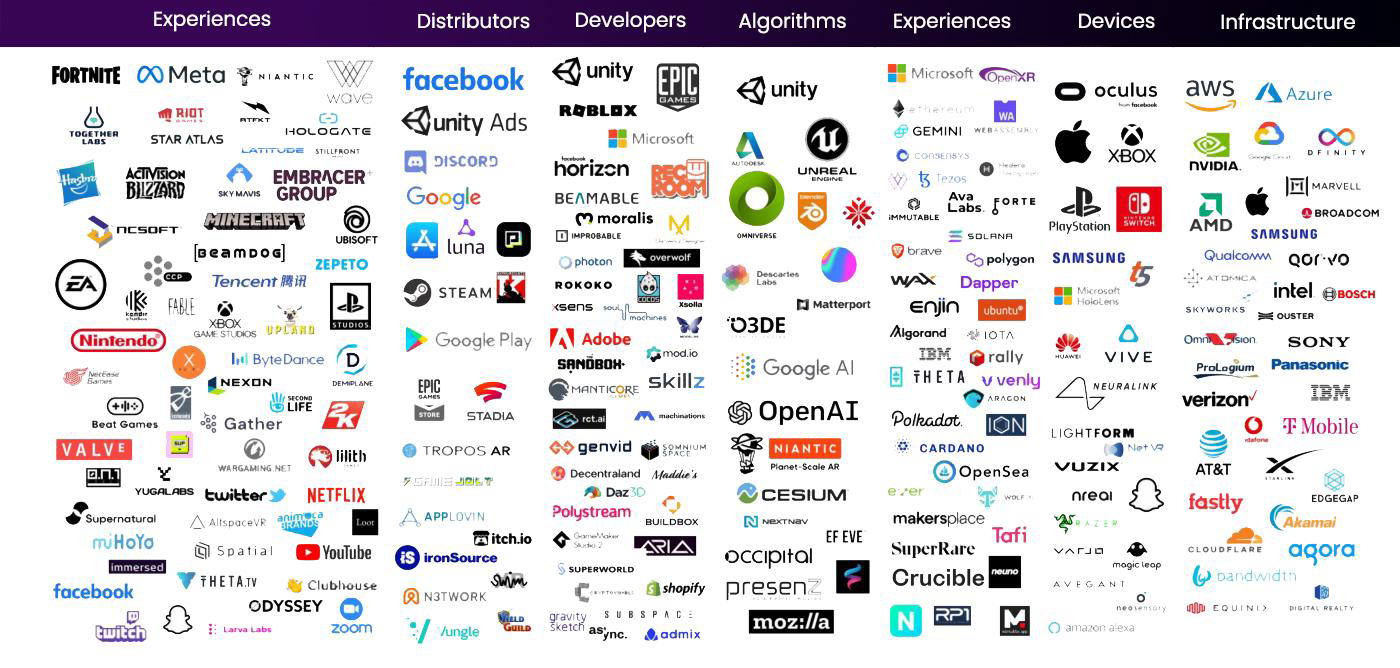
The Artisan Community and Indian Craft

As an ancient civilization that has birthed many cultures and has seen numerous migrations and invasions, India has a rich heritage in the field of arts.

Craft as a term was historically limited to “goods worked by hand” but now includes a broader canvas – all things art, like Music, Dance, Painting, Sculptures, Textiles etc. Even if we limit Indian craft to “Handicrafts” across states, the variety in art form and media is unparalleled. 

The Export Promotion Council for Handicrafts (EPCH) is a nodal agency for promoting exports of handicrafts from India to various destinations of the world and projecting India’s image abroad as a reliable supplier of high-quality handicrafts goods & services. 

The Handicrafts exports during the year 2021-22 was Rs.33253.00 Crores (US$4459.76 Million) registering a growth of 29.49% in rupee terms & 28.90% in dollar terms over previous year1. While the growth is promising especially from a tourism perspective, this may have a miniscule impact on the overall rating of India as the Vishwaguru

Revenue Generation for Artisans, while preserving the Art Heritage 

The fast-paced Digital Age is only going to get faster with Industry 4.0. With technologies like VR/AR, 3D-Scanning and 3D-Modeling, 3D-Printing as well as Web 3.0 constructs (and buzzwords) like the NFT, Metaverse and Blockchain, the craft Industry has all the components aligned for that leapfrog moment. 

A lot of artisan communities and tribal art communities in India are now extinct and some on the verge of extinction – this is a challenge that uniquely presents itself to us as an opportunity if we leverage the technologies mentioned above. 

Industry 4.0 terms Technology as a driver of change, and not merely an enabler. We should look to harness this driver for Indian Craft and the numerous communities associated with it.

There is a need to look at Indian Craft holistically, including all forms of fine art and performing arts, compounded by technology and tourism. We Illustrate these possibilities by taking the famous Channapatna Toys from Karnataka, as an example. They are protected as a Geographical Indication (GI) under the World Trade Organisation administered by the Government of Karnataka. 

Channapatna Toys could be put up on an artisan marketplace in the Metaverse. The artisan would be able to directly engage in selling goods in 3D and voice-interact with consumers worldwide. With technologies like 3D-scanning and 3D-printing, consumers worldwide would be able to see, touch and feel these products via Haptic technologies and also view the story of the artisan behind it.

Such multi-sensory experiences are disruptive and could help consumers in accelerating their buying decisions, something the Internet has not been able to achieve. 

Consumers will not only get to pick up local artisans’ produce but also engage with them and know more about our culture, traditions and heritage from their standpoint. The same product, once digitized, could be converted to limited edition NFTs during special seasons. The underlying financial technology could be powered by Digital Ledger Technology (DLT) or Blockchain, keeping the transaction decentralized, bereft of middle-men. 

Imagine the access for the artisans to the entire Indian Diaspora across the world and imagine the ease of access and purchase for the consumers, at large. This will also help the Artisans transfer knowledge to the next generation, a large number of who are looking for better economic opportunities in cities. 

As mentioned earlier, this is the main reason why India has lost a lot of tribal and native art. With metaverse and ancillary technologies, the hope is that we will be able to reverse this trend and preserve art heritage for posterity while making it economically viable for the artisans at scale, something that is unknown and unprecedented in today’s times.

Early traction in such technology-driven soft power can certainly propel India onto the world stage and make traditional Indian artisans global celebrities, giving them the much needed recognition and respect.    

Conclusion 

Indian Heritage and Culture is multi-layered, with each layer having the capability to catapult India’s soft-power quotient. One could experience it through ancient monuments, scriptures, textiles, crafts, music, dance, food, sports, folktales and many more. 

There is a need to look at each of these layers from a Technology and Tourism standpoint, the intent being to preserve and propagate Heritage and Cultures of the world, including the most backward communities.

If deployed across other art-forms like paintings, pottery, sculptures, textiles, and even artists like musicians and dancers, Artisans worldwide have tremendous potential to earn from a global market without boundaries. 

References:

  1. https://indiaeducationdiary.in/piyush-goyal-union-minister-of-commerce-industry-consumer-affairs-food-public-distribution-and-textiles-govt-of-india-graces-handicrafts-export-award-function-as-chief-guest-and-gives-away/ 

Most searched question 

Why do we need Web3?

Is Web3 virtual reality?

Are Web 3.0 and the metaverse the same thing?

Most searched queries

Web3 social impact

Web3 blockchain


Hello readers! Hope you liked what you read today. Click the like button at the bottom of this page and share insights with your colleagues and friends!

 For more such amazing content follow Digilah

Categories
Food Tech Web 3.0 Tech

A Paradigm Shift is Possible in the Metaverse Experience

Written by : Ajit Padmanabh on Digilah (Tech Thought Leadership)

Only if these 2 technologies become a reality!

There is no doubt about it – Metaverse is the next Internet and is here to stay for a couple of generations, if not more. It is also a natural evolution from today’s 2D Internet to be able to experience the Digital Universe in 3D! With today’s technology advancements and research, if we can plug 2 technologies into the Metaverse, it would be a limitless opportunity. 

What are these 2 technologies, you ask? Sensory technologies involving Olfactory and Gustatory systems. In simpler terms, Smell and Taste, respectively. With the pandemic having affected many people with the loss of sense and taste and they having reported a loss of interest in life owing to the sensory loss, it makes sense to build these technologies for the Metaverse.  

Why Sensory Technologies

You may be familiar with the reductionist philosophy. It’s the practice of analyzing and describing a complex phenomenon in terms of its simple or fundamental constituents, especially when this is said to provide a sufficient explanation. 

Quoting few examples from Britannica1, the ideas that physical bodies are collections of atoms or that a given mental state (e.g., one person’s belief that snow is white) is identical to a particular physical state (the firing of certain neurons in that person’s brain) are examples of reductionism.

With advances in neuroscientific research in the last century, there is an existence of what is known as Cortical Homunculus. A cortical homunculus is a distorted representation of the human body, based on a neurological “map” of the areas and proportions of the human brain dedicated to processing motor functions, or sensory functions, for different parts of the body. A 2D representation of the sensory homunculus is shown below. 

Fig.1 A 2D Cortical Sensory homunculus

All signals are received by the primary sensory cortex in the brain. The amount of cortex devoted to any given body region is not proportional to that body region’s surface area or volume, but rather to how richly innervated that region is.

Areas of the body with more complex and/or more numerous sensory or motor connections are represented as larger in the homunculus, while those with less complex and/or less numerous connections are represented as smaller.2 You’d notice that the significant amount of brain-processing is accorded to sensory functions, including those of taste and smell. 

If we are to look at the proposition of Metaverse being an alternate universe and where you are expected to spend considerable amount of time, it has to be capable of attracting your attention not only visually or aurally (as is the case with the 2D internet of today) but as a multi-sensory experience involving haptics (touch), olfactory (smell) and gustatory (taste) technologies as well.

Hence, it is critical to understand and invest in these sensory technologies and ensure that the promise of Metaverse is realized in entirety.

A Sneak Peek into Multi-sensory Prototypes and Ongoing Research 

A lot of research and development has gone into haptic (touch) technologies with many commercially available solutions as well. Since the solutions are fairly established, we will focus on research into olfactory and gustatory technology.

Olfactory Prototypes and Research

As far as olfactory technologies are concerned, considerable research is being performed on classification and extraction of scents so as to define the exact sense stimulus in the brain which then can be simulated using ergonomic hardware. 

According to Judith Amores, a research fellow at Massachusetts General Hospital and Harvard Medical School, whose work is focused on scent and virtual reality – “People don’t really appreciate the sense of smell,” she said. “It’s actually so important, it’s so unexplored, and it’s so powerful.”3

OVR Technologies, a Burlington, Vermont-based startup, is one of the few companies developing this technology for Virtual Reality. While reproducing real-world odors with chemicals is challenging, it opens up new possibilities in nostalgic experiences as odor is associated with memories. With earlier 5D systems, scent technology had certain issues, namely the mixing up and lingering of scents long after the experience. This is being fixed with AI-driven algorithms that trigger various odors and control their intensity, duration among other parameters. 

 Lastly, there is research on olfactory-powered deaddiction programs in Virtual Reality, which could prove to be a panacea in the Metaverse. Closer home, research into olfactory is ongoing at various institutes including IIT, Jodhpur.

Gustatory Prototypes and Research

Research into gustatory prototypes is in its early days. The idea is to simulate taste in the physical world first and then look to replicate it in the virtual world. The “lickable screen,” called the “Norimaki Synthesizer,” uses five different gels, each corresponding to the five tastes the human tongue can distinguish between — salty, acidic, bitter, sweet, and umami. 

By weakening and strengthening these five different tastes through the use of electrical currents, the device can reproduce any “arbitrary taste,” according to the research.4 “Like an optical display that uses lights of three basic colors to produce arbitrary colors, this display can synthesize and distribute arbitrary tastes together with the data acquired by taste sensors,” said Homei Miyashita, researcher at Meiji University, Japan. 

In a recent development, A team at the Carnegie Mellon University, a private institution in Pittsburgh, US, have made it possible for users to feel the virtual world in and on their mouth, without making physical contact. What the user can feel are tactile sensations such as drinking from a water fountain, wind on the face.5 Project Nourished, a VR food start-up, has been experimenting with technology to trick taste buds and promote sustainability.6

Conclusion

Metaverse is here to stay and become an integral part of who we are. Multi-sensory metaverse, in its complete form, will not only make it real and immersive but will also open up new industry verticals hitherto unknown as of today. A paradigm shift is also possible in Hospitality, Travel & Tourism and Entertainment industries with such technologies.

There is huge potential to be at the forefront of research and commercialization of such technologies in India – Tasty food for thought for investors and research institutes across the country!

References:

  1. https://www.britannica.com/topic/reductionism
  2. https://en.wikipedia.org/wiki/Cortical_homunculus 
  3. https://www.wbur.org/news/2022/03/14/virtual-reality-smell-ovr-technology
  4. https://futurism.com/the-byte/device-simulate-any-flavor  
  5. https://www.cnbctv18.com/technology/ultrasound-vr-device-lets-users-touch-and-feel-in-mouths-vr-kiss-13378502.htm

Most searched question

What is metaverse experience?

What are the possibilities in metaverse?

Will the metaverse change our lives?

Most searched queries

Metaverse companies

Top 10 metaverse companies

Metaverse in education research paper


Hello readers! Hope you liked what you read today. Click the like button at the bottom of this page and share insights with your colleagues and friends!

 For more such amazing content follow Digilah

Categories
AI Tech

5 Levels of Autonomy in Vehicles

Witten by Oliver-Werner K. on Digilah (Tech Thought Leadership)

Levels 0 to 5

Level 0 – No Automation. The human at the wheel steers, brakes, accelerates, and negotiates traffic.

Level 1 – Driver Assistance. …

Level 2 – Partial Automation. …

Level 3 – Conditional Automation. …

Level 4 – High Automation. …

Level 5 – Full Automation.

Researchers forecast that by 2025 we’ll see approximately 8 million autonomous or semi-autonomous vehicles on the road. Before merging onto roadways, self-driving cars will first have to progress through 6 levels of driver assistance technology advancements.

What exactly are these levels? And where are we now? 

The Society of Automotive Engineers (SAE) defines 6 levels of driving automation ranging from 0 (fully manual) to 5 (fully autonomous). These levels have been adopted by the U.S. Department of Transportation. 

Level 0 (No Driving Automation)

Most vehicles on the road today are Level 0: manually controlled. The human provides the dynamic driving task although there may be systems in place to help the driver. An example would be the emergency braking system―since it technically doesn’t “drive” the vehicle, it does not qualify as automation. 

Level 1 (Driver Assistance)

This is the lowest level of automation. The vehicle features a single automated system for driver assistance, such as steering or accelerating (cruise control). Adaptive cruise control, where the vehicle can be kept at a safe distance behind the next car, qualifies as Level 1 because the human driver monitors the other aspects of driving such as steering and braking. 

Level 2 (Partial Driving Automation)

This means advanced driver assistance systems or ADAS. The vehicle can control both steering and accelerating/decelerating. Here the automation falls short of self-driving because a human sits in the driver’s seat and can take control of the car at any time. Tesla Autopilot and Cadillac (General Motors) Super Cruise systems both qualify as Level 2.

Level 3 (Conditional Driving Automation)

The jump from Level 2 to Level 3 is substantial from a technological perspective, but subtle if not negligible from a human perspective.

Level 3 vehicles have “environmental detection” capabilities and can make informed decisions for themselves, such as accelerating past a slow-moving vehicle. But―they still require human override. The driver must remain alert and ready to take control if the system is unable to execute the task.

Almost two years ago, Audi (Volkswagen) announced that the next generation of the A8―their flagship sedan―would be the world’s first production Level 3 vehicle. And they delivered. The 2019 Audi A8L arrives in commercial dealerships this Fall. It features Traffic Jam Pilot, which combines a lidar scanner with advanced sensor fusion and processing power (plus built-in redundancies should a component fail).

However, while Audi was developing their marvel of engineering, the regulatory process in the U.S. shifted from federal guidance to state-by-state mandates for autonomous vehicles. So for the time being, the A8L is still classified as a Level 2 vehicle in the United States and will ship without key hardware and software required to achieve Level 3 functionality. In Europe, however, Audi will roll out the full Level 3 A8L with Traffic Jam Pilot (in Germany first). 

artificial intelligence

Level 4 (High Driving Automation)

The key difference between Level 3 and Level 4 automation is that Level 4 vehicles can intervene if things go wrong or there is a system failure. In this sense, these cars do not require human interaction in most circumstances. However, a human still has the option to manually override.

Level 4 vehicles can operate in self-driving mode. But until legislation and infrastructure evolves, they can only do so within a limited area (usually an urban environment where top speeds reach an average of 30mph). This is known as geofencing. As such, most Level 4 vehicles in existence are geared toward ridesharing. For example:

NAVYA, a French company, is already building and selling Level 4 shuttles and cabs in the U.S. that run fully on electric power and can reach a top speed of 55 mph.

Alphabet’s Waymo recently unveiled a Level 4 self-driving taxi service in Arizona, where they had been testing driverless cars―without a safety driver in the seat―for more than a year and over 10 million miles.

Canadian automotive supplier Magna has developed technology (MAX4) to enable Level 4 capabilities in both urban and highway environments. 

They are working with Lyft to supply high-tech kits that turn vehicles into self-driving cars.Just a few months ago, Volvo and Baidu announced a strategic partnership to jointly develop Level 4 electric vehicles that will serve the robotaxi market in China.

Level 5 (Full Driving Automation)

Level 5 vehicles do not require human attention―the “dynamic driving task” is eliminated. Level 5 cars won’t even have steering wheels or acceleration/braking pedals. They will be free from geofencing, able to go anywhere and do anything that an experienced human driver can do. Fully autonomous cars are undergoing testing in several pockets of the world, but none are yet available to the general public!


(Source1: https://www.synopsys.com/automotive/autonomous-driving-levels.html)

(Source2: https://newsroom.intel.com/news/autonomous-driving-hands-wheel-no-wheel-all/)

Most searched questions

What are the levels of vehicle autonomy?

What level of autonomy is Tesla?

What are SAE levels?

Most searched queries

Levels of autonomous driving

5 levels of automation

level 2 autonomous cars list

Hello readers! Hope you liked what you read today. Click the like button at the bottom of this page and share insights with your colleagues and friends!

For more such amazing content follow Digilah

Categories
Med/Health Tech Web 3.0 Tech

Digitalizing the Healthcare Industry with Blockchain Technology

Written by : Divinegift (soetan) Afolabi on Digilah (Tech Thought Leadership)

The healthcare industry is not yet ready for digitalization, but blockchain technology has the potential to transform how healthcare is delivered.

There are numerous potential blockchain applications in the healthcare industry, and it is critical to investigate all of them in order to fully realize the technology’s potential. However, let us discuss the TELEMEDICINE technology that has so far been used in the healthcare industry.

With the rise of telemedicine technology, more revolutionaries are turning to health tech to improve global health and well-being. Users can consult doctors and other medical professionals from the comfort of their own homes, thanks to telemedicine (be it in rural, remote, or urban areas). It has grown so quickly that everyone wants to have access to high-quality services.

Telemedicine has numerous advantages, including convenience, improved access to healthcare, quick response time, reduced workload on local medical personnel, and lower cost.

Benefits of Telemedicine 

Convenience is one of telemedicine’s biggest advantages. Patients are no longer required to miss work or travel long distances to see a doctor. They can simply log into a telemedicine platform and have a doctor consult with them from the comfort of their own homes at a lower cost. This is advantageous to everyone, especially those living in rural areas where it is difficult to obtain quality healthcare at an affordable cost.

Patients can consult doctors and other medical professionals via telemedicine from anywhere in the world, at any time. This means that patients in rural areas will be able to access high-quality healthcare without having to travel long distances.

Telemedicine also saves time, money, travel expenses, and time away from work. Furthermore, telemedicine is frequently less expensive than in-person care. This is due to the fact that telemedicine platforms frequently have lower overhead costs than traditional healthcare practices.

In light of all of this, it is clear that telemedicine is a game-changing way to improve healthcare access and achieve global goal 3 for all. It is convenient and inexpensive, and it allows patients to consult qualified medical professionals from any location and at any time using their devices. Telemedicine is transforming the healthcare industry worldwide. Consider what blockchain and telemedicine can accomplish together.  It would change how we get quality healthcare, keep health records, authenticate medications, and more.

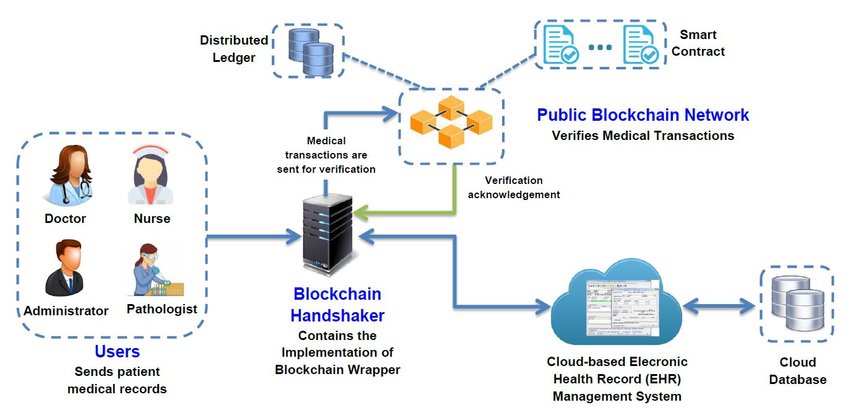
Blockchain technology can be used to create a secure, decentralized platform for storing and sharing patient data. Streamline clinical trials, research initiatives, and the authenticity of pharmaceutical and medical supplies.

One potential application for blockchain is the secure storage and sharing of patient data. In the past, there has been news of patient data being stolen within individual healthcare organizations, making it difficult to share information between providers.

This has resulted in inefficiency in healthcare delivery and has put patients at risk when records are not properly handled and updated. Most developing countries now lack centralized, up-to-date, paperless medical information about their patients. This has made it difficult for organized bodies to obtain concise data or information about the state of health in some countries. 

To achieve the United Nations Sustainable Development Goals by 2030, it is critical to find solutions that can help to address this issue, such as the use of blockchain as a means to save and protect users’ medical data.

Blockchain technology provides a decentralized system for storing and sharing patient data. This would enable the healthcare provider to obtain any information required at any time and from any location. It would also protect users’ data, which would only be accessible with the patient’s permission.

Furthermore, blockchain can aid in ensuring the authenticity of data collected during clinical trials and research. Clinical research data must be used to determine the efficacy of a new treatment.

Clinical trials are often complex and time-consuming to coordinate, but blockchain can help to streamline processes by providing a secure, decentralized platform where clinical trial data can be stored and shared.

The part that most leaders haven’t noticed is that blockchain can also help with medical supply chain authentication. Many counterfeit drugs have been sold on the black market, posing a serious threat to the public. Blockchain can aid in ensuring the authenticity of medical records. 

By providing tracking technologies powered by smart contracts and nodes, blockchain can help to ensure the authenticity of medical products.

This would ensure that patients receive safe and effective medications while also assisting in the fight against the sale of counterfeit medications.

Building a solution that lasts longer is what inspired the creation of HellthGO, a healthcare adherence provider with the goal of providing quality healthcare services to all individuals at all levels.

HellthGO would be able to reach all parts of Africa with services such as telemedicine, where notable and qualified medical professionals would provide the best healthcare services to all. 

HellthGO, in addition to telemedicine, is a social commerce platform where individuals and corporations can learn more about health care, first aid, cures, and healthcare adherence from renowned tutors, raising awareness about maintaining a healthy lifestyle and creating a safe and healthy world.

To make it easier for everyone to afford and access quality healthcare, HellthGO has decided to use blockchain technology to finance our users’ daily expenses and savings through a decentralized wallet that gives users total control over their funds while rewarding them for adhering to a health adherence plan. 

This allows our users to transact in both fiat and cryptocurrency and connects them to the HellthGO transchain, where their data is secure and shared in a blockchain-powered decentralized ledger, also assess a comfortable lifestyle where HellthGO provide home delivery of medical product and services through our dispatch partners.

Speaking of other strategies, HellthGO, a health technology startup leveraging blockchain, has developed solutions that work and provide accessible healthcare through telemedicine and more technology built to reward patients for being healthcare compliant.

At least 400 million people have no basic healthcare and more than 1.6 billion people live in fragile settings where protracted crises, combined with a weak national capacity to deliver basic health services, present a significant challenge to global health (UNDP). 

By digitalizing the healthcare industry using telemedicine and blockchain, we will be able to achieve good health and well-being for all by the year 2030.

This is the driving force behind HellthGo, the leading decentralized healthcare adherence solution working to achieve universal health coverage by 2030. That is, everyone has access to quality healthcare services, allowing for a reduction in mortality and morbidity rates in most African countries and improving access to healthcare for everyone, regardless of gender, age, religion, political affiliation, or geographical location, thereby increasing life expectancy.

MOST SEARCHED QUESTION 

What is the future of medical technology?

How blockchain technology is transforming the healthcare industry?

Which type of blockchain is used in healthcare?

MOST SEARCHED QUERIES

Web 3.0 healthcare

Blockchain in healthcare use cases

blockchain in healthcare research paper


Hello readers! Hope you liked what you read today. Click the like button at the bottom of this page and share insights with your colleagues and friends!

For more such amazing content follow Digilah

Categories
AI Tech Web 3.0 Tech

Web3.0:The Real decentralized Internet 

Written by Femi Omoshona on Digilah (Tech Thought Leadership)

Decentralized technology is the present and the early we start investing our time, energy and resources trying to understand what future DApp looks like the better for us. 

Blockchain, AI, AR and IOT are amazing technologies we should be wrapping our brain around in this 21st century.

In this article, I lay out how the web has evolved, where it’s going next, and how Africa as a continent can position itself for the future.

Think about how the internet affects your life on a daily basis since it was discovered in early 1990. Internet, a system architecture that has revolutionized communications and methods of commerce by allowing various computer networks around the world to interconnect. Sometimes referred to as a network of networks, the Internet emerged in the United States in the 1970s but did not become visible to the general public until the early 1990s.

By 2020, approximately 4.5 billion people, or more than half of the world’s population, were estimated to have access to the Internet.

The Evolution of the Web

The evolution of the web can be classified into three separate stages: Web 1.0, Web 2.0, and Web 3.0.

Web 1.0  are static web sites and personal sites, the term used for the earliest version of the Internet as it emerged from its origins with Defense Advanced Research Projects Agency (DARPA) and became, for the first time, a global network representing the future of digital communications. Web 1.0  offered little information and was accessible to users across the world; these pages had little or no functionality, flexibility, or user-generated content.

Web 2.0 is called the “read/write” web, which seems to indicate an updated version of the current World Wide Web, which is known as Web 1.0. It’s more accurate to think of Web 2.0 as a shift in thinking and focus on web design. Instead of static HTML pages with little or no interaction between users, Web 2.0 represents a shift to interactive functionality and compatibility through some of the following features: User-generated content, Transparency in data and integrations.

Web 3.0 (…Loading)

Web 3.0 is the next stage of the web evolution that would make the internet more intelligent or process information with near-human-like intelligence through the power of AI systems that could run smart programs to assist users.

Tim Berners-Lee had said that the Semantic Web is meant to “automatically” interface with systems, people and home devices. As such, content creation and decision-making processes will involve both humans and machines. This would enable the intelligent creation and distribution of highly-tailored content straight to every internet consumer.

Key Features of Web 3.0

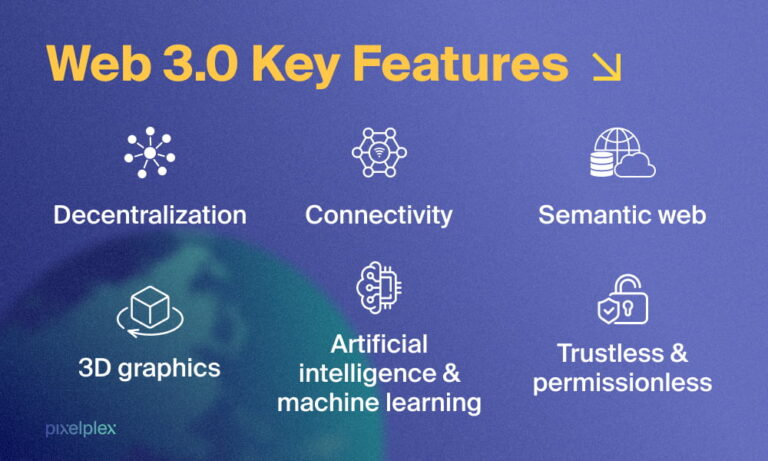
To really understand the next stage of the internet, we need to take a look at the four key features of Web 3.0:

Semantic Web

Semantic(s) is the study of the relationship between words. Therefore, the Semantic Web, according to Berners-Lee, enables computers to analyze loads of data from the Web, which includes content, transactions and links between persons.

Artificial Intelligence

Web 3.0 machines can read and decipher the meaning and emotions conveyed by a set of data, it brings forth intelligent machines. Although Web 2.0 presents similar capabilities, it is still predominantly human-based, which opens up room for corrupt behaviors such as biased product reviews, rigged ratings, etc.

For instance, online review platforms like Trustpilot provide a way for consumers to review any product or service. Unfortunately, a company can simply gather a large group of people and pay them to create positive reviews for its undeserving products. Therefore, the internet needs AI to learn how to distinguish the genuine from the fake in order to provide reliable data.

Web3.0 future for Africa

Across the world, the new Web3 economy is giving birth to myriad opportunities and the implications for the African continent are massive. Code 247 Foundation is on a mission to raised the next generation of Africa talent who will leverage the latest blockchain technologies to provide real value to billions of unbanked, underbanked and underserved individuals across Africa and other emerging markets, and we’re excited to see various blockchain protocols, startups, investors, grant funders and governments interested in doing the same.

Web3 can open up an intra-African exchange economy, it can be used for purchases and transportation between African nations. It will assist Africans to generate more economic value in a wider market.

In Africa, the evolution of blockchain technology has interested many governments across the Africa countries  to explore blockchain-based solutions, creating Central Bank Digital Currencies (CBDCs) that are likely to develop a more informed approach to the Web3 economy along with policy frameworks in line with the needs of everyday users.

Web 3 can be used to solve some of the challenges in Africa, issues of land ownership:

It is no secret the messy land management in most African countries has made it harder for citizens to acquire genuine land. This has meant that most communities are left poor due to lack of access to manage and develop their lands. Other challenges include faulk drugs, financial transactions and management of traffic etc.

Conclusion

We believe in Africa 100%. Africa can be great, will be great and must be great. Blockchain and Web3 technologies will be revolutionary in Africa. There are a lot of problems with currency and corruption in Africa.

Most searched question

What Is Web 3.0 the evolution of the internet?

When did Web 3.0 start?

Why Web 3.0 is the future?

Most searched  queries

Web 3.0 blockchain

Web 3.0 technologies

Web 3.0 metaverse


📣 Hello readers: Do you like what you read today? Click the 💟 “Like” button at the bottom of this page and share insights with your colleagues and friends and do follow Digilah for more amazing articles.

Categories
Web 3.0 Tech

My Tech Journey – is a wave

Written by Bolarinwa Odupe on Digilah (Tech Thought Leadership)

Matt Mullenweg a social media entrepreneur once quoted “Technology is best when it brings people together.” 

The evolution of digital technology is such that even if we wanted to, we can’t stop the impact, especially in a community like ours. The average man today has better medical care, unlimited access to information and education. Better options to travel in and communicate with one another across long distances more than the wealthy monarchs in time past.

A few years ago, I was just an average individual who loved tech. I was so enthusiastic about tech that I regularly kept up with the latest trends by learning new technologies. Now, I have clients whom I communicate with virtually most of the time. As a matter of fact, I have never met most of them physically, why? This is because of the rapid revolution of digital and technology that the global pandemic brought. The world has now become a global village where there is a dramatic increase in the standard of living due to labor productivity.

From the industrial age to modern age, it is quite obvious that digital and tech has greatly improved working conditions.

The impact has covered long working hours and has replaced tedious work conditions with efficient tools that speed up work processes and make you achieve  more in record time.

The digital and tech sector is a competitive industry and it requires new strategies and practices. Most brands have grown to recognize how much of an impact digital technology holds for their businesses. Through technology, we have seen the growth of emails, virtual meeting places, work tools which we have increasingly grown to depend on because they help to give more efficiency and visibility to your startup.

One thing about my thought leadership is the fact that I’m not just content with my basic knowledge of tech. Tech and digital is a sector that keeps evolving over the years and to keep updated on trends, one must be willing to learn new technologies. I had the knowledge of coding, digital marketing and a whole of other technical know-hows before I created my startup. Now I use Google sheet, Google drive, Google docs, Google meet for my meetings and canva for my product designs. I had to learn more than the basic knowledge of product and web design.  I have learnt quite a lot from tech between 2020 and till now, and I have not stopped learning.

It should also be observed that the global pandemic was a major propeller for the growth of digital technology all over the world. The pandemic caused most brands and startups to create temporary solutions to meet any demand brought upon them suddenly much more quickly than they had thought possible before the global crisis. 

The reliance on digital and technology also became much more profound as they began to recognize the importance of technology and how far its reach was.

It also helped because many consumers naturally leaned more onto technological channels and platforms they’ve been using over the course of the pandemic.

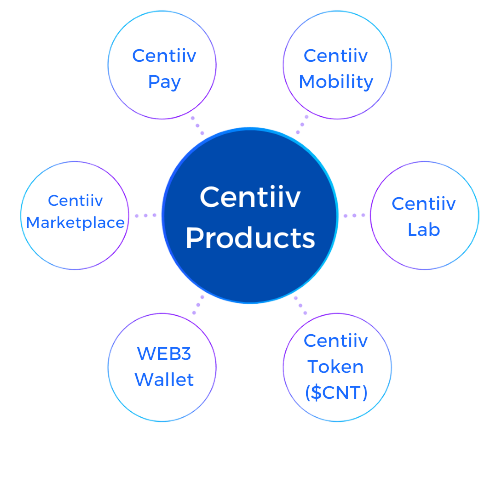
The pandemic helped me create a tech startup which sped up in a space of a few years due to the world’s new outlook on tech and digital. My tech brand Centiiv is founded on a community of blockchain enthusiasts like myself who are curious to learn all they can about blockchain. The growth of technology is a wave that cannot be stopped. 

Every day more people discover new inventions that make life simpler and work more efficient. My workplace productivity has grown by a huge margin and the numbers keep rising because thanks to online communication tools, technology enables us to work more closely in some ways even while working remotely. Teamwork is now simpler to achieve even when workers are not in the same place. 

Most searched  question

What is a Web 3.0 website?

What programming language does Web 3.0 use?

What skills are needed for Web3?

Most searched queries

Web 3.0 crypto

Web 3.0 blockchain

Web 3.0 applications

 
Hello readers! Hope you liked what you read today. Click the like button at the bottom of this page and share insights with your colleagues and friends!

 For more such amazing content follow Digilah

Categories
Web 3.0 Tech

Understanding Stablecoins

Written by Ganesh Kompella on Digilah (Tech Thought Leadership)

In the wake of recent crypto events, I feel it necessary to write an opinion piece on what stablecoins are, why they exist and what separates them from being good or bad. 

What is a stablecoin?

A stablecoin is a crypto asset pegged to a real-world asset’s value. 

Example: 1 USDT is always intended to be worth 1 US dollar. They hold their value relative to traditional currencies but, unlike the money in your bank account, they can be used freely on the blockchain. 

Similar to traditional currencies, these stablecoins can be used for buying, selling, sending, and lending within the crypto markets. 

In terms of timeline – USDT was the very first crypto stablecoin, then Circle introduced USDC, Binance introduced BUSD, Luna introduced the failed algo stablecoin UST and there are a bunch of others.  

How are they different from regular currency? 

Stablecoins are more cost- & time-efficient than the decades-old payment rails that the financial system relies on.

They are transferable 24/7/365 & are faster & cheaper to transact with than fiat. That’s why they continue to rise in popularity through bull and bear markets.

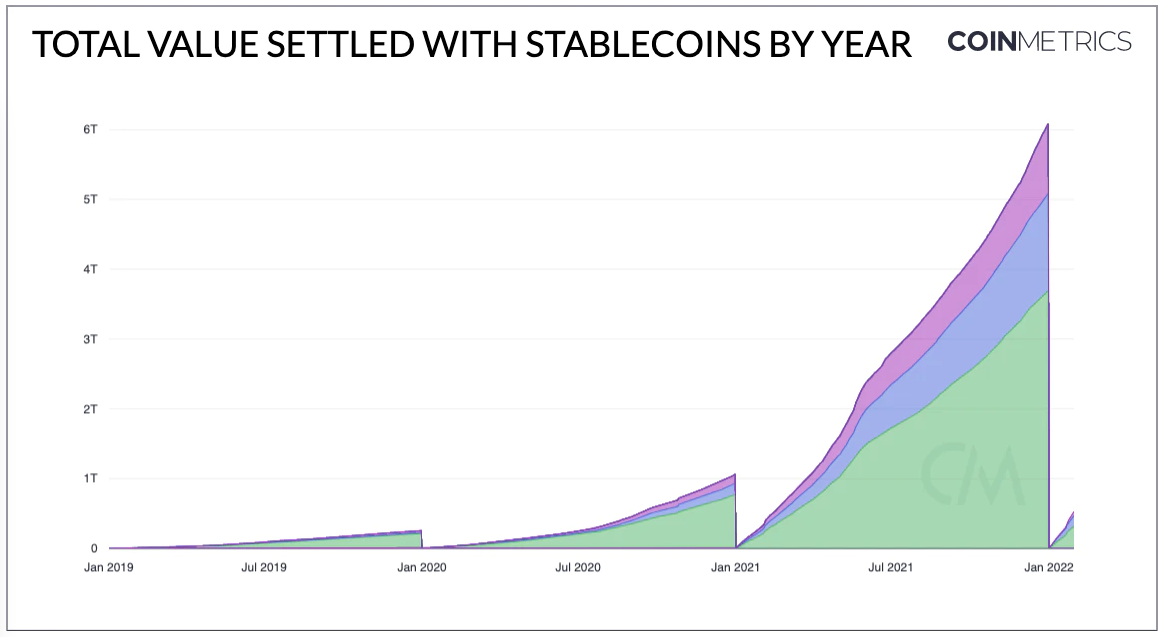
 In 2021 alone the total value settled with stablecoins was $6T, up 600% from its 2022 high of $1T. This graph from CoinMetrics sheds a light on how popular these are becoming.

Different types of Stablecoins

There are essentially three types of stablecoin designs:

  1. Fiat-collateralized 
  2. Crypto-collateralized
  3. Algorithmic 

The mechanics of each are different from one another as the names suggest, some are asset backed while some are code backed. They work very differently from one another and have distinctive pros and cons amongst themselves. 

Fiat-collateralized

Fiat backed stablecoins work very much like regular money market funds. You deposit your dollar with a stablecoin entity and get an equivalent amount of stablecoins in return.

Let’s take USDT (Tether) as an example.

A $100 deposit will get you $100USDT. You get the stablecoin and you are free to use it anyway you choose onto any of the blockchain networks that support tether. And the issuer puts your deposit to use and earns interest. With a crucial promise that you can always go back to the issuer, redeem your USDT for U.S.Dollars.

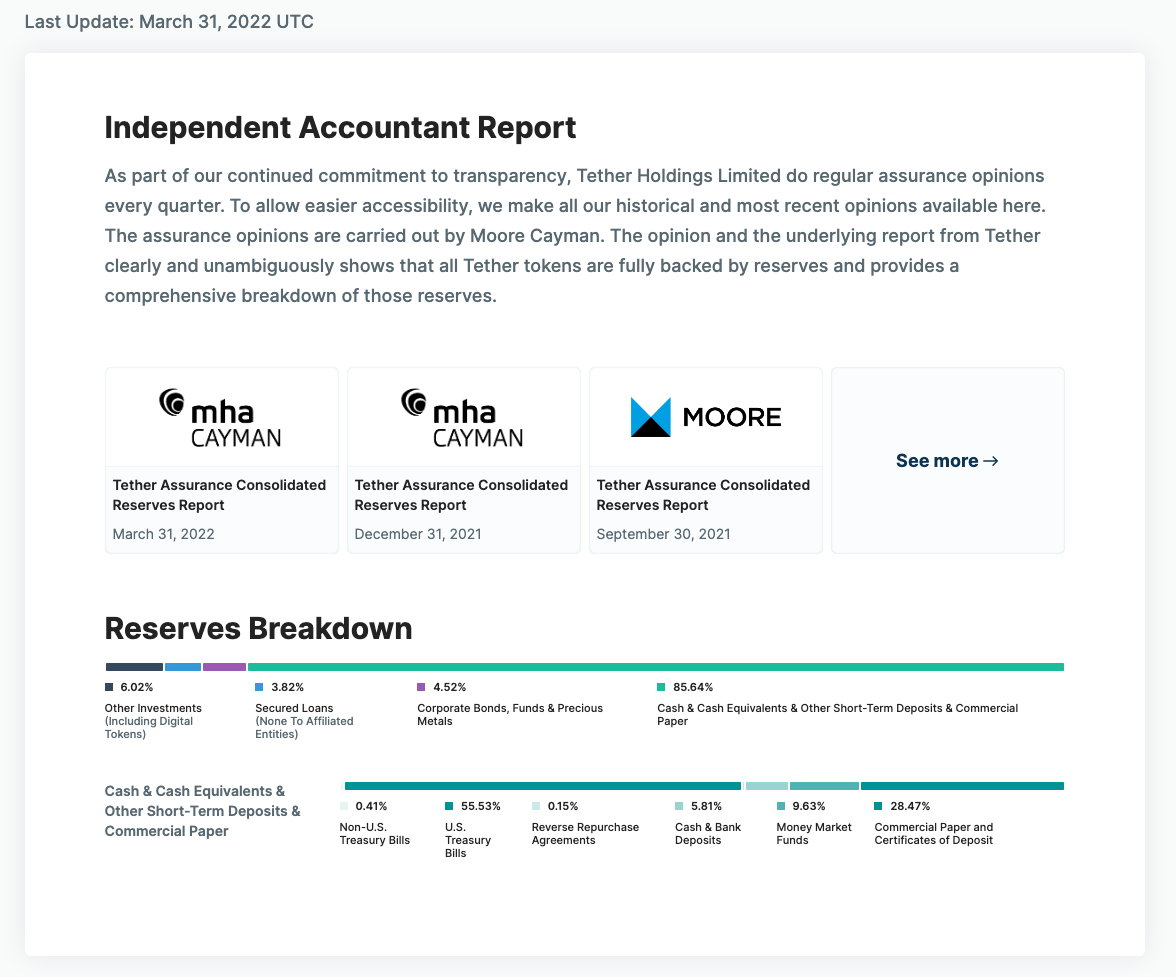
Diving into Specifics, this is how Tether manages their deposit reserves (Last reported on March 31, 2022). Your deposits turned reserves are mostly into Cash & Cash equivalent with some allocations into other asset classes like secured loans, corporate bonds, and digital tokens. These entities get audited from time to time. 

As an investor you must take notice of these audits, review them, and make an assessment on the issuer’s reserves. Strong reserves indicate they wouldn’t have any liquidity concerns in the event of a market crash or bank run.

Crypto-collatarized

Crypto-backed stablecoins operate more like traditional home equity loans. Investors deposit crypto with a decentralized issuer (usually a DeFi protocol), which issues stablecoins in exchange.

 The investor must repay the stablecoins (plus a fee) to redeem their crypto assets. The critical promise is that every crypto-backed stablecoin in circulation is directly backed by excess collateral.

 From a transparency perspective, the reserves can be audited & monitored by anyone in real time (including regulators). They just need to look on-chain. $DAI is an example of such stablecoin. It’s trusted by a huge community of crypto investors and developers

Algorithmic stablecoins

They are typically minted & issued by a DeFi protocol and are commonly under-collateralized (meaning they aren’t backed by an equivalent or excess amount of collateral). Instead, they mostly rely on an algorithm that aims to maintain a stable price by expanding & contracting the stablecoin’s supply. 

The intent is to influence interest rates and market behavior, which, in theory, ultimately return the stablecoin to its target price. The key promise is that the algorithm & incentive mechanisms work as promised, & the stablecoin maintains its peg through the issuance & removal of its supply.

The downside: The non-collateralized, algorithmic model keeps failing. Luna UST is one such example. 

Historically, the adoption of Fiat-collaraterized stablecoin has dominated this segment, with over 95% of the market share, some economists even call it “Smart Money”. 

What does the future hold? 

Stablecoins definitely have the potential to play a pivotal role in the global economy and the future of digital finance. 

Once we see central banks, regulators and the traditional financial sector starting taking notice which they already have. They could bring a host of benefits into this sector.
The pros of stablecoins are obvious: Low-cost, safe, real-time and more intuitive and competitive with what the consumers and businesses need today. 

They could rapidly change and make it cheaper for businesses to accept payment, for governments to run cash intensive programs and connecting the unbanked population.

MOST SEARCHED QUESTION 

What is the point of stablecoins?

Can you make money on stablecoins?

How many stablecoin are there?

MOST SEARCHED QUERIES

Stablecoins list

Best stablecoin

Is Bitcoin a stablecoin


Hello readers! Hope you liked what you read today. Click the like button at the bottom of this page and share insights with your colleagues and friends!

For more such amazing content like and follow Digilah

Categories
Edu Tech

Edumoms

Written by – Mona Sutrave on Digilah (Tech Thought Leadership)

Technology has been re-shaping and re-organising the economic dynamics of the world. The Internet brought about the revolution at the turn of the century.

Today, Technological advancement in almost all fields is NORMAL. Technology drives daily life. From a simple purchase of vegetables to complex algorithm driven activities. Technology has crept into our lives like we have never realised before.

Consumerism has shifted gears from a sellers’ market to a buyers’ market. While marketplaces created demand for products. Today, demand for a marketplace of convenience has brought the market place virtually to the customer. Making customers’ access products from different regions. Without having to travel the distance.

Education has its fair share in this technological revolution. The information available to the world at a click of a ‘mouse’ has been astounding. Just that one needs to access their relevant information with care.  

Online videos are in millions which speak about various topics. But little do they teach in a way a mother or a teacher would teach.  Content companies show content as they have understood a concept while in their college days.

The real challenge is how a young mind is wired? Does that young mind fire connections like a 25 year old? Does someone doing so make a school teacher obsolete? The Answer is a simple ‘NO’.

The growing years are so important in framing a personality. What one is at 10 is not the same as 14 and 16 and definitely not the same as while one is 25.  This goes on to prove that ‘ONE SIZE DOES NOT FIT ALL’. 

Each child is unique and each of their needs are certainly unique.  One needs to step into the mindset of the student and help them nurture their learning skills to adapt to the challenges. That One person, is the Teacher

A Teacher is not just educated, they are “QUALIFIED”. They understand every child in their class. They understand their abilities and Capabilities. They do not treat the child as a robot to max marks sheets.  They treat the child as a human being and help them with the abilities to form the very basis of LIFE SKILLS. The choice to PICK n CHOOSE.

DHII came into existence for the very fact that there were so many contents, videos, pdfs of chapters, but the whole personal touch was missing.  Kids are kids, they need to be nurtured, spoken to, cared and loved while teaching, which technology still hasn’t achieved.  It’s just not the topic which the kid is learning, but the whole universe around that particular topic, which only a teacher sitting across can bring it down.  

We at DHII believe in this very concept of teaching.  Help the students realise their true potential and enable them to experience the HIGH POINTS. We are available to the student through-out the duration of the course, in person. We proudly say, we just don’t teach subjects, but we BUILD CONFIDENCE.

We call ourselves, the new era EDU MOMS, simply because the first guru for any human being is a MOM. The affection which MOMs can give, can be compared to none! 

The onslaught of content companies camouflaged as edtechs are widening the gap by denying reasonable opportunities to the lower end of pool.  

We propose to take our ONLINE Teaching to Tier II and Lower areas, make quality education affordable to the aspiring students to cross the hurdle first.  Break the barriers of the regional languages and enable them to realise their dreams.

Technology is indeed making this possible. We have started this journey of providing customised education to the far and beyond corners of India with an initial investment. We now hope to achieve our mission with right investment opportunities sooner than we imagined!

most searched question?

Why education is the key to success?

What are 3 types of education?

What is the role of education in society?

most searched queries

Education importance

Education Department

Education Portal


Hello readers! Hope you liked what you read today. Click the like button at the bottom of this page and share insights with your colleagues and friends!

For more such amazing content follow Digilah

Categories
Edu Tech

The Evolution of Education

Written by – Deakin Daney on Digilah (Tech Thought Leadership)

The thirst for knowledge is as ancient as the sea. Every generation of knowledge seekers is hungrier than the last. But is just education enough to quench our growing desire to know more?

Innovation and ideation are two important parameters to assist in our education journey. With the launch of the New Education Policy, the country is now moving into the future with a strong focus on STEM and assisted and alternative teaching methods. What this now brings to the forefront, is how we impact the thoughts, abilities, and actions of our young generation.

How do we excite them, and make them think beyond the pages of their books? 

The answer lies in engagement, team building and working on real life problems which lead to world class solutions which help build a sustainable and enriching environment. 

Hackathons started as a technical competition, aimed at a 24 or 48 hour finale, which involved writing code, creating technical prototypes and , during the finale , proving the product / code actually worked and could be used in real life scenarios.

While those kinds of hackathons do still exist, they focus on a very defined solution. Now, these hackathons have opened up not just for technical students , but also non-technical ones , including management , social media , the arts , and more. These events are no longer aimed at 24 & 48-hour timelines. They extend for a few months and have various engagement activities which make the whole program so very interesting.

As the Head of Innovation for i4C we work in the niche space of Hackathons and Ideathons. With a proprietary idea submission and evaluation platform, we provide school and college students and corporate employees alike the opportunity to participate in multiple events and showcase their strengths and solutions.  

At the heart of a hackathon event is the theme. One could do a specialised event on IoT, Blockchain, Artificial Intelligence, Machine Learning, EV infrastructure etc. They can also do a social event on Sustainability goals, climate change, water conservation, Air Pollution, Waste Management, and many other themes. One could even have an event involving multiple themes to engage a larger target group and audience. 

The strength behind the Theme is the Problem Statement (PS). These statements are carefully curated problems faced currently. Sometimes these PS are given by Industry – Banks, Manufacturing Cos, Aggregators, Cloud Computing etc , all because they want to see a fresh take on how to tackle these problems .

This becomes very interesting for students because here they get a real world problem faced by a large company, and if they are part of the team which solves it, well.. it can lead to an offer of employment for them, or at the very least an internship. It could help them start their career on a good note. 

We have recently conducted a few hackathons for government bodies, private companies and are currently working with a large Blockchain entity now. The thrill that the students get from such a participation, needs to be seen to be believed. We have students from Tier 2 and Tier 3 colleges attempting to solve a real-world problem of a Trillion Dollar Company. This is the Engagement which the Hackathon Platform provides. It helps see things from a very large perspective.

These events also lead to team management and team playing skills. Since these events are all team based with a minimum team size of 4, the students and employees get to work with each other in proximity. This helps them understand the life lesson of team dynamics, kindness, sharing and above all, the desire to win as one.

Feedback from many events conducted by us, has led us to this important conclusion, as students themselves commented on feeling as a family, with immense gratitude for winning being shared by all. 

During an event, the teams which take part, are evaluated by industry experts, who interact with the students and share their thoughts and ideas on what can be done to make the solution to the PS more compelling.

Many of these experts, if not all, are usually Subject Matter Experts (SME) in their chosen field , and hence approached by us . These kind of interactions between young minds and experienced SME, goes over and beyond what is taught in a classroom, and it liberates the young minds to think more clearly and more long term.

It gets even better, once the teams are shortlisted for the finals based on their solutions. These teams are then assigned mentors who help guide them and take their idea, prototype, vision, product, or service into the Finale.

These mentors spend long hours with the team and patiently answer all questions in support of their team winning the Finale. These hours and moments spent with such experienced mentors is usually a defining moment for students. 

During the Finale, all teams compete hard to prove their solutions are worthy, but it is usually the Top 3 who end up victorious. These 12 students across 3 teams, get to share their Intellectual Property with the companies who find their solution effective, they get prize money, they get certificates and trophies, they get internships and job offers, but most importantly , they learn to win on their own , through their efforts and those of team members. This, to me, is probably the defining thought on why we need to have more such idea based events in India.

Having our young generation think out of the box, solve Big Corporate problem statements, work as a team, and enjoy the success of winning, at a young age, on a big platform all adds up to our country’s growth and economic success.

Most searched question

What happens at a hackathon?

How do beginners prepare for hackathons?

How has the education system evolved over the years?

Most searched queries

Hackathon for beginners

Evolution of education in India

Importance of evolution in education


For more such amazing content follow: Digilah

Categories
HR Tech

Leadership development in a virtual world

Written by –  Sreena Seetha Nadarajan on Digilah (Tech Thought Leadership)

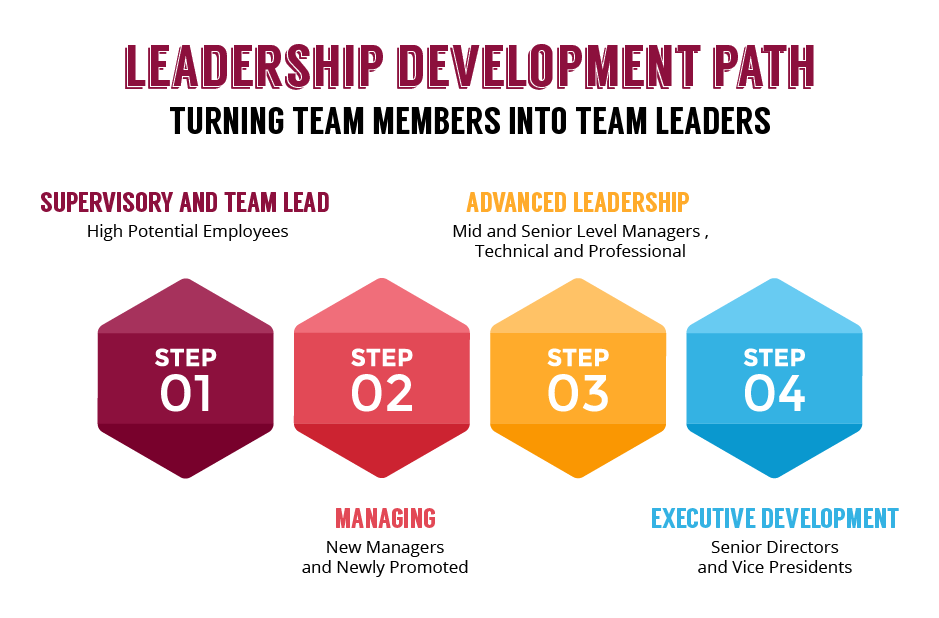
Remote learning and training became the norm during the covid pandemic. With most of us locked in our homes, we were forced to look for new ways to acquire knowledge, to connect with people and, for many, develop new skills and capabilities. Those at the top of organisations, including senior leaders who are Members of our Community, had to navigate the challenges of leading their businesses remotely. How do you keep in touch with your executive team, your Board, your people and the outside world? How do you seek inspiration and advice, from colleagues, mentors and peers, in a lock down? 

Online learning and training is nothing new. Companies have offered employees access to e-learning as a flexible and often cost effective way of upskilling teams for some time. The challenge of leadership development is more complex. For executives, it’s often less about learning a new skill, but instead understanding the business landscape outside of your immediate organisation and industry. It is no longer enough to have deep sector expertise, leaders need insight from a range of sources and across different geographies in today’s fast-paced environment.

Executive development using technology to let the outside in

According to our research, senior executives including CEOs, CFOs and HRDs consistently rate development opportunities like mentoring and peer learning as most effective to their roles and responsibilities. When lockdown hit back in March 2020, Criticaleye had to quickly adapt many of the learning experiences we offer our Members, so technology played a major role in keeping leaders current and connected. 

In fact, when it comes to executive development, virtual meetings and connections with other leaders around the globe has become one of the major opportunities to emerge from the crisis. Our mentors are now able to combine face-to-face interactions with virtual conversations, creating a constant and consistent touchpoint for their mentee. Equally, and although we resumed our calendar of physical events last year when restrictions were lifted, the advent of more regular, virtual roundtables and forums at Criticaleye is enabling our Members to dip into leadership insight and be inspired by peers more than ever before.

Tech and Talent

If the way leaders are developing their skills and capabilities is changing, so too is the way they think about their workforce and talent strategies. Organisations need to adapt to remain competitive, and improve their understanding of both what it means to lead a distributed workforce. It’s about much more than remote working. Leading a distributed workforce should be intentional, strategic and it requires a shift in both leaders’ mindset and the culture of the business.  

According to discussions we frequently have with leaders across the Criticaleye Community, executives need to ask themselves how they can create a new sense of belonging in a more remote working environment. They also need to question how they measure and maintain productivity. Overall, there must be a focus from leadership teams on retaining your best talent, and, going back to our Criticaleye Research, the C-suite consistently cites talent as their top priority for the year ahead. 

Digital transformation is not just about the customer. It must also play a key role in how you engage your teams, what you offer in order to hold on to key people, how people learn and how leaders get the touchpoints they need to be successful. 

Sreena Nadarajan, Head of Research UK, Criticaleye

Most searched queries

Leadership qualities

Leadership skills

Leadership development  in human resource management

Leadership development research

Most searched question

What is meant by leadership development and its importance?

Why is leadership development important?

How do virtual organizations deal with leadership development?

How can you be a good leader in a virtual environment?

For more such amazing content follow: Digilah

Categories
Med/Health Tech

The Story of Love and Faith, Touching Lives with Tech where it Matters

Written by : Arunoday Singh on Digilah (Tech Thought Leadership)

“We used to travel several kilometres for basic medical facilities, and many times lost precious time at work and our wages but this medical Van which comes to our village now has proved to be a boon,” says Damyanti Devi as she deftly embroiders beautiful patterns on a shawl she is working on at the cottage industry she works.

“My husband had undiagnosed diabetes which was posing many health issues for him making him miss work, making it difficult for us to make ends meet”, adds Veena who works at the same place, “The doctors who talks through the ‘Television’ at the van in consultation with Para-medical staff on the van which reports the vitals to the doctor and explains the medicine & treatment to the patients, not only diagnosed it but have also treated it effectively and now he is leading a normal life and goes to work regularly”.

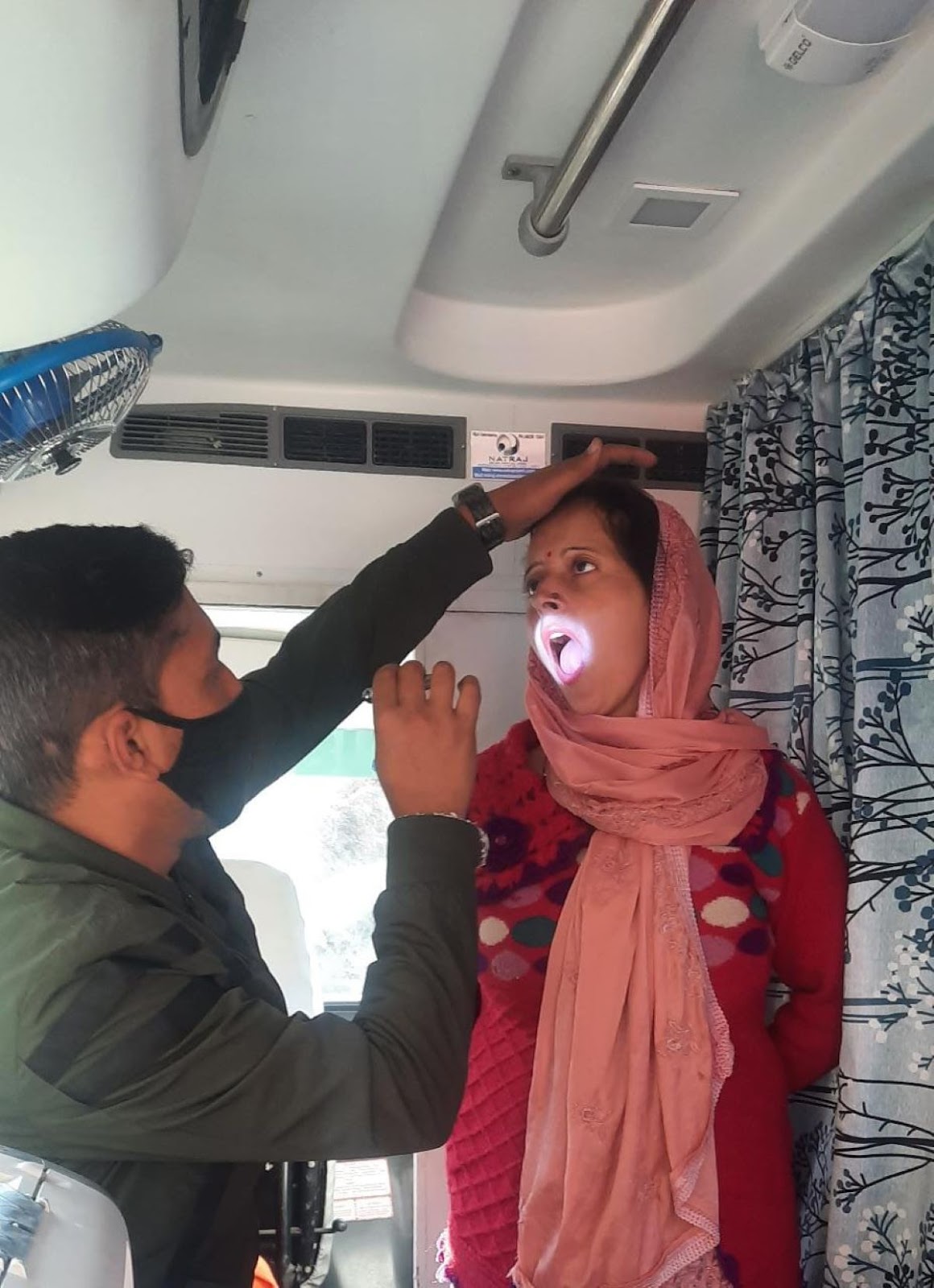
This is a heart whelming story of many in these rural areas of Jammu and Kashmir. Set in the interiors of the region, the villagers had to travel long distances to avail themselves of medical care. But the mobile medical Van by O-health, fully equipped with telemedicine facilities has changed the lives of people in these remote villages.

Changing Lives and Landscapes

Srinath, a construction worker who hails from Bihar, is working in the Kathua district of J&K, beams at us when we asked him about what he thinks about the facility. He has just finished his teleconsultation with a specialist in Delhi. He says he was suffering from fatigue and restlessness for many months but after this ‘Doctor Wali Van’ (Van with Doctor) started coming, his BP was diagnosed, and he is now well with regular medication and checkups. He says that with this Van people can avail affordable health care almost at their doorstep.

The telemedicine service provides the facility of Tele-Consultation with India’s Top qualified doctors and specialists who provide evidence-based care and boasts of having done over 8000 consultations till date. The state-of-the-art telemedicine facility by O-health has the facility to conduct clinical tests and supply medicines to people who are living in remote areas.

The Man Behind the Mission

Visioned and conceptualised by Arunoday Singh, a Biomedical Engineer with an MBA and MSc in Health Economics from the London School of Economics, O-Health is born out of Arunoday’s vision to bring accessible and affordable quality healthcare to rural India and take the best of medical facilities to the patients at the farthest of villages, in J&K, some of which are merely 01 km from Indo-Pak border, with Pak army posts clearly visible from camp sites.

Arunoday Singh has strived to serve the rural population of the country in a way that could bring a major positive change in their lives. Thus, in the process of striving to provide universal access to primary healthcare, he came up with the idea of this telemedicine Van, equipped with the best of diagnostic, pharma and speciality care which has now fast become the ‘Saviour’ for the rural population in these remote villages of the region.

“There is no denying that, unlike in olden times, there is much better road connectivity to rural areas these days but still these places continue to face the paucity and lack of good medical facilities and doctors at par with towns and cities. Most doctors wish to set up their practices in bigger towns and cities after having dedicated many years of their lives studying, but many of them also wish to serve the marginalized section of the society in some way” Arunoday said. “With the fast improving internet connectivity in the villages, digital healthcare can really make a powerful change in the healthcare landscape of rural India”, he added. 

This telemedicine facility on wheels allows O-Health access to the patients in the far-flung rural areas, without having to compromise their careers.

 “The main motive of the project is to extend healthcare facilities to the needy at their doorstep,” says the staff we met in the van, which is like a mini-hospital on wheels with all the facilities of a good clinic put together comprehensively.

The Challenge and the Solution

Rural patients are seen to be somewhat averse to new technologies, especially in healthcare, due to some of the reasons – paucity of awareness and knowledge about the technology, lack of trust on the individuals running the services and inefficient ways of care delivery leading to ineffective treatment outcomes. “It is critical to send an accurate patient parameter feedback to the remote doctor for a correct diagnosis, otherwise the treatment remains incomplete and hence, leaves the patient ill. We use high fidelity digital health devices like digital stethoscope, digital otoscope, digital derma-scope, etc to capture the parameters and images, to be shared with the specialist for accurate diagnosis leading to an effective treatment. When patients start feeling better after consultation, their level of trust on the technology shoots up”, said Arunoday.

Wheels of Change

Soon, O-Health also aims to setup a larger mobile van to cater to other remote areas with even more health services as well as plans to pilot a static clinic to position itself as a permanent care giver in the region. The service is fast becoming popular as lack of access to affordable and quality medical care is a huge challenge in rural India. This innovative Medicine Facility provides people of remote regions with easy access to quality health services and has worked towards improving the general health of the population in the area as patients can now avail regular diagnostic check-ups. It has also changed their perspective towards their health and well being, making them aware of the value of timely action and lifestyle changes when it comes to their health.

Committed to bringing a change where it matters, in the area of rural health, the wheels of O-Health move ahead with a conviction to bring a change in the area of the health sector in rural Jammu and Kashmir and there is no stopping them!

The landscape of the region seemed buoyant with health and hope when we visited it and people brimmed with a promise of newer, healthier horizons!

Currently, the service is completely free as it has been fully funded by a Public Sector Enterprise. We have examined over 8000 patients for free till date.

Most searched questions?

What is MED technology? 

What is the future of medical technology?

How is technology used for health?

Benefits of technology in healthcare??

What is included in MedTech?

Most searched queries.

Health technology example

Importance of medical technology

Medical technology articles

New medical technology blogs

Categories
Digi Tech

Who Wants To Be a (Digital) Millionaire?

Written by Wendy Scott on Digilah (Tech Thought Leadership)

I do.

If you recognize the reference to the Frank Sinatra/Celeste Holm song from the 1956 film, High Society, you are probably a Boomer like me. So what business does a fifty-nine-year-old have wanting to be a digital anything, let alone a digital millionaire?

I didn’t grow up with tech. We didn’t even have a landline at home. I took my ‘O’ Levels in 1978, which was the first year in the UK we were allowed to take calculators into exams. I struggle with tech, and I say ‘interweb’ to annoy the kids.

But what I do have is at least forty years of leadership and learning & development knowledge that I can share online. And technology has made it possible for me to make money doing that.

What the heck is a digital millionaire?

Otherwise known as a digital entrepreneur or content creator, it’s someone who sells digital products online such as templates, books, or courses. It’s also possible to sell membership newsletters, coaching, and exclusive coaching groups called masterminds.

How it all works

I’ve spent the last eighteen months reading, doing courses, and attending webinars to find out how to be a content creator, and as far as I can tell, this is what digital millionaires do:

Step One – Create online content – whether you create a blog, an Instagram post, a podcast, or articles, put free content online.

I write articles on Medium, a writing platform anyone can post on. When people read an article, the author gets a small amount of the reader’s membership fee.

Medium writers share articles on FB, Instagram, LinkedIn, Twitter, Quora, and Pinterest.

Step Two – Collect email addresses – Followers on Instagram or other social media are useful, but you’d have to start again if the platform disappears. The trick is to collect the email addresses of people that like your work. The list can’t disappear overnight, and you use the list to send newsletters and sell your products.

I’ve just started an email newsletter that goes out weekly and contains free links to my training, leadership and dating articles.

It’s said that successful online creators make one dollar a month income from each email subscriber.

I’m using convertkit for my list; They provide helpful resources, such as an online creator community, online tutorials, and live zoom tutorials.

Step Three – Give free content to your email list – Email your list once a week and give them valuable content for free. Content could be an article in the body of the email, sources you have found helpful, book recommendations, templates, short email courses, short video courses, or access to an exclusive podcast episode.

Step Four – Sell your content via your email list – You can sell templates, ebooks, and courses. I’ve seen online courses from $29 US to $3000 US, and some big earners sell masterminds for $10,000 US per year.

Currently, I’m writing an ebook and a course which will be my first digital products.

I use Atticus for my book, Teachable to create my course, and Canva to create the slides and workbooks.

Next tech on the list

A subscription to Later to automatically schedule my posts on social media.

I also use a writing assistant called Jasper.ai and a note-taking tool called RoamResearch.

How I’m finding all the tech

I believe in a growth mindset, so after the screaming, tears, and tech-induced lie-downs with a nice cup of tea, I persevere. Google is my friend. I’m learning very slowly, but each gain I make is a small step forward.

The upside is that I’m enjoying myself while learning about a whole new world. The downside is that none of my friends can understand what I’m talking about and think I’m getting mixed up in an online pyramid scheme scam.

Am I a Digital Millionaire yet?

No. I’ve made a loss with the subscriptions to tech and courses I’ve taken. But I’m having fun, learning heaps, and keeping current with new tech.

And you never know, this time next year I could be a millionaire…

Digital Millionaires I follow: Denise Duffield-Thomas, Jeff Walker, Amy Porterfield, Marie Forleo, and Dr. Benjamin Hardy.

Movers and Shakers on Medium: Tim Denning, Zulie Rane, Ayodeji Awosika, Tom Kueglar, Sean Kearnan, Nicolas Cole, Sinem Gunel.

Categories
Wellness/Beauty Tech

Trust In the Age Of Digital

Written by Sabina Ariff/Munshi on Digilah (Tech Thought Leadership)

The skincare industry has always been a very traditional space in the way business was done. Heavily brick and mortar, mass targeting when it came to marketing, touch and feel factor was crucial and only the big boys had a stake in the game. Well, all of that is being challenged and the disruptors are here to stay.

The health and well-being industry went through a seismic shift during the pandemic when, time at home increased exponentially and the need to engage and connect reached an unusual high. This interesting combination led to niche skin care brands finding innovative ways to not only build a community but use digital platforms to engage, interact and show customers how to maximize their time at home while achieving that sought after glow and Zen vibe.

Online shopping platforms and social media tools gave brands the much needed space to create content that was amplified to customers who were hungry for relatable content and the need to find a calm in the chaos of the pandemic. Customers interacted with each other and shared feedback on the efficacy of brands and were not shy to voice their opinions about the drawbacks of a product. This forced brands not only to be transparent about their sources but also held accountable to high standards which in turn made online skincare shopping more appealing.

Taking this conversation forward we talk about business growth alongside trust and community in the skincare world. The natural and organic beauty product market is expected to touch $54Billion by 2027 and digital has a strong role to play in this. Direct to consumer on online market places has been a game changer and will contribute heavily to this forecast. Social media product tags will also be a big part of the sales numbers for skincare brands.

Never before has it been this pivotal for brands to be present and be seen on the phone screens of Gen Z to Millennials.

Baréskin calls its’ customer base the “CircleOfTrust” which cements how important the factor of trust is in a world where digital interaction is the only option sometimes. Community building and a strong story, backs this brands success and there is no looking back. Frequent LIVE sessions with the founder, supporting other female-led brands, taking transparency of toxic ingredients seriously and authenticity of its content are all part of the brand ethos which the founder has ingrained in all aspects of the business. This has to seamlessly translate to the customer which is when the magic happens.

Baréskin production unit

Capturing this wave will mean staying agile and on the ball more than ever before but fortunately for us, we take this challenge on as an opportunity to grow to our full potential.

Categories
Sustainability Tech

Energy Tech startups need more support

Written by Beth Henderson on Digilah (Tech Thought Leadership)

You believed in us and completely changed the trajectory of our startup” A startup that I’d been working with once told me this after they’d come through an accelerator program I was involved with. This startup almost didn’t make it onto the program because they couldn’t clearly articulate their business model or value proposition. But I took a chance on them even though I didn’t really understand their solution, because I had a gut feeling the founding team were something special.

This got me thinking, how many start-ups in the past have invented complex hardware technology with the potential to solve some of the biggest problems we face today, but never succeeded to commercialise? There are a multitude of reasons why startups fail, but it pains me to think that incredible technology is out there sitting dormant because its technical founder couldn’t quite pitch it right, or understand the right market to target or the angle for the value proposition.

More support is needed for early stage technical founders who are struggling to get the business side right. Particularly for climate and energy tech, where the technology can be highly complex and it’s higher risk for investors and industry to get commercially engaged without demonstrated traction.

So what can the startup support ecosystem do more of to help these founders succeed?

Over my past 5 years of being involved with energy-tech startup accelerator programs, below are the top three responses on the things that had the biggest impact on accelerating their growth:

  1. Learning a structured method for customer discovery and sharpening the value proposition: This was the number one most impactful outcome for startups. It’s traditionally been an area only taught in marketing degrees but education in this space is highly needed for technical startup founders. Early stage founders have often told me hiring a marketing person is something they can only afford once they start getting decent revenue, but getting to that point is so hard without the skills to talk to customers in a way to understand their pain points, then frame your value proposition in a way that directly addresses those. I’ve seen so many ‘aha’ moments from founders who started out overloading on jargon and buzzwords when trying to sell, then swap to a message that clearly addresses a customer problem in simple terms.
  2. Relentless pitch practice and feedback: During our programs, founders deliver their pitch to different audiences 10-15 times, each time getting valuable feedback from our pitch coaches and adding new learnings. The main takeaway is that they should be able to go into any investor or customer meeting and have a clear and compelling story that they know back-to-front and can deliver with confidence. Early stage founders can’t outsource sales, so it’s critical for them to learn this skill as they will continue to struggle to make a business out of their technology if they can’t sell the vision for it.
  3. Connections for mentorship: There are a lot of intelligent and successful people out there who are willing to help founders, they just need the right channels to find each other. More dedicated channels to aggregate mentors and startups in specific verticals, and oversee the success of mentor matching are needed. Having access to corporate industry experts to help validate assumptions in a no-pressure environment has been instrumental to helping accelerate the startups’ growth.

The elements I’ve described above don’t take millions of dollars to implement but can make a huge difference in helping to accelerate getting game-changing technology to market. So, if you’re in any capacity to support startups, consider these areas to focus your efforts. 

And where is that startup from the start of the story now? They’ve done over 30 customer interviews, completely overhauled their value proposition messaging, their pitch is unrecognisable from the first version and they’ve just been awarded the ‘Most Disruptive Renewable Energy Startup in South East Asia’ by a major publication. 

Categories
Fin Tech

The Evolution of Financial Payments

Written by Salim Hussain on Digilah (Tech Thought Leadership)

It is a paradox of our lives that some of the most common of actions underlying a functioning society are left virtually untouched by advancement as civilization marches forth to Metaverses and recyclable rockets. An example is how Education has operated historically – a source of knowledge (teacher/computer) facing a collective of students, dispensing knowledge. The dispenser may vary but the fundamental construct remains unaltered. But the one I want to focus on today is the act of making Payments. Yes, payments…the industry that is supposedly being disrupted with an onslaught of payment tech start-ups touting nosebleed valuations. But if one peels away the slick interface and looks into exactly how the payments course from one end to the other, you will inevitably run into technology which was built when Mash was still on air and “Bloody” a bad word!…

Let’s think of a situation where a corporation say Nike, needs to pay its suppliers in Vietnam called VietShoe. Nike instructs it’s bank to make a payment in VND to its supplier bank account. Nike is shown a FX rate by the trader at Nike’s bank, “Banque de Zapatas”(BDZ)…there follows a little negotiation… then finally the golden word “done” is said/typed. The next stage is for the operations people then deduct the USD100 from Nike’s account in the US and initiate a series of steps whose desired outcome is to get the VND equivalent of USD100 (about 2,250,000 VND at current rates) credited to VietShoe’s account.

FX markets are the largest component of capital markets with a daily trade volume is 6.6 Trillion USD (the equivalent number for equities is 0.5 T and bonds is 4.7T). hence, there are hundreds of thousands of such Nikes making millions of payments to the Vietshoes of the world every day! The scale is mind boggling.  The good news is that there is a method to the madness. There is a common platform and a common language which banks can speak to each other. And a central organization creating rules for this superhighway, so these trillions can move around seamlessly. That organization is a member owned cooperative called SWIFT (Society for Worldwide Interbank Financial Telecommunication). This was set in the 70s! And is still the backbone of the vast majority of the 6.6T being transacted every day.

% Turnover

I will give you a brief taste of the gymnastics involved in the example above.

1.Once the rate is agreed with Nike, Bank NY needs to let it’s partner bank in Vietnam called Bank VN (termed “onshore bank” in the Trading Room) two things – One, the identity of the Beneficiary and it’s bank account details and Two, the amount to be transferred. This is done using a MT 103 Swift format file.

2. Once Bank VN receives the request, it will debit the account BDZ maintains with it for 2,250,000 VND and credit the ultimate beneficiaries account.

(I am making a number of simplifying assumptions here like the presence of “nostro” account as well as absence of routing banks. These can be the subject of another future note.)

The route above, is how most fintech apps work today. If evaluated by a tech person, she will be aghast at the usage of flat files, and, in a minority of cases, API calls (which will be the subject of future write ups). Now, take a step back and juxtapose the promise of blockchain technology to this archaic construct… suddenly, The Swift system, if imagined as an entry on a vast netted ledger, across multiple counterparties, begins to resemble a classic blockchain construct.  And the realization comes that this is the exact point where the technology should be deployed and has not, for the most part, been deployed. For it remains mired in producing Dogecoin’s and NFTs to make use of those Dogecoins!!