In today’s time, technology is even in the deepest corners of each and every existing community of this world.
If I specifically speak about my own journey as an avid user of technology, I’ve been using technology ever since it came into popularity, but the density of use just multiplied by magnitudes when the pandemic hit.
Post-pandemic, things started bending towards creating content rather than just consuming it. Until the pandemic hit, I only used the technology towards a certain tangent and to a limit, which usually included digital classrooms, emails and just some YouTube videos. But, post-pandemic, the limit just became limitless with every dimension, everything just changed.
Things like LinkedIn and Twitter came into my life and with that, creating content became a part of my life henceforth the digital journey became even more vivid and deep. You see, with the purge of this digital era, every single person on this planet has started building their own “digital personality” which generally comes with a cost, the cost of mental stability. Talking about myself, obviously, I am not the same person as I am on any social media platform, because it is just a part of my overall personality and not my only personality.
My journey has been very amazing because I have been witnessing the process of progress in the digital world ever since and it feels genuinely amazing to be a part of such a generation.
I mean with platforms like Google Meet, Zoom call or even Skype you can technically meet any human being in any corner of the world. With platforms like Notion you can basically create a second brain of yours with everything in and out of your brain and even your mind.
With platforms like WhatsApp or messenger you can essentially talk to anybody without even meeting them.
With platforms like Slack and Wurker you can just make a virtual workspace altogether, just like your office.
With things like your own mobile phone or laptops you can just do whatever you want to and possibilities are just endless, literally, you may start tens of businesses just by an internet connection and a good laptop or workstation.
With things like Google Maps or any maps, you can just hop on to any place in the world in your choice of comfort!
I, in my personal as well as my professional life, have been using such beautiful and radical pieces of technology and they have made my life much more efficient, all because of obvious reasons.
As a concluding note, I would just like to mention a cliche which is indeed the truth of the century, which is, “life wouldn’t have been fair without digitalisation”, also now that every digital element is it smartphones, laptops or even the internet is becoming so pocket-friendly with an amazing durability and quality, this saying just makes even more sense!
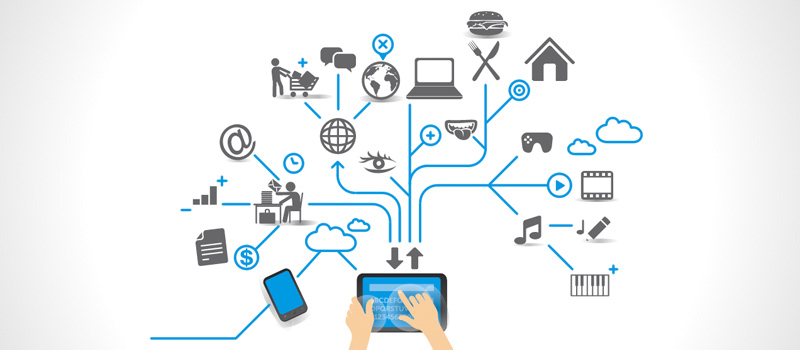
As you can probably see in the featured image, everything and anything which is visible is pretty much possible because of the digitalisation of major elements of life, be it communicating (telling and listening, not just hearing), expressing, sensing, feeling etc.
Most searched question
What are the three types of digital technology?
How does digital tech work?
Most searched queries
Digital technology
Digital technology in education
Hello readers! Hope you liked what you read today. Click the like button at the bottom of this page and share insights with your colleagues and friends!
“Our future success is directly proportional to our ability to understand, adopt and integrate new technology into our work”- Sukant Ratnakar
Workplace technology is growing exponentially. From the industrial age to current day, technology has changed manifolds. Not only has it helped in increasing productivity, it has also made “Work from anywhere” super easy and a reality.
Due to modern interpersonal communication technology, employees communicate more clearly and that’s leading to better results.
The onset of the global pandemic reshuffled the world of work. Businesses digitized themselves and shifted to working remotely overnight, all thanks to technology. With flexible workforces and mass adoption of remote and hybrid work models, many untapped talents are now shining bright. With talent not being restricted by geographical boundaries, both employers and employees are participating in the “Gig Economy.” Moving on an exponential growth trajectory, the gig economy workforce is projected to increase 3X from 7.7 million in 2021 to 23.5 million in 2030.
With every pros, comes the cons and the same is true for technology.
From separating employees by screens creating miscommunications, to the world of automated voicemails that can make customers upset, many believe that “Old is Gold.”
At the same time, with greater flexibility due to Work from Home or freelancing in the gig economy, people are often working overtime, over the weekend and even while sick. This has disbalanced the “Work life balance” and has mentally affected many people. From burnout, insomnia to depression, all have risen with more stress.
According to Technology and Innovation Report 2021, every spurt of progress has been associated with sharper inequality between countries. New technologies can have severe downsides if they outpace a society’s ability to adapt. To benefit from frontier technologies, countries need to promote their use, adoption, and adaptation, while addressing their potential adverse effects.
Moreover, International cooperation should:
Build stronger national capacities in STI,
Smooth technology transfer,
Increase women’s participation,
Improve foresight and technological assessment and promote inclusivity.
Moreover, Policymakers should direct technological change towards meeting societal needs and reducing inequalities; developing countries should adopt frontier technologies while continuing to diversify their production bases by mastering existing technologies; social protection systems should be strengthened to provide safety nets to workers who may lose their livelihoods.
Everything is a boon and a brain, it depends on us how to take it. To make technology a boon, effective communication, connectivity, being flexible but not insensible is the key! We must master the art of balancing our work and our life, otherwise we might not enjoy the super delicacy that the technology provides!
Most searched question
What role does technology play in today’s workforce?
What are the 10 advantages of technology?
What are the effects of technology on employees?
Most searched queries
Impact of technology on organizations
Beneficial and ill effects of technology in work
Negative impact of technology in the workplace
Hello readers! Hope you liked what you read today. Click the like button at the bottom of this page and share insights with your colleagues and friends!
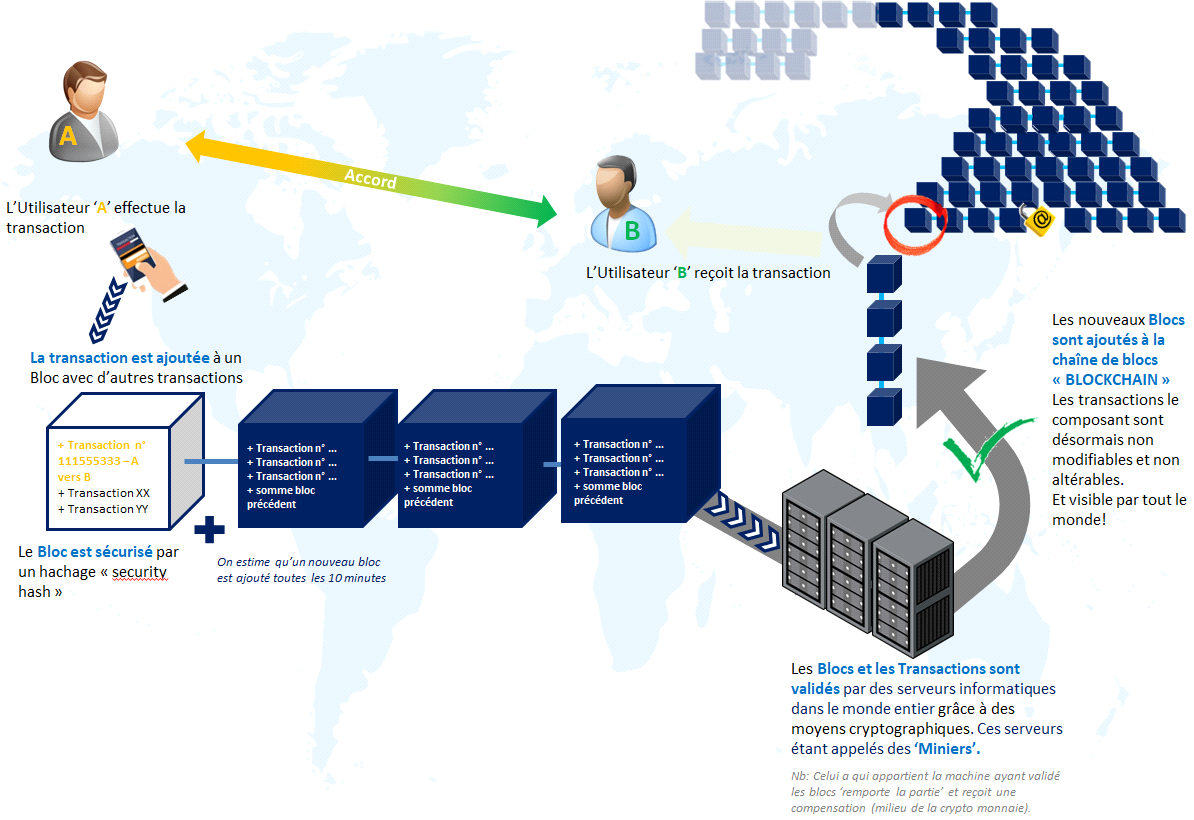
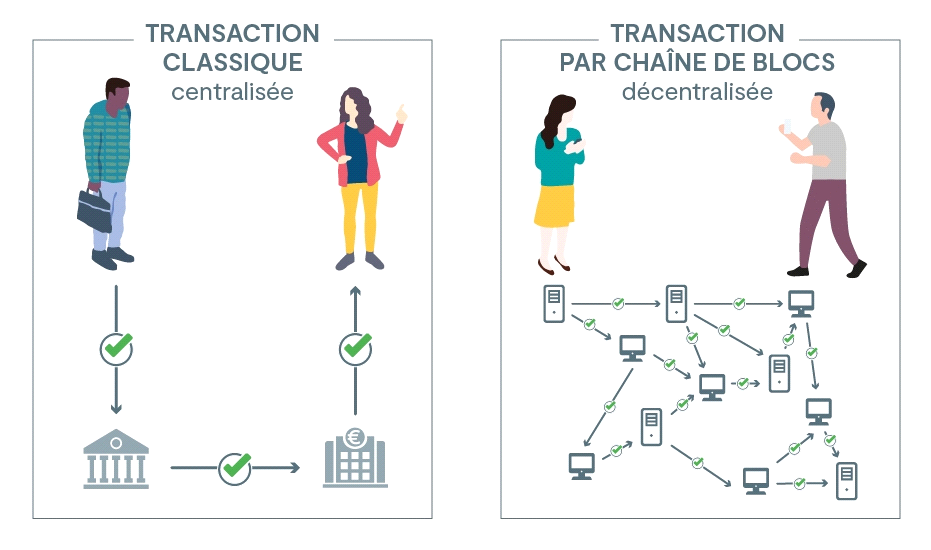
Developed from 2008, blockchain is, first and foremost, a technology for storing and transmitting information. This technology offers high standards of transparency and security because it works without a central control body. More concretely, the blockchain allows its networked users to share data without an intermediary.
In practice, a blockchain is a database that contains the history of all exchanges made between its users since its creation. Its main characteristics are:
The identification of each part is carried out by a cryptographic process
The transaction is sent to a network (or storage “node”) of computers located around the world.
Each “node” hosts a copy of the database in which the history of the transactions carried out is recorded. All stakeholders can access it simultaneously
The security system is based on a consensus mechanism of all the “nodes” each time information is added. Data is encrypted and authenticated by “data centers” or “miners”. The transaction thus validated is added to the database in the form of a block of encrypted data (this is the “block” in blockchain)
Decentralized security management prevents transaction tampering. Each new block added to the blockchain is linked to the previous one and a copy is transmitted to all the “nodes” of the network. The integration is chronological, indelible, and tamper-proof.
The blockchain represents a major innovation that is used in particular in the banking sector. Indeed, historically, blockchain technology was developed to support transactions carried out via cryptocurrencies/crypto-assets (including bitcoins which are the most well-known form) and which have the main characteristic of not depending on an organization centralizer (like a central bank) and to be international.
But its use is not limited to cryptocurrencies. Many fields and sectors of activity, commercial or non-commercial, public or private, already use the blockchain or plan to do so in the years to come. The uses of blockchains and other technologies include:
In the banking sector, technology opens up the possibility of validating transactions without the intermediary of a clearing house, which should make it possible to certify transactions in much shorter timeframes. The blockchain can also promote the sharing of information between competing players in a financial centre while respecting the secrecy of their commercial data and, in doing so, facilitate the management of common structures or instruments by reducing contact costs and administration fees.
In the insurance sector, the contribution of the blockchain is due, for example, to the automation of reimbursement procedures and the alleviation of certain formalities at the expense of companies and their customers, provided that the assumptions and conditions of compensation and damage are clearly established.
In the logistics sector, the blockchain has two interests:
ensure product traceability, as well as the memory of the various interventions on a production and distribution chain.
reduce formalities and create the conditions for cooperation between actors in a sector, particularly in terms of information exchange. This use could also find an application in the agri-food sector for food traceability, particularly interesting in the event of a health crisis.
In the energy sector, by authorizing the exchange of services and values outside a central management body, the blockchain potentially creates the conditions for implementation on a more or less large scale depending on the technical capacities of local networks. production, exchange and resale of energy to balance supply and demand at all times, which is a major constraint for electricity networks in particular.
But many sectors are potentially affected by the use of blockchain technology: health, real estate, luxury, aeronautics, etc.
Using blockchain has many benefits, including:
The speed oftransactions thanks to the fact that the validation of a block takes only a few seconds to a few minutes.
Security of the system, which is ensured by the fact that the validation is carried out by a set of different users, who do not know each other. This protects against the risk of malicious intent or hijacking, since the nodes monitor the system and check each other
The productivity and efficiency gains generated by the fact that the blockchain entrusts the organization of exchanges to a computer protocol. This mechanically reduces the transaction or centralization costs existing in traditional systems (financial costs, control or certification, use of intermediaries who are remunerated for their service; automation of certain services, etc.).
WEB 3.0 AND THE METAVERSE
As conversations began to shift from Bitcoin (BTC) to other largercrypto projects such as Ethereum network upgrades and central bank digital currencies, or CBDCs, media coverage would suggest that widespread adoption of crypto is already well advanced. But it is clear that the majority of people do not know what it is.
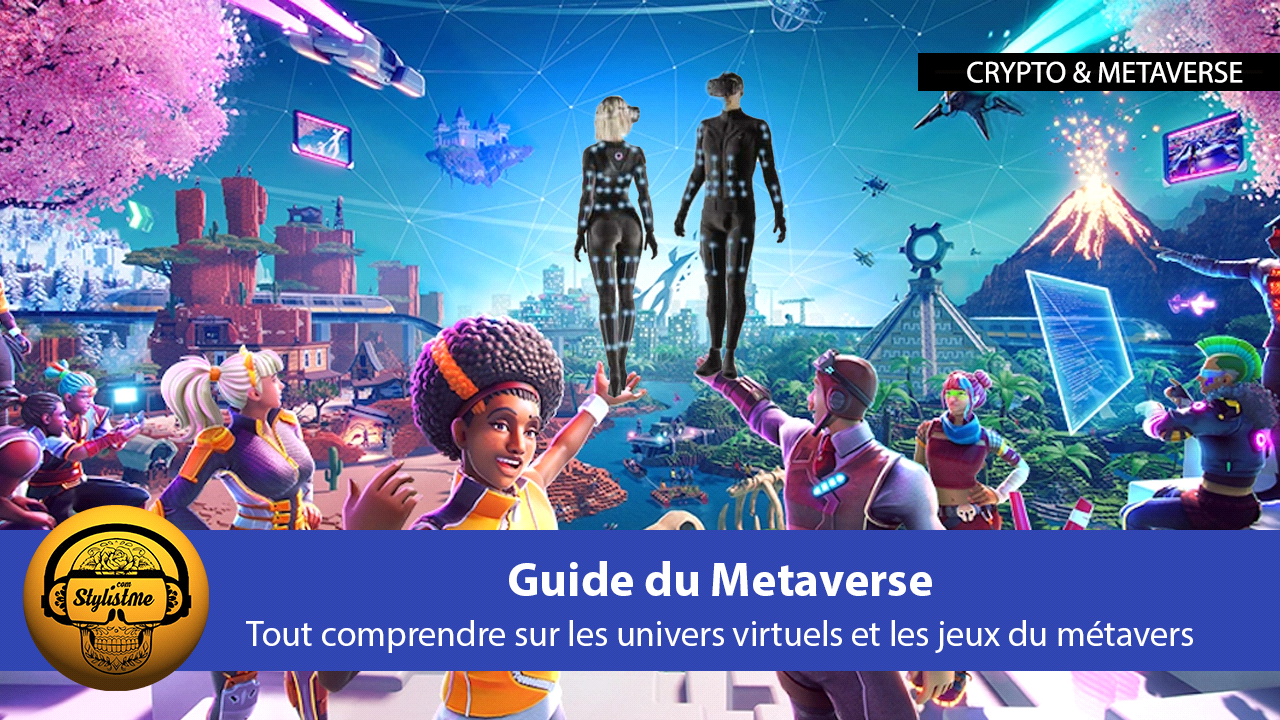
The Metaverse (in English) or Métavers (in French) is a generic term for technologies that make it possible to create an entire (virtual) digital universe like our real universe. This universe can be extremely detailed and include a wide variety of different worlds, often also called virtual environments. People can join this Metaverse using different technologies and interact with each other. However, instead of being present in person, the user creates an avatar which is their representation in the Metaverse.
However, the Metaverse doesn’t just want to be a massively multiplayer open-world gaming platform (RPG MMO). It is already beginning to be a virtual space where people work, earn money (by spending it), meet people, and invest in real estate. In short, where you can live another life.
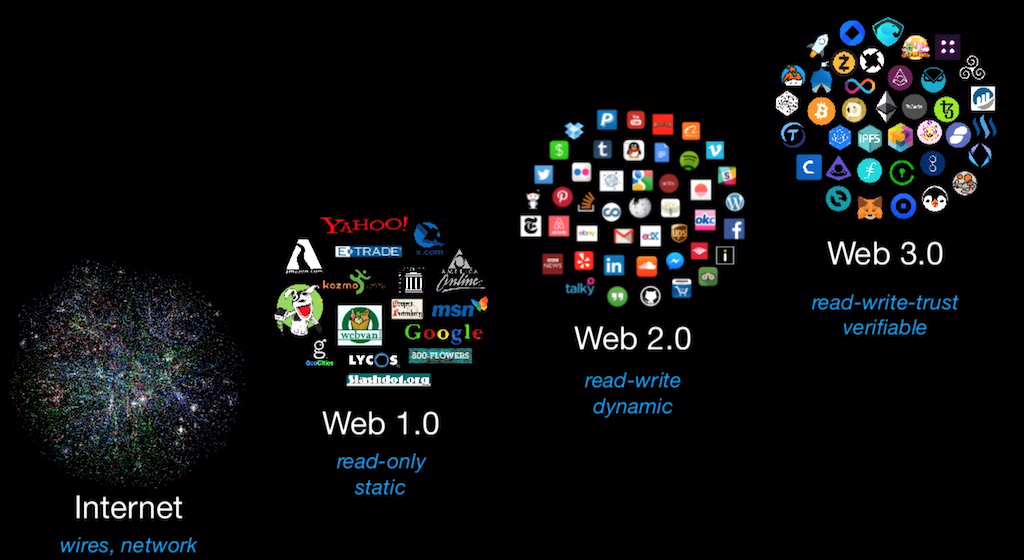
Technologies like Augmented Reality (AR) and Virtual Reality (VR) are important levers for the Metaverse, as they will help create an incredible sense of immersion in another’s skin and in another universe. However, there is one project that may well facilitate mainstream adoption of crypto: Web3.
To better understand the evolution of these two technologies, an illustration between Web2 and Web3 as support for the Metaverse.
NFT are the three initials of Non-Fungible Token, which translates to non-fungible token. That doesn’t necessarily make things any clearer. Therefore we must detail the notion of “non-fungible”.
For example, bitcoins or €100 bills are fungible. Even though each note is unique, it will have exactly the same value as another €100 note. The first mined bitcoin, no matter what platform it is on or who owns it, is the same value as a recently mined bitcoin stored in another wallet.
Conversely, works of art or concert tickets are non-fungible.Something that is not fungible cannot be replaced or divided. It’s unique. They are objects of the same nature, but which have their own characteristics and their own usefulness.
We talk about “tokens” when they are digital units, which are exchanged with blockchain technology: 3D visuals, objects in a video game, or even a piece of land in a fictional universe.
The NFT can therefore be defined as follows: it is the digital title of ownership of a non-fungible token. NFTs can be classified into different categories according to their nature and usefulness:
collectibles: a collection of digital objects, or a work of art for example.
metaverses: virtual worlds.
online gaming tokens.
utilities: they provide a service to their owner.
Some NTFs may belong to more than one category. They are traded on online marketplaces dedicated to NFTs, connected to the blockchain.
The value criteria of an NFT: This young technology has a future ahead of it, but it could lead to some abuses. Many investors seek to speculate on this trend which, although it is a resounding success, is still very volatile and full of scams. The vast majority of sold works and NFT projects will never have value, simply because no one wants them.
Some NFTs have artistic value: They are works valued independently of the fact that they are digital, in the same way as a painting in a museum. The blockchain does not have a preponderant role in the evaluation of their price, it is simply the art market. Overall, price is defined by what an artist’s fan is willing to invest.
The value of an NFT can also depend on its usefulness: Becoming a member of a club, meeting other holders or the artist himself, being more powerful in a video game, acquiring and showing a certain social status, etc. .
BIBLIOGRAPHY
My name is Joel Nzoda Consultant in Digital Marketing, Junior Blockchain Developer, Junior cyber Security Consultant and Expert in blockchain technologies. I hope I have been able to bring value to each other, I remain attentive. Discover my activities on social networks.
Hello readers! Hope you liked what you read today. Click the like button at the bottom of this page and share insights with your colleagues and friends!
The creative mind and focus on your purpose in life.
I think I was only 3 years old when I sat in my grandmother’s room. Sitting by the table looking out from the window, seeing all the beautiful snow, and the stars caught my interest. I was only 3 years old when I sat and wondered what the meaning of life was.
My childhood was not easy, I had an abusive father who drank a lot of alcohol and chased us with his guns! So, I kind of grew up to be extremely intuitive and ready to run. I had to “read” my father’s energy and temper. This kind of life made me a small problem solver. I did build a small treehouse in the woods.
I built it between 3 trees like a triangle. It was my safe place. I even arranged a small table and chairs there. I did not build windows, not for security reasons only small peak holes so I could see if there was a threat coming. I also did build it 1,5meters from the ground so no animals could “visit”.
I felt it was also my problem-solving “office”. I was proud of it! Luckily my father stopped drinking alcohol and did almost stop all abuse.
I am 43 years now and still a problem solver.
Now from my life to TECH, tech has probably saved my life! I have had the chance to study with mentors from my home, studying everything from physics, laser physics, AI, IoT, Magnetochemistry, and the automotive industry, not to forget the energy business. It has given me happiness and total freedom of choice.
But that is not all, I have studied wolves and their anatomy and also the human being, neurological problems, and hormones. I felt I wanted to learn everything about everything so yes, I did even study all kinds of religion and philosophy of course and history.
No matter what you study, you will have some use of the knowledge when the stars align with you. The saying, throw me to a pack of wolves and watch me return leading the pack! That is very true in my life. I was thrown to the wolves many times.
An example when I came up with the first navigation app for visually impaired people, I did lose the idea even if I was dealing with an organization helping the visually impaired. You see, you can trust the org but perhaps not all the people working there.
In this case, there was a man who stole my idea. The only thing comforting me was the idea that a lot of people did get help from this app all around the world.
Hard to say but boy have I lost a lot of ideas cos I did not afford to make them myself. I had a very hard time getting an investor. I came up with an app when the media had a lot of headlines on rape cases in India. I wanted to help the women there.
And the app was called the family secure app. I got involved with developers in India, they called me Didi(sister). And yes, they became like a family to me and we still have contact after many years. Well, this Idea still exists but has not been made cos I have not got any investors. But maybe someday? Que sera whatever will be will be as they sing!
I am happy for VR during the pandemic. It has helped so many people work remotely. And much more. So now My ideas include VR, AR, MR, and XR. How to implement them in daily life and business.
I am now carefully trying out crowdfunding platforms. The fact is that only 2 % of all female inventors get funding, that figure is scary really. Only 2 %? Why?
When it comes to leadership I see it as a game of chess. The idea concept or innovation is the king, you are the queen and for example, the soldiers can be a patent or also marketing.
You have to consider every step you take, or you will take one step forward and two steps back!
Do not feel small asking for advice from professionals. Do not be too proud. Build a team! If you haven´t got money for salaries well then offer something else like shares in the company.
No matter what, try to build the team, and do not do everything alone like I have been used to doing. You might get some tasks done but not as effective as the energy of a real team.
You do not have to understand everything about Tech, but always try to learn a little bit every day. Maybe reading a book, only one page a day? No matter how slow you learn, as long as there is some kind of progress you will win every time!
So, both women and men, time to come together for a more peaceful world. There is so incredibly much we can do with AI, for example, medicines, operations, automotive, and energy. The list goes on forever as long as we give ourselves credit for thinking outside the box!
And at last, I will share a video of my prototype of a food bowl for toothless pets who either have lost their teeth or have an underbite or have a short nose and are hard to breathe when picking up the food. It might have a futuristic design, but it is working!
And remember, unlearn, relearn, and unlearn again, question everything, and focus on your main purpose in life. I recommend reading Viktor F Frankl’s books on this matter!
Thank you for reading my story! If you feel you want to connect, I can be found on LinkedIn.
Here is a video of my prototype :
Kindest Regards
Heidi Ström, Vaasa, Finland.
Most searched question
How is technology saving animals?
What are three common technologies used in animal systems?
Is technology good for animals?
Most searched queries
Importance of animals in our environment
Animals in our environment
Hello readers! Hope you liked what you read today. Click the like button at the bottom of this page and share insights with your colleagues and friends!
My name is Rick Woo, born in Hong Kong and graduated from Australia. To me, I did experience the journey from Web 1.0, Web 2.0 and now Web 3.0. What I see is we must embrace technology. Also, I pretty much tend to use the buzzword “gamification”, here is the reason.
I started up LOST in 2013, a real-life escape game that gives gamers an all-rounded experience (www.losthk.com).
Introduction
LOST will launch a play-to-earn and play-to-learn mechanism, which has been made viable by blockchain economics. Play-to-earn model enables players to be rewarded by playing LOST games; and the play-to-learn model enhances players to attain knowledge throughout LOST games. Together with our existing stores and future stores, this revolutionary model will disrupt the market and create a different income stream by the OMO (online merge offline) concept, plus LOST Token and NFT assets, the ultimate GameFi & SocialFi world is born.
Escape in Metaverse
Now, LOST officially announced its entry into the Metaverse, creating the world’s first Metaverse escape room. Founded in 2013 and headquartered in Hong Kong, LOST (www.losthk.com) currently has 14 branches around the world, together with its sub-brand LOST Junior, offering players an unique game experience throughout different story themes and self-developed auto-gadgets. From children to adults, individual to corporate, shopping malls to schools, indoor to outdoor, and now offline to online to create an OMO (online merge offline) Metaverse game experience.
The 4E business model
The entire business model is a combination of virtual and reality, via our ESCAPE game, connecting the physical store and the virtual store, which enhance the user experience on ENTERTAINMENT. For instance, players can continue to challenge the rest of the escape game after they did the online / offline one. Every time when they cracked the riddles or unlocked the chests may receive a limited NFT, this will be an integration for online / offline customers to have a greater user experience. Besides, any kind of brands / products can also be promoted through this experiential EVENT, such as sports brands, can issue NFT or Tokens of limited edition sneakers and store them in the treasure box, allowing challengers to win it by unlocking, as a result to to increase the sales and strengthen brand effect. Furthermore, together with our sub-brand LOST Junior, we will create an experiential EDUCATION, let the child learn while playing, like story-telling, science explanation, strengthen social skill through our escape game, a comprehensive play-based learning experience.
NFT in the escape game
LOST will have different themed rooms in Metaverse, and various virtual props / tools / gadgets will be used to unlock each mission level. These unique props are exactly NFTs, which can upgrade the player’s level for cracking the harder levels; on the other hand, those NFT items will have a potential market value. Digital assets in Metaverse could be a painting, a key, weapons or equipment. It is also your certificate of passing the escape game level, as you need it to reach the higher level with these items, as a result the value of these NFT items is created. Moreover, the crypto currency “LOST Token” will be hidden in different places randomly, players can collect them and redeem it at LOST physical stores as tickets. This crypto currency can also be used for purchasing equipments, items to equip your avatar in Metaverse and convert them into digital assets. In the future, players can create their own escape game rooms in Metaverse and build their own revenue stream.
The future of LOST Island
The whole concept of LOST is to create play-to-learn and play-to-earn. Throughout the escape game experience not only the players will attain the knowledge, but also gaining the NFT / Token. Moreover, brands’ joint promotion can also be benefited by riding on this OMO (online merge offline) business model, creating brand awareness and increasing market value. In the future, LOST looks forward to building a virtual world based on Web 3.0 and will be named as LOST Island.
An Edutainment world with education and entertainment, a gaming ecosystem with infinite possibility.
MOST SEARCHED QUESTION
How is metaverse used in education?
How is gamification used in education?
MOST SEARCHED QUERIES
Metaverse in education PDF
Edtech metaverse
Metaverse gamification
Hello readers! Hope you liked what you read today. Click the like button at the bottom of this page and share insights with your colleagues and friends!
If you aren’t keeping abreast with the latest IT, Tech, and Digital trends, you’re behind the curve. Tech innovations are important for continuous education and tech development. Yet, keeping track of all of them is incredibly time-consuming.
Even IT professionals spend a lot of time gathering information, as there are hundreds of expert sources and even more technologies. So, I have a few simple steps on
How to Stay on Top Of Modern Technological Innovation
[1] Read: Spend some time reading about new technologies and concepts through sites like TechCrunch, Digilah. Also, try to keep yourself updated about the Tech stack your team is already using.
[2] Monitor Competition: Not just direct competition, it helps to follow companies in same problem domain/space. It’s good to be one up the competition, but since it is not always possible, following them closely gives a good insight about new concepts and tech that they might be aware of.
[3] Watch annual Developer conferences from major tech companies (e.g. Google, Apple, Meta, Amazon)
[6] Discover new markets and ideas with 5-minute reports from Trends.vc by Dru Riley
[7] Pay attention to what company’s top VCs are investing in, and follow those companies
[8] Read engineering blogs to learn how systems work in relatively simple language and understand how world-class teams solve product problems and eng challenges!
[9] Internal Tech Team: My biggest resource is my teammates who are generally more updated. I am curious about implementation and architecture, and I keep asking them questions, and they are kind enough to explain stuff to me stuff. This is quickest way to get all updates.
[10] Events and Meetups: All the latest technologies kind of breed communities around them. That’s a great way to know the latest trends and keep yourself updated. You can become a part of the Digilah Tech community.
Keeping up with modern technologies allows businesses to increase sales, transform business models, launch innovative products, and improve customer experience.
However, the number of emerging technologies is constantly increasing. It’s highly time-consuming to keep track of them since there are numerous sources to study, but they don’t provide accurate and full definitions, let alone cover all the latest IT trends.
To overcome the challenge, product managers must find ways to help their teams stay on top of this changing world by contributing to the community, subscribing to trade publications, joining professional communities(Digilah Linkedin page) and attending seminars, technological events.
Most searched question
What are the current macro trends?
What is macro technology?
What are the latest trends in technology?
Most searched queries
Technology trends Macroeconomic trends
Global macroeconomic trends
Hello readers! Hope you liked what you read today. Click the like button at the bottom of this page and share insights with your colleagues and friends!
To understand the term Merge, it is important to master certain operating mechanisms of the Blockchain, such as the proof of work (Proof of work) and the proof of stake (proof of stake) algorithm consensus.
The proof of work: is a mechanism by which the different machines (represented by miners) on a blockchain network validate transactions on that network, through a consensus algorithm in this case the proof of work consensus algorithm. Proof of work is done using a set of machines (computers, CPUs, GPUs, Asics etc.) driven by humans called miners. A miner’s role is to secure the network by validating transactions as they appear on the blockchain.
Basically, each transaction corresponds to a mathematical equation whose solution is unknown, when a transaction is carried out on the Bitcoin network for example, the miner whose machine will have the greatest computational capacity will succeed in solving the mathematical equation hidden behind the transaction initiated, will be rewarded with an amount of crypto (Bitcoin) into his wallet. This process is called mining.
Once the transaction has been validated by the winner (miner having validated the transaction) all the other machines (nodes) must validate and approve the transaction as well so that a copy of this transaction will be shared on all the machines involved in the mining process.
This mechanism makes it difficult or even impossible for a hacker to modify the content of the transaction. The hacker will have to modify the copy of that transaction at the same time on more that 50% of the miner’s machine that constitutes the whole network.
Generally, several entities or people join forces and create what are called mining pools in order to have an important computing power in order to validate a large number of transactions faster. The proof of work remains one of the most secure computer systems in the world. although it has certain limitations such as highenergy consumption, low transaction speed, and high transaction costs to name a few.
It is important to recall that the Blockchain Ethereum has also been operating under proof of work since its creation in 2015 and wanted to change the consensus mechanism for ecological and scalability reasons. Several alternatives have been proposed to overcome this problem, but one of the most important ones remains the Proof of Stake consensus algorithm.
Proof of stake: validates transactions on the network using money staked in wallets. Here to validate transactions on the network, unlike having a machine (GPUs, ASICs) whose computing capacity must be huge, validators must store a require amount of crypto (money) in their wallet defined by the developers of the blockchain in question, so they can participate in securing the network by validating transactions. The higher the amount, the more likely the validator is to validate a transaction, and in return earn some reward (money in the form of crypto).
In order to prepare for the transition from proof of work to proof of stake, the developers of the Ethereum blockchain set up in December 2020 a network called Beacon Chain (Consensus Layer) which is a separate blockchain from the Ethereum mainnet, running in parallel but never having processed any transaction on the main network. The Beacon chain uses the proof of stake consensus algorithm.
The MERGE is simply the fuse of the main Ethereum network (main net) which works under the proof of work with the Beacon Chain which works under the proof of stake consensus.
One of the objectives of MERGE is to reduce the significant energy consumption generated by proof work consensus algorithm. It is important to remember that The Merge is only the first step for a total migration from proof of work to proof of stake for the Ethereum Blockchain. There are several others steps such as:
Ø The Surge: whose objective will be to increase the number of transactions per second commonly called scalability so that the Ethereum network can reach the up to hundred thousand transactions per second. To carry out this step, the developers will use a network partitioning technique called sharding, which consists of dividing the network into several parts called shards, so that the transaction processing calculation will be shared among the network, therefore more digestible and faster.
Ø The verge: which will make it possible to set up the Verkle tree (an improvement of the Merkle tree) which will allow network participants to be validators without having to store a large amount of data on their machines (computers).
Ø The Purge: which will be a continuation and improvement of the previous step “the Verge”
Ø The Splurge: which will constitute a series of updates to the Protocol.
What we must remember from this important step (The Merge), the transaction costs will not be reduced, the transaction speed will not change either, since all these improvements will be integrated into the future steps listed above. On the other hand, what will change, will be the reduction in Energy consumption of nearly 99%, the issuance of tokens which will be reduced by 90% (the quantity of tokens in circulation will reduce), and the reward system as well.
I am a freelance Blockchain consultant, reach out to me and I would love to help you more on this future technology.
Most searched question
What does the Ethereum MERGE mean?
What happens if the MERGE fails?
Most searched queries
What is the Merge, Ethereum
Merge into oracle
Hello readers! Hope you liked what you read today. Click the like button at the bottom of this page and share insights with your colleagues and friends!
Co-create learning that has strategic impact, scalable reach and sustainable deployment
Ongoing waves of next generation technology…
As a learning strategist, I have been an early adopter throughout several waves of “next generation technology”. In various forms, technology has always been and continues to be a very powerful enabler of learning. This happens only when it is used as an integrated part of a learning strategy targeted to achieve pre-defined and measurable positive impact on performance (of the people and organisation).
Recurring patterns
I found the patterns and the simple rules within this complex world of people, performance and purpose, while working and learning globally with a diverse range of organisations from corporates, NGOs, governments, educational institutions to start-ups.
As technology evolves, some things remain the same… The range of ways, in which humans react to any new technology, remain the same. How we learn, how our brains work and the psychology of learning, remains the same.
The paradox…
What has truly expanded is that we have more and more diverse, innovative, and impactful ways of how organisations could be enabling learning. In addition, the pace, complexity and volume of what needs to be learned and unlearned has increased.
Yet many organisations are still on the old island taking lecture-based classroom “training” &/or existing course content, which was not impactful in the first place and turning it into AI powered digital courses, virtual classrooms &/or even virtual reality experiences.
Formally support formal and informal learning
Let’s go back to the basics. As a lifelong observer of people, I believe we have a natural capacity to learn, an innate wisdom as well as a need for connection and shared purpose.
Therefore learning works (i.e. has an impact on capabilities, behaviours and results) when we formally support both formal and informal learning. Learning works when we respect our fellow human beings. Learning works when we innovate with integrity leveraging the best in human psychology and the latest in technology. As we digitise, we need to humanise.
Enabling the 3 ways we learn naturally
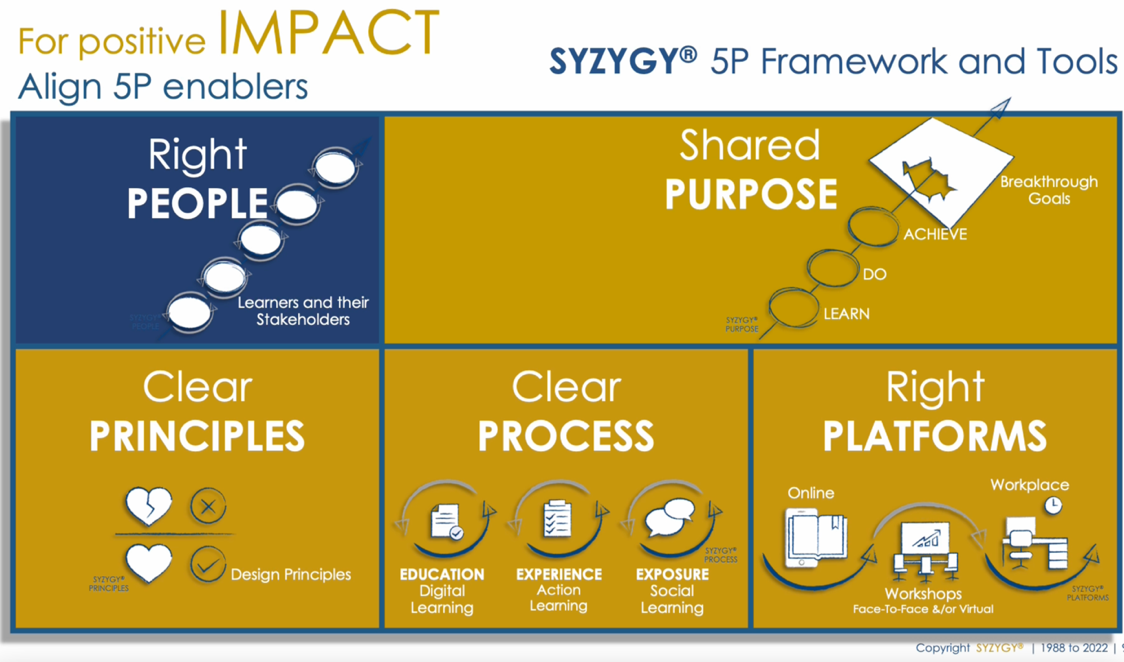
There are 3 ways we learn naturally. In addition to this being based on research, take a moment to reflect on your own natural habits every day. These include leveraging a combination of:
Digital Learning = Education via content available 24×7
Action Learning = Experiences to apply the learning while working
Social Learning = Exposure to learn from/with others
Organisations can therefore formally support learning as a daily habit by enabling a clear PROCESS which combines the 3 ways we learn.
Life is our classroom
Furthermore, every minute of the day we are presented with learning opportunities. The millions of dollars invested in low-impact, high-cost learning solutions is a crime and defies basic common sense.
It costs very little for any organisation to enable ongoing learning as a daily habit. It costs very little for the teams doing the real work, for example, to use their iphone cameras &/or basic PowerPoint to capture and share their tacit knowledge (Digital Learning).
You do NOT need to do contrived role plays and irrelevant activities in a classroom when it costs very little to consciously apply what has been learned in the workplace (Action Learning).
In conjunction with the above, it costs and takes very little to reflect on and discuss with each other, experts, practitioners, coaches &/or mentors what has been achieved and what can be improved (Social Learning).
Observing and learning with high performing teams and organisations, I found 5Ps are always in place and aligned. When we get the right PEOPLE together and support them to co-create a shared PURPOSE. Thereafter, we put in place clear PROCESSES and the right PLATFORMS (online and offline) using clear guiding PRINCIPLES. This creates a safe space that enables people to learn, adapt and improve as a daily habit.
We found this applies irrespective of whether you are working with and upskilling underprivileged youth in the rural areas, private bankers in the big cities, operators in a factory, leaders in a board room or the frontliners of a popular restaurant brand.
Technology amplifies, aggregates, increases accessibility and more…
What we are highlighting is that high performing organisations and teams create safe spaces to learn, adapt and improve every day. They fail fast and learn faster. Many call these agile teams and draw from the practices part of the agile approach, innovation and human centred design. I draw on these and practices from development and cognitive psychology.
Whatever our source, how we learn and evolve as a human race from prehistoric times to today and in future, there is nothing that is completely new. (Wall art and papyrus scrolls was the ancient form of technology (= makes things easier) and their form of digital learning available 24×7).
What continues to evolve is that technology takes what we do, accelerates and amplifies our efforts in ways that are even more scalable and sustainable. For example, a great speaker can create and instantly broadcast a relevant and meaningful message company-wide to thousands of people in a few minutes using a live video.
Technology allows us to aggregate, integrate and increase accessibility by bringing all the learning resources via an integrated or single front-end platform – from content, people to experiences.
Technology allows us to use AI such as sourcing very widely and then in seconds recommending relevant learning resources based on the Learner’s profile, needs and interests.
Technology is allowing us to distribute, consume, exchange and track learning and its impact on results using web2 such as learning experience platforms and now web3 technology such as the blockchain, NFTs and virtual reality spaces.
Yet as we leverage technology as an enabler of learning, the entire strategy must be designed for impact. We must not lead with technology. The technology as an enabler comes last in the design process. We can also reverse engineer and then iterate the original design as we learn more about new ways technology can be used.
We must design the end-to-end experience focusing on the human elements, human experience and impact.
Digital learning using learning technology as a standalone, without the human element in the real-life context, will not impact performance. It will not impact a change in our behaviours and results.
In addition to this – why learning technology is deployed and what capabilities it develops must consider human or soft skills. Soft skills have never been more important. Human intelligence combined with artificial intelligence is still the best combination. For this and many other reasons, developing our empathy, resilience, problem solving and communication skill sets and mindset, as examples, remain as critical future skills as the hard technical skills of any role. If we innovate with integrity leveraging the best in human psychology and the latest in technology – as we digitise in business, society and learning, we will remain human-centred.
Most searched queries
What is digitalization
Digitization vs digitalization
Benefits of digitalization
Most searched question
What is digital humanization?
What does it mean to humanize technology?
What is digitalization in healthcare?
Hello readers! Hope you liked what you read today. Click the like button at the bottom of this page and share insights with your colleagues and friends!
Women’s health is the most neglected sector, even after multiple attempts of bringing attention to it on different horizontal and vertical levels. According to WHO health is the culmination of the physical, mental, emotional, and spiritual well-being of an individual.
A woman starts her biological journey from the onset of puberty, fertility years, and menopause, and till life continues.
LevelUpForWomen, a women’s health and wellness-based startup working on the niche of reversing PCOS was co-founded by partners Chetan Arora and Bhawana Yadav. Polycystic Ovarian Syndrome is a common endocrine disturbance that affects roughly 6% to 12% of women of reproductive age. The data is still insufficient as most of the women go undiagnosed due to several factors in their lives and the lack of PCOS-based specific scientific research and developments.
The startup was conceived based on personal experience and lack of guidance by the medical fraternity for the initial years of bearing with PCOS symptoms. It is currently bootstrapped and is already on the profitable side from the business perspective.
Technology has been a boon for women’s healthcare, especially in the post-pandemic world. It can be looked at from both the sociological and economic lens to arrive at the conclusion that healthcare and technology are a great combination for the knowledge and wellness revolution.
In a research conducted by Mckinsey, they analyzed 763 FemTech companies (FemTech a term coined by entrepreneur Ida Tin) largely tech-based and enabled, consumer-centric solutions addressing women’s health, excluding biopharma and incumbent medical devices as well as the companies which included unisex services.
It concluded the beginning of the FemTech revolution and domination in public awareness and generating large-scale funding, However, the services were earlier limited to menstrual products, devices, and applications.
New startups like LevelUpForWomen have proven to be a one-stop virtual healthcare and wellness platform.
In our experience and case studies, technology in terms of social media has become a great tool for social awareness and probing to take an action even if you are sitting in the far remote corner of the country.
It does not just act as a catalyst and solution provider to the direct consumer but also a great medium to sensitise other genders and generations which have hushed over women’s reproductive health for centuries.
In the post-pandemic world, the mental and physical health of women has undergone a major toll, being the bearer of family and trying to manage work-life balance has become even more difficult. The results are visible in hormonal imbalances, increased stress, anxiety, and depression cases. Women feel safer reaching out to judgement
-free healthcare solutions online rather than visiting traditional clinics where the approach is the same as it was 20 years ago.
The FemTech revolution in the healthcare industry is still in a nascent stage and will take time to be accepted in Tier-2 cities with fewer apprehensions but it is the dawn of the future.
Women are finding a supportive community via these technological mediums and a platform to grow and heal and restore balance in their lives. These developments promise a tomorrow where health tech will not just expand the female consumer-oriented business but also provide an opportunity for groundbreaking research and growth for sustainable women’s health.
MOST SEARCHED QUESTION
What is a common female health concern?
What is the most important issue in women’s health?
MOST SEARCHED QUERIES
Women’s health startups India
FemTec Health careers
Hello readers! Hope you liked what you read today. Click the like button at the bottom of this page and share insights with your colleagues and friends!
In the prevailing scenario, Technology has perpetually converted the way people across industries do their work.
From the past two decades digital evolution has improved working conditions immensely. It has augmented productivity and made working from anywhere accessible.
I am going to shed light to some of the upsides and downsides I have witnessed with the emerging technology trends.
Team Collaboration made easier:
Thanks to the virtual communication tools, it allows us to work more closely even as we work remotely. Team collaborations have been simplified. People don’t have to be present physically at the same place.
Video conferencing, meeting remotely and working on the same stuff at once with cloud based file sharing has made our life easier.
Automated follow-ups and customer service using AI messaging has outperformed the heavy lifting.
No longer need to stay at the Workplace:
Major impact of digital evolution in the workplace is the workplace itself. Majority of workplaces still ask you to work on-site, there are plenty of positions open to work remotely all over the country.
Advancements in global job hunts have given wings to our fulfillments and outlived the restrictions to our capabilities. We can freelance from anywhere. Organizations can hire potential candidates half a world away.
Efficiency and Incessant Speed:
Technology is the real boost. Employees have become systematically structured than ever before. What used to be a cumbersome tiring process is now done in seconds. Messages can be sent instantly to colleagues and clients across the world. Payments, billings and proposals can be taken care off immediately.
Some of the downsides include anxiety due to increased working hours. If you work from home it may feel like you are never out of the office. Flashing, pinging constantly draw Employees back to their jobs.
The learning curve to implement new methodologies separating employees by screens leads to miscommunication. Being glued to systems disrupts people and automated voicemails sometimes can make clients upset.
In a nutshell, technology in the office environment has encouraged productive habits. Organizations with advanced approaches may consider the gains in efficiency from technology as a reason to slow down as opposed to rushing the process.
I hope employees one day will get notified to take a break instead of handling more work related demands.
Most searched question
What role does technology play in today’s workforce?
What are the 10 advantages of technology?
What are the effects of technology on employees?
Most searched queries
Impact of technology on organizations
Beneficial and ill effects of technology in work
Negative impact of technology in the workplace
Hello readers! Hope you liked what you read today. Click the like button at the bottom of this page and share insights with your colleagues and friends!
Many brick and mortar businesses have put new retail and omnichannel strategies on their agenda. The pandemic has pushed many consumers, like us, online. But yet, different sets of consumers still long for the in-store experiences.
On another note, companies, now, have to battle with a mix of high inflation, consumer behaviour and changing trends. With big brands like Walmart and Shopify laying off their workforce, there is a significant uncertainty in the retail industry.
That said, all sectors of the retail industry had embraced technology solutions to accelerate the pace of digital transformation.
For the many of our beloved retails brands, offline-to-online commerce (O2O) is the solution.
O2O integration is where retailers use online and offline to provide improved customer experiences. It’s a strategy to convert traffic from ecommerce into offline sales.
A report by Forrester notes that while online shopping is projected to grow to 27% of overall retail sales by 2023, consumers are rethinking the in-store experience – with 40% of adults in the US saying they enjoy shopping in stores less than before the pandemic.
A hybrid O2O retail model bridges the two channels with a single strategy – elevating in-store shopping with digitally-enhanced experiences, while providing enticing virtual environments online. As customers become more experience-driven, the gap between ecommerce and physical stores is further reduced, with completely re-imagined customer journeys.
Virtual shopping with live digital support
Online shoppers can be instantly connected to skilled in-store staff to explore products. Customisable web widgets for live chat, audio and video calls can be leveraged for instant customer service or virtual shopping experiences. These widgets can also be activated by clicking web links – which many businesses design in their branding as buttons or images on their websites, inviting shoppers to enjoy tailored shopping experiences.
Digital platforms connect customers to staff best suited to their needs, while delivering rich customer insights.
They can even follow up with the customer over their preferred instant messaging and social media channels for better relationship building – even sending special offers and deals exclusive to that customer.
Many of us know QR codes where customers can scan them for shopping, provide product information and make payments.
Another way is to bridge the divide between in-person and virtual environments through QR codes. This blends the O2O shopping experience. For example, sharing of QR codes in marketing campaigns and advertisements, or sending a message on your Facebook Pages can transform them into a powerful communication platform. Strong retail relationships can be built through live chat, instant message platforms, virtual number or video calls and more. A QR code linked to a cloud-based omnichannel solution can help you to build a 360° customer profile with minimal effort.
Humanising your brand to nurture customer relationships
Modern customers have come to expect almost immediate responses to their queries. If you keep them waiting, or force them to navigate through a complicated procedure to answer their question, you will miss opportunities and risk losing customers to the competition. Another key differentiator is quality of service – which the right technology platform can help with, through the power of data.
Inspire loyalty from existing and new customers by building a brand that they love through a total customer engagement platform.
Most searched question
Why is O2O important?
What does O2O mean in marketing?
What are the four types of e-commerce?
Most searched queries
O2O strategy
O2O process O2O benefits
Hello readers! Hope you liked what you read today. Click the like button at the bottom of this page and share insights with your colleagues and friends!
Great top-down leadership doesn’t end at laying down the groundwork. A good business leader knows that a people-first mindset is key to a company’s growth. It is a fact that staff satisfaction tends to reflect on their productivity and loyalty. And who better to represent your company than a loyal and happy employee?
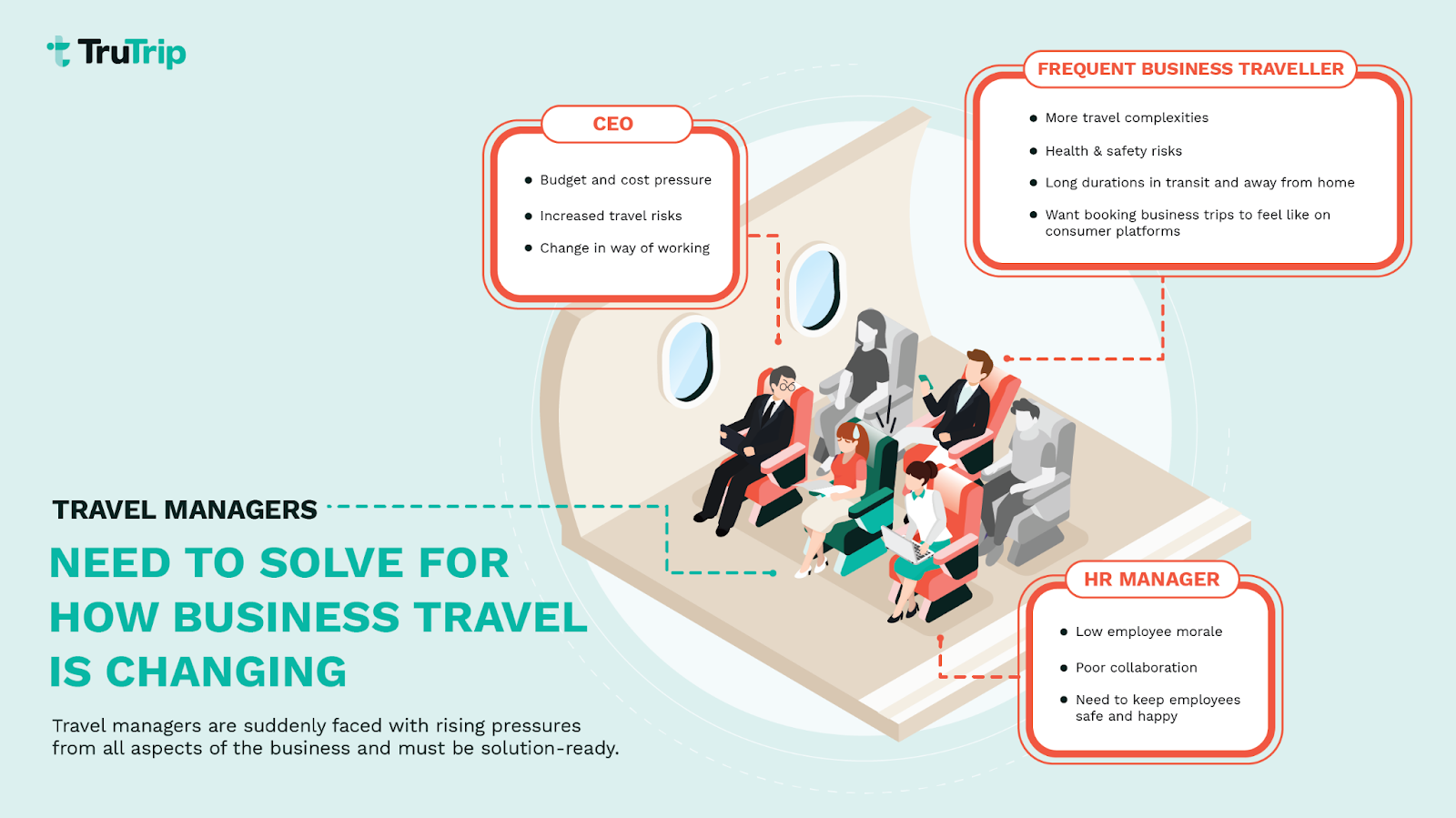
Business travel today is one aspect of work that is very much changed from how it was pre-2020. It is an area that business leaders must acknowledge has a direct impact on employee happiness. Travel risk and trip preparations call for more energy and closer attention to detail in order to achieve quality business trips.
But it is not just “how” business travel is done that has changed. Companies are also assessing the “why” and assessing the rationale behind each trip. Business travel is often pitted against video calls though the former is proven unrivaled in forging connections and winning deals. However, paying more attention to the purpose of travel is worth doing to achieve greater employee happiness, less risk and save costs.
Are employees happy to travel for business?
The novelty of jet setting for work can wane over time – no one likes long layovers, delays and crowded airports. But the bleisure trend shows no sign of slowing. On top of that, people want to deliver their best work and excel in their careers. And research shows that face-to-face meetings and business trips yield better business results. Whether employees like to travel for business comes down to a matter of preference and support.
This is where business travel management makes all the difference, not just to those traveling but also to employees in human resources, finance, managers, and other roles. Modern travel management empowers employees to choose how they travel within the parameters of the company travel policy. Travel management done right lets employees know they are well protected, trusted and valued. The culture of a company is determined by how people feel at work.
Here’s how modern, technology-driven business travel management keeps employees happy.
Peace of mind with risk & safety tools
Safety is not just about having a policy in place but communicating it well to ensure employees know how they are covered. Employees having peace of mind is invaluable, especially when in a new and unfamiliar environment. Feeling safe during business trips positively impacts confidence and unwittingly equips them to do better work.
Your company travel policy may cover how employees are taken care of if something goes wrong but using a modern travel management tool ensures you stay proactive in preventing untoward incidents.
Global disease outbreak?TruTrip’s integration with Riskline, for example, alerts you ahead of time so you can choose your next course of action – whether repatriation, treatment or other support.
Employees achieve more when admin tasks are fewer
Business travel requires careful planning, budgeting and reporting. When done manually, one business trip creates spillover tasks for human resources, finance, team managers, travel managers, administrative staff and the traveler itself. That’s a lot of time that can be saved through streamlining and automation.
Using a travel management platform frees up your employees’ time, letting them do more of the work they take pride in. No more booking and comparing flights and hotels on different platforms; researching travel requirements; reimbursements and reporting; lengthy back and forth travel approvals and requests, and arcane company travel policy.
Overall, it sets your company up to do more and better meet your goals.
Empowering employees to make travel choices
Company travel policies inform employees of budgets and other rules to comply with. But despite the best of intentions, business trip bookings and expenses may sometimes fall outside the confines of travel policy. Using a travel management platform takes away the challenge of implementation. Set up your company travel policy and bookings are automatically compliant.
Instead of restricting employees to booking with certain hotels and star ratings, smart policy implementation lets them choose travel based on their needs and preferences – whether that is direct or connecting flights, unique accommodation types and other trip extras. Select a travel management partner that gives you extensive travel choices. These minor customisations can go a long way to ensuring business traveler satisfaction.
Support and service at every stage of your business trip
A dedicated support team that’s one call, chat, or email away at all times can take the edge off traveling in a high-stress environment. Quality travel management gives you easy, self-service options to make planning business trips a breeze. And at any point, if you need help, having someone to talk to makes for a better overall experience.
But it is not just pre-trip that support is useful. Employees having access to the right support while on business trips are critical. Things can go wrong when traveling – missing travel documents, injuries, bad hotel experiences and more. Your travel management partner is your dedicated point of contact to help resolve issues for you.
TruTrip makes business travel enjoyable and safeWith our modern technology and tools, employees can better dedicate their time to organizational growth. There is no better time than now to get started on impactful business travel. To learn more about TruTrip, schedule a demo or sign up for a free trial.
Most searched question
Why are happy employees essential for a successful business?
What are 10 ways to motivate employees?
Most searched queries
Benefits of happy employees
Happy employees are productive employees
Hello readers! Hope you liked what you read today. Click the like button at the bottom of this page and share insights with your colleagues and friends!
Aromas can play a significant role in our daily lives and the virtual world is highly influencing us more to take the leap of faith and create magic with our senses.
We were taught about the five senses in our childhood and the sense of ‘smell’ is the one of those that triggers our subconscious memory and it’s intuitive to the events around us. This goes back to the classic Annie’s song, “You fill up my senses like a night in the forest…” and so on, John Denver describes the scent of his woman. Smell is a chemical language that is most of the time taken for granted. It is so natural to us and reminds us of memories, that we do not have to put in a lot of thought and effort. However, the pandemic has changed our lifestyles a lot.
Senses that travel
While digitization has taken place and our screen time has increased enormously, all the other senses are very much active and put into conscious use. Smell is critical and how one link to the digital world is challenging. In the past, a lot of experimentation has been done capturing scents from nature and mimicking them in the lab to re-create the same magic as one would experience. From the smell of coffee in coffee bars to the aroma of popcorn in movie theaters. Virtual electronic noses were invented to analytically deep dive into fragrance specifications to be ahead of competition.
Captivating
“Odors have a power of persuasion stronger than that of words, appearances, emotions, or will.” quoted Patrick Suskind in his 1985 novel, Perfume: The Story of a Murderer. Tricks of the trade have been creating this fantasy of smells not so familiar, packaging them with colors, concepts, ingredient stories, enhanced mood music playlists have persuaded us to stay at stores for longer, shop more and control our thoughts through neuroscience technology.
Driven to act
Smell can help us make choices and decisions to try and buy products. Many perfume, cosmetic and beverage companies are engaging consumers through social media with their fragrance and flavor wheels to opt for their preferences on how the product would smell or smell and taste like. Visuals play a key role in helping consumers pick their brand. It is all about the perception created of what we are exposed to: What you see, is what you believe!
Borrowing neighbors
These days edible fruity flavors are found in lip care, beverages are inspired by lavender flowers, candles come in aromas of bacon and thus, cross category fertilization is a trend that is picking up. And the involvement of Millennial and Gen-Zs has been tremendous returning to nostalgic memories when it comes to aromas.
The DIY (Do-It-Yourself) techniques going viral on Instagram and Tik–Tok during lockdowns have boosted the rise of influencers and bloggers that review products and spread the word. Today it is not the celebrity endorsement that works but ordinary users that leave more credibility especially the usage ideas of innovative formats that are popular on YouTube.
More is yet to come!
This is just the beginning, and the world is yet to witness a huge revolution of metaverse calling. Chatting with virtual bots and artificial intelligence devices, virtual gaming and role-playing avatars are no less than an alien arriving on our planet and creating a ‘world within a world.’
Every conversation and movement are captured to extract data, thereby closely monitoring day-to-day activities, from our actions to what is going on in our minds. There are pros and cons to every sci-fi made real, but eventually using these to the best of our advantage is co-creating a world of instant, faster and agile consumerism. The question is are we ready to trust this new world?
Aromatically Yours!
Candice Midde
Aromas & Sensory Expert working in an MNC
Most searched queries
Research paper on perfume
Study of perfume making
Most searched question
What is the strongest smell?
Which smell is good for health?
What is an example of aroma?
Hello readers! Hope you liked what you read today. Click the like button at the bottom of this page and share insights with your colleagues and friends!
There is a palpable sense of skepticism in many with regards to the promise of inclusivity in Web3. Many believe that all talk of decentralization is a mere hype and is not implementable.
When one looks at the Metaverse players across various layers and that the metaverse market is projected to be worth $12Tn by 2030, the values of pay-parity, equity and inclusivity need to be lived in and by the Metaverse players.
Are there companies working on inclusivity and equity in places like Africa and economically backward countries?
Are there real possibilities to generate revenue and employment for the deprived or underprivileged classes of our society, with Web3 technologies?
The internet had made similar promises in the beginning and the utopian dream died within years of its inception. If we look at the internet today, there are pockets of improvement in revenue generation in rural and tribal populations but largely, it has skewed more, making the privileged a little more privileged.
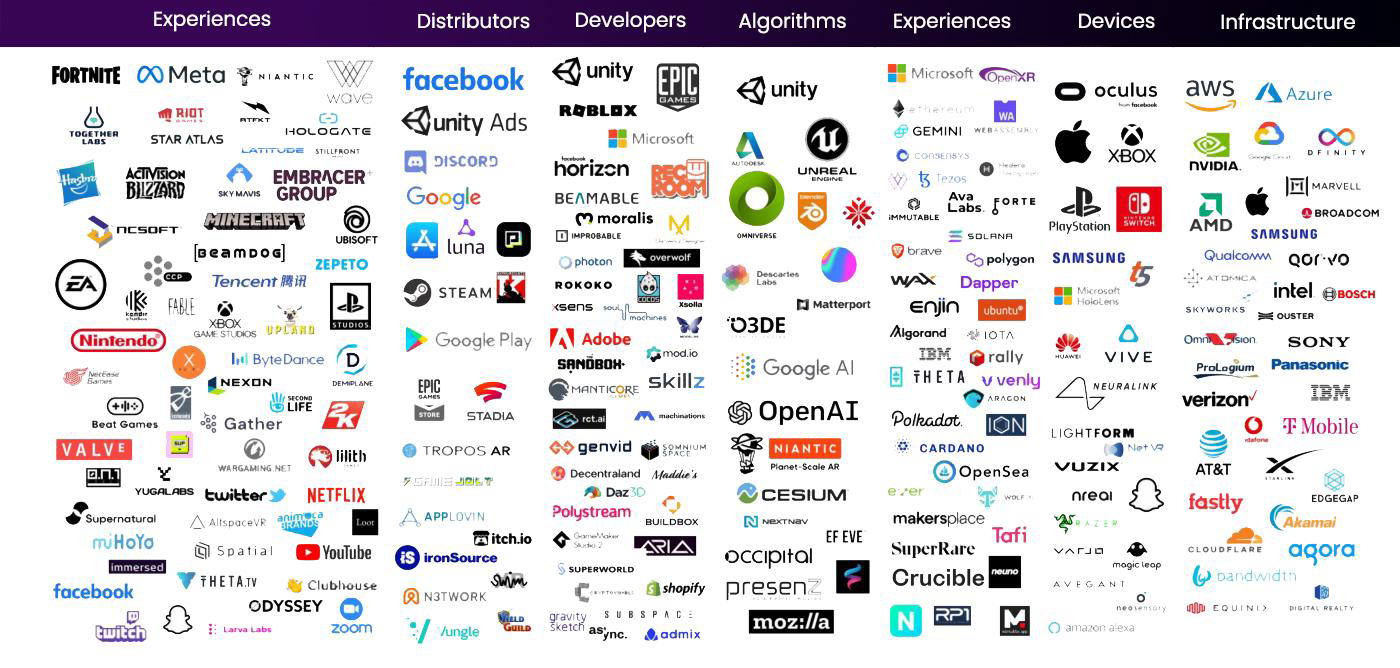
Hence, considering the promise of Web3 in decentralization and self-sufficiency in revenues, this article attempts to provide scenarios across various layers of Metaverse as depicted below, to make this utopian ideal a reality.
The Artisan Community and Indian Craft
As an ancient civilization that has birthed many cultures and has seen numerous migrations and invasions, India has a rich heritage in the field of arts.
Craft as a term was historically limited to “goods worked by hand” but now includes a broader canvas – all things art, like Music, Dance, Painting, Sculptures, Textiles etc. Even if we limit Indian craft to “Handicrafts” across states, the variety in art form and media is unparalleled.
The Export Promotion Council for Handicrafts (EPCH) is a nodal agency for promoting exports of handicrafts from India to various destinations of the world and projecting India’s image abroad as a reliable supplier of high-quality handicrafts goods & services.
The Handicrafts exports during the year 2021-22 was Rs.33253.00 Crores (US$4459.76 Million) registering a growth of 29.49% in rupee terms & 28.90% in dollar terms over previous year1. While the growth is promising especially from a tourism perspective, this may have a miniscule impact on the overall rating of India as the Vishwaguru.
Revenue Generation for Artisans, while preserving the Art Heritage
The fast-paced Digital Age is only going to get faster with Industry 4.0. With technologies like VR/AR, 3D-Scanning and 3D-Modeling, 3D-Printing as well as Web 3.0 constructs (and buzzwords) like the NFT, Metaverse and Blockchain, the craft Industry has all the components aligned for that leapfrog moment.
A lot of artisan communities and tribal art communities in India are now extinct and some on the verge of extinction – this is a challenge that uniquely presents itself to us as an opportunity if we leverage the technologies mentioned above.
Industry 4.0 terms Technology as a driver of change, and not merely an enabler. We should look to harness this driver for Indian Craft and the numerous communities associated with it.
There is a need to look at Indian Craft holistically, including all forms of fine art and performing arts, compounded by technology and tourism. We Illustrate these possibilities by taking the famous Channapatna Toys from Karnataka, as an example. They are protected as a Geographical Indication (GI) under the World Trade Organisation administered by the Government of Karnataka.
Channapatna Toys could be put up on an artisan marketplace in the Metaverse. The artisan would be able to directly engage in selling goods in 3D and voice-interact with consumers worldwide. With technologies like 3D-scanning and 3D-printing, consumers worldwide would be able to see, touch and feel these products via Haptic technologies and also view the story of the artisan behind it.
Such multi-sensory experiences are disruptive and could help consumers in accelerating their buying decisions, something the Internet has not been able to achieve.
Consumers will not only get to pick up local artisans’ produce but also engage with them and know more about our culture, traditions and heritage from their standpoint. The same product, once digitized, could be converted to limited edition NFTs during special seasons. The underlying financial technology could be powered by Digital Ledger Technology (DLT) or Blockchain, keeping the transaction decentralized, bereft of middle-men.
Imagine the access for the artisans to the entire Indian Diaspora across the world and imagine the ease of access and purchase for the consumers, at large. This will also help the Artisans transfer knowledge to the next generation, a large number of who are looking for better economic opportunities in cities.
As mentioned earlier, this is the main reason why India has lost a lot of tribal and native art. With metaverse and ancillary technologies, the hope is that we will be able to reverse this trend and preserve art heritage for posterity while making it economically viable for the artisans at scale, something that is unknown and unprecedented in today’s times.
Early traction in such technology-driven soft power can certainly propel India onto the world stage and make traditional Indian artisans global celebrities, giving them the much needed recognition and respect.
Conclusion
Indian Heritage and Culture is multi-layered, with each layer having the capability to catapult India’s soft-power quotient. One could experience it through ancient monuments, scriptures, textiles, crafts, music, dance, food, sports, folktales and many more.
There is a need to look at each of these layers from a Technology and Tourism standpoint, the intent being to preserve and propagate Heritage and Cultures of the world, including the most backward communities.
If deployed across other art-forms like paintings, pottery, sculptures, textiles, and even artists like musicians and dancers, Artisans worldwide have tremendous potential to earn from a global market without boundaries.
Hello readers! Hope you liked what you read today. Click the like button at the bottom of this page and share insights with your colleagues and friends!
The current fast paced world is creating new opportunities for growth every day. With emerging technology and an interconnected world via IoT, there is always room to create a new market and provide solutions for growth of older ones to create a more technologically advanced society.
The fourth industrial revolution, more commonly referred to as Industry 4.0, is characterised by the use of smart technology developed by a combination of Machine Learning, Artificial Intelligence, Cloud Computing and Internet of Things, to analyse data in order to increase efficiency and user satisfaction.
The creation of smart factories and machines, opens up a realm of possibilities, providing for solutions in Manufacturing, supply chain management, modernising enterprise applications, edge computing, smart systems, 5G and many more.
What exactly is Industry 4.0?
In a most generic way, Industry 4.0 describes a rapid shift to the use of automation and data exchange in technology and manufacturing processes, creating a system where machines rely on wireless connectivity and data analysis to monitor and process statistics and data to make autonomous decisions.
With the availability of affordable edge infrastructure and advanced connectivity technologies, Industry 4.0 has become increasingly mainstream, taking hold of the traditional manufacturing system and completely revolutionising it.
Heavily dependent on IoT, ML and AI, it has paved a way for the next revolution, one guided by robotic automation.
Why is IoT important?
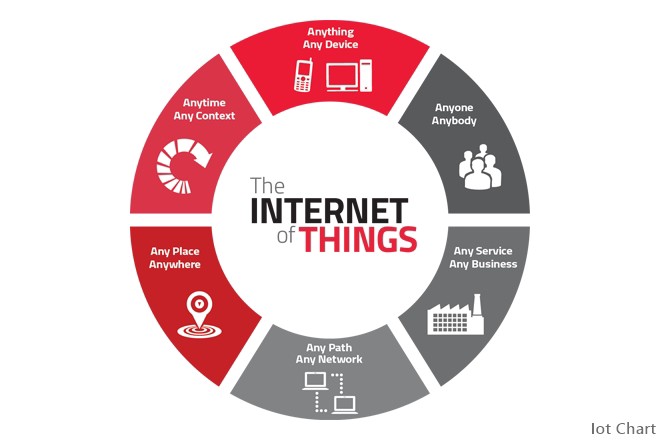
The internet of things (IoT) is a computing concept that describes the idea of the network of physical objects embedded with sensors, software, and other technologies being connected to the internet and being able to identify themselves to other devices.
The data from IoT is important as it creates an improved customer experience, with greater efficiency in production and optimised monitoring and data analyses to further industrial growth.
With the changing world, the need for novel solutions is now greater, with more focus being put on the future, especially a self-sustainable one.
Businesses need to rebrand themselves, or prove themselves to be at the head of the change as reliable information providers in order to keep up with the flow of the tides.
IoT entrepreneurs need a wide range of vision to cater to the needs of the market, both the current and future, and as such the IoT businesses can be generally categorised as core, adjacent or transformational depending on the type of services it provides.
IIOT and Industry 4.0
Industrial IoT or IIoT takes the concept of IoT and applies it on large scale industrial settings with focus on instrumentation and control of devices using cloud computing.
Use of Machine-to-Machine communication to achieve wireless control was a pre-existing working concept, however, with use of cloud computing and machine learning, a new level of automation can be achieved, thus leading to unprecedented growth in revenue and creation of new business models.
Some of the more common uses of IIoT are:
Smart manufacturing
Smart power grids
Smart cities
Smart digital supply chains
WhileIIoT and Industry 4.0 are separate concepts, they do benefit each other and are considered as a set piece when working to increase efficiency in operation via automation.
Industry 4.0 itself is non-existent without IIoT while the concept of IIoT is inefficient without the concept of Industry 4.0 and as such, they share several common agendas.
Focus on results and efficiency to streamline production process and make manufacturing viable and cost efficient
Both categories heavily depend on high speed wireless communication between smart machines and constant real time monitoring and data analysis.
People Driven and requiring constant development and implementation with people capable of interpreting data to further innovate on faster efficient processes
Benefits of IIoT
Maximising revenue – By eliminating unplanned downtime and getting to market faster, improve revenue growth
Lower operational costs – Interconnected machines and industrial data boosts productivity while lowering cost of production
Improved Quality – Market analysis and monitoring via an interconnected system improves efficiency and quality of service/product
Creating a Brand
With the vast domain that is IoT, it is difficult to find a niche to hold onto and create a business model surrounding it.
In order to keep up with the booming growth, there is a need for constant influx of novel ideas and sharing information in order to create a brand image that is credible and also due to the recent nature of all developments and a lack of general awareness, it may be difficult to provide both efficiency and sustainability.
This is where IoTAGI comes in, enabling access to technology and partnering with Industry 4.0 based service providers to curate customised IIoT solutions and help usher in a new era of digitization.
Most searched question
How IoT can help sustainability?
How will IoT impact sustainability of environment or business?
What impact will IoT have on sustainability?
What is industrial IoT?
Most searched queries
IoT sustainability PDF
Internet of Things environmental impact
IoT for environment
Hello readers! Hope you liked what you read today. Click the like button at the bottom of this page and share insights with your colleagues and friends!







 Team Collaboration made easier:
 Some of the downsides include anxiety due to increased working hours. If you work from home it may feel like you are never out of the office. Flashing, pinging constantly draw Employees back to their jobs.